2025 Reports | SDG 1 – No Poverty


Isabela State University (ISU) recognizes education as a vital instrument for poverty reduction and sustainable development. In support of Sustainable Development Goal 1 (No Poverty), the University implements inclusive policies, scholarship and financial assistance programs, student support services, and community-based livelihood initiatives. Through strategic partnerships with government agencies, nongovernmental organizations, and local communities, ISU seeks to reduce financial barriers, empower economically disadvantaged sectors, and promote equitable opportunities for education, economic growth, and improved quality of life.
As a state-funded higher education institution, ISU remains committed to providing accessible and quality education, particularly to students from low-income households and marginalized communities. Through the implementation of Republic Act No. 10931, the University’s Affirmative Action Program, and comprehensive student welfare services, ISU strengthens educational access, promotes student retention, and supports successful degree completion. These initiatives aim to ensure that financial difficulties do not prevent deserving students from pursuing their academic aspirations.
Beyond its academic mandate, ISU extends its commitment to poverty reduction through community extension programs, livelihood training, entrepreneurship development, healthcare assistance, and partnerships with various stakeholders. These initiatives seek to strengthen the capabilities of vulnerable communities, create opportunities for sustainable income generation, and improve access to essential services. This report presents the University’s policies, programs, accomplishments, and institutional contributions toward achieving SDG 1, demonstrating its continuing commitment to inclusive growth, social equity, and sustainable community development.
PROPORTION OF STUDENTS RECEIVING FINANCIAL AID TO ATTEND UNIVERSITY BECAUSE OF POVERTY
Student Enrollment
| Campus | Number of Students |
|---|---|
| Echague | 12,137 |
| Angadanan | 3,377 |
| Cabagan | 6,817 |
| Cauayan | 8,198 |
| Ilagan | 5,427 |
| Jones | 1,170 |
| Roxas | 3,222 |
| San Mariano | 1,480 |
| San Mateo | 1,564 |
| Palanan Extention | 797 |
| Santiago Extension | 574 |
| TOTAL | 44,763 |
Students Parent Income Group
| Students’ Parents Income (Source: PIDS) | Total Number of Students 2025-2026 |
|---|---|
| Rich – greater than or equal to P219,140 | 127 |
| High income (but not rich)- greater than or equal to P131,484 but less than P219,140 | 765 |
| Upper middle income- greater than or equal to P76,669 but less than P131,484 | 1,018 |
| Middle class- greater than or equal to P43,828 but less than P76,669 | 1,869 |
| Lower middle class- greater than or equal to P21,194 but less than P43,828 | 4,359 |
| Low income (but not poor)- greater than or equal to P10,957 but less than P21,194 | 9,960 |
| Poor- less than P10,957 | 26,665 |
| Total | 44,763 |
Admissions and Completion Targets for Students from Low-Income Households
| Students’ Parents Income (Source: PIDS) | Total Number of Students 2023-2024 |
|---|---|
| Lower middle class- greater than or equal to P21,194 but less than P43,828 | 4,359 |
| Low income (but not poor)- greater than or equal to P10,957 but less than P21,194 | 9,960 |
| Poor- less than P10,957 | 26,665 |
| Total | 40,984 |
UNIVERSITY ANTI-POVERTY PROGRAMS
Admissions and Completion Targets for Students from Low-Income Households
Isabela State University (ISU), as a state-funded higher education institution, upholds its commitment to inclusive and equitable access to quality education by prioritizing students from economically disadvantaged and marginalized sectors. In accordance with Republic Act No. 10931, otherwise known as the Universal Access to Quality Tertiary Education Act, the University implements institutional policies and student support mechanisms designed to reduce financial barriers, promote educational inclusion, and improve opportunities for academic success and degree completion.
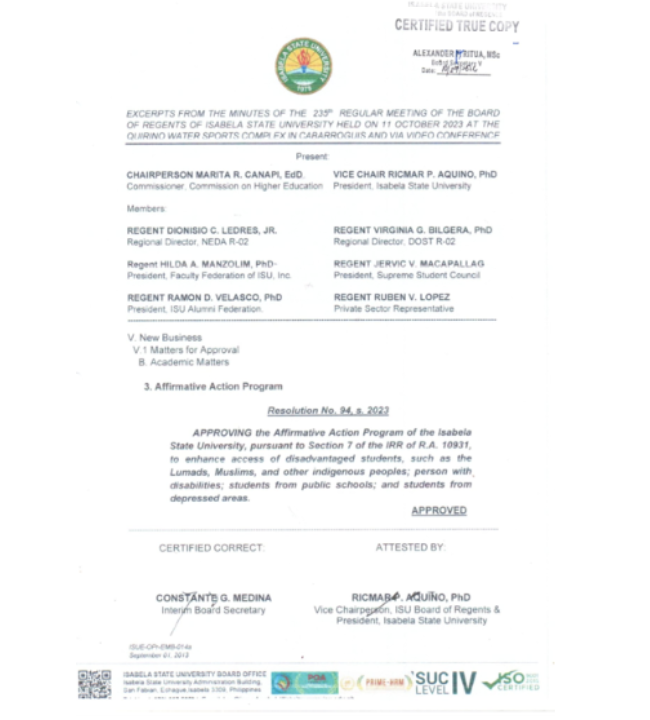
Strengthening this commitment, the ISU Board of Regents approved the University’s Affirmative Action Program through Board Resolution No. 94, series of 2023, during its 235th Regular Meeting held on October 11, 2023. Pursuant to Section 7 of the Implementing Rules and Regulations of Republic Act No. 10931, the resolution institutionalizes measures to enhance access to higher education for disadvantaged and underrepresented students, including indigenous peoples, Muslim students, persons with disabilities, graduates of public schools, and students from economically depressed areas.
The Affirmative Action Program provides an institutional policy foundation for promoting equitable educational opportunities and addressing socioeconomic and other barriers that may limit access to higher education. Together with the University’s admission planning, scholarship programs, and student welfare initiatives, this policy reinforces ISU’s commitment to ensuring that disadvantaged learners have meaningful opportunities to pursue tertiary education.
For its institutional assessment, ISU also monitors the participation of students from households with a reported monthly income of ₱35,121 and below, using this income threshold to identify economically disadvantaged students within its enrollment data. This monitoring mechanism supports the University’s efforts to evaluate educational accessibility and strengthen evidence-based student support interventions.
A. Admission Targets
| Category | Target Number of Enrollees | Actual Number of Enrollees | Total Number of Students belong to Lower middle class |
|---|---|---|---|
| Undergraduate (Bachelors Program) | 43,259 | 42,825 | 40,217 |
| Graduate Studies (Masteral and Doctoral Program | 1,431 | 1,405 | 453 |
| Post-Baccalaureate (Medicine, Juris Doctor, PDDSA, GDCE) | 346 | 533 | 124 |
| TOTAL | 45,146 | 44,763 | 40,794 |
| Percentage of Admitted Students who fall into bottom 20% or low-income household | 91.13% |
In 2025, ISU established an institutional enrollment target of 45,146 students across its undergraduate, graduate, and post-baccalaureate programs, reflecting its continued commitment to expanding access to higher education. The University recorded an actual enrollment of 44,763 students, equivalent to 99.15% of its reported target. Of these, 40,794 students, or 91.13%, were identified as belonging to households within the University’s reported income threshold of ₱35,121 and below per month.
The substantial representation of students from economically disadvantaged households highlights ISU’s role in expanding access to higher education. Supported by the Affirmative Action Program under Board Resolution No. 94, s. 2023, the University strengthens its institutional framework for educational inclusion and provides opportunities for learners who may otherwise encounter financial, social, or structural barriers to tertiary education.
Beyond admission, ISU implements comprehensive student support programs designed to promote academic retention, student well-being, and successful degree completion. These initiatives include university-sponsored, government-sponsored, and nongovernment-sponsored scholarships; student assistantship and loan programs; free transportation and bicycle services; food assistance through the provision of coffee, bread, and porridge; free Wi-Fi connectivity; academic mentoring and counseling; healthcare services and access to medicines through the YAKAP Program; learning facilities; and livelihood and skills development programs.
Collectively, these initiatives help alleviate education-related financial burdens and address challenges that may affect students’ continued enrollment and academic progress. By integrating inclusive admission practices, affirmative action policies, and sustained student support services.
B. Graduation / Completion Targets
| Category | Target Number of Graduates | Actual Number of Graduates | Total Number of Graduates belong to Lower middle class |
|---|---|---|---|
| Undergraduate (Bachelors Program) | 7,024 | 6,903 | 6,142 |
| Graduate Studies (Masteral and Doctoral Program | 264 | 233 | 169 |
| Post-Baccalaureate (Medicine, Juris Doctor, PDDSA, GDCE) | 5 | 1 | 0 |
| TOTAL | 7,293 | 7,137 | 6,311 |
| Percentage of graduates who fall into bottom 20% or low-income household | 88.42% |
For 2025, the University recorded 7,137 graduates, representing 97.86% of its institutional graduation target. Of these, 6,311 graduates, or 88.42%, were identified as belonging to lower-middle-income households. This substantial representation of economically disadvantaged graduates highlights the University’s continued efforts to provide inclusive educational opportunities and support students throughout their academic journey. The results further demonstrate ISU’s institutional commitment to translating access to higher education into successful degree completion.
These institutional efforts support the principle that economic disadvantage should not prevent students from obtaining quality higher education. By promoting access, retention, and degree completion, ISU strengthens its role in developing human capital, improving future employment prospects, and contributing to long-term poverty reduction and inclusive socioeconomic development.
Implementation of Free Higher Education Act
Since Academic Year 2018–2019, Isabela State University (ISU) has continuously implemented the Free Higher Education (FHE) Program pursuant to Republic Act No. 10931, otherwise known as the Universal Access to Quality Tertiary Education Act (UAQTEA). This national initiative provides eligible undergraduate students in state universities and colleges with free tuition and other prescribed school fees, thereby reducing the financial burden on students and their families, particularly those from economically disadvantaged households.
As part of its commitment to inclusive and equitable access to higher education, ISU ensures the sustained implementation of the program across its campuses. By eliminating tuition and other covered educational expenses for eligible students, the University helps address financial barriers that may prevent individuals from pursuing and completing tertiary education. This initiative supports the University’s institutional mandate to expand educational opportunities, promote social equity, and contribute to poverty reduction through accessible and quality higher education.
| School Year | Number of Students | Number of Students with Free Tuition Fee and Other Miscellaneous Fees | Percentage |
|---|---|---|---|
| 2021-2022 | 40,127 | 37,553 | 93.58 |
| 2022-2023 | 39,729 | 37,729 | 94.96 |
| 2023-2024 | 40,420 | 38,460 | 95.15 |
| 2024-2025 | 42,796 | 40,158 | 93.84 |
| 2025-2026 | 44,763 | 42,062 | 93.97 |
For Academic Year 2025–2026, ISU recorded a total student population of 44,763, of whom 42,062 students, or 93.97%, benefited from free tuition and other Miscellaneous fees. This represents an increase of 1,904 beneficiaries compared with the previous academic year, reflecting the University’s continued expansion of access to tuition-free higher education.
Over the five academic years, the number of FHE beneficiaries increased from 37,553 in AY 2021–2022 to 42,062 in AY 2025–2026, equivalent to a 12.01% increase. Throughout this period, more than 93% of the University’s total student population benefited from the program annually, demonstrating its sustained implementation and extensive institutional coverage.
Through the implementation of the Free Higher Education Program, Isabela State University (ISU) continues to alleviate education-related financial burdens, promote equitable access to quality tertiary education, and expand educational opportunities for students from economically disadvantaged households. By eliminating tuition and other covered school fees, the University helps reduce financial barriers to higher education, supports students in pursuing their academic goals, and strengthens opportunities for degree completion. These sustained efforts contribute to human capital development, enhance future employment prospects, and promote socioeconomic mobility and long-term poverty reduction.
Financial Assistance and Scholarship Programs for AY 2025–2026
Isabela State University (ISU) continues to strengthen its commitment to inclusive and equitable access to higher education through comprehensive scholarship and financial assistance programs. In Academic Year 2025–2026, the University provided financial support through university-sponsored merit scholarships, government-funded merit and financial assistance programs, private and nongovernment scholarships, and the Free Higher Education Program under Republic Act No. 10931.
These initiatives aim to reduce the financial burden on students and their families, particularly those from economically disadvantaged households, while promoting academic excellence, student retention, and successful degree completion.
Distribution of Scholarship and Financial Assistance Beneficiaries
| Scholarship | Number of Scholars/Grantees | Percentage |
|---|---|---|
| University Sponsored (Merit) | 4,185 | 9.35 |
| Government Sponsored (Merit) | 145 | 0.32 |
| Government Sponsored (Financial Aid) | 32,496 | 72.60 |
| Private/Non-Government Sponsored | 39 | 0.09 |
| Free Tuition Fee and Other Miscellaneous Fees | 42,062 | 93.97 |
Percentages are based on the total student population of 44,763 for AY 2025–2026.
Program And Initiatives for Students
The Office of Student Affairs and Services (OSAS) has institutionalized a comprehensive support system to ensure that students, particularly those from financially challenged backgrounds, are fully equipped to succeed academically and complete their studies on time. To achieve this, the University implemented a range of responsive programs and initiatives, including:
The Office of Student Affairs and Services (OSAS) implements a comprehensive range of student-centered programs and initiatives designed to promote equitable access to quality education, enhance student well-being, and support academic retention and successful degree completion. These interventions particularly prioritize students from economically disadvantaged households by addressing financial, academic, psychosocial, and personal challenges that may hinder their educational progress.
Through sustained institutional support, strategic partnerships, and inclusive student welfare services, the University seeks to alleviate education-related financial burdens, minimize the risk of student dropout, and create a supportive learning environment where students can successfully pursue their academic goals.
To achieve these objectives, the University implements the following programs and initiatives:
1. List of Scholarship Opportunities
In pursuit of inclusive and equitable access to quality higher education, Isabela State University (ISU) continues to strengthen its commitment to student financial support through comprehensive University-Sponsored, Government-Sponsored, and Non-Government-Sponsored Scholarship Programs. These initiatives aim to reduce financial barriers, particularly for students from economically disadvantaged households, while recognizing academic excellence, leadership potential, community involvement, and athletic achievements.
University-Sponsored Scholarships provide merit-based financial incentives and assistance to deserving students who demonstrate outstanding academic performance, leadership, athletic excellence, and other notable achievements. Government-Sponsored Scholarships offer financial support through national and local government programs, helping eligible students meet educational and other essential expenses. Meanwhile, Non-Government-Sponsored Scholarships, supported by private organizations, foundations, and institutional partners, provide additional financial assistance and educational opportunities to qualified students.
1.1 University Sponsored
Pursuant to Board Resolution No. 65, series of 2018, Isabela State University (ISU), through its Scholarship Unit, implements a comprehensive merit-based scholarship program that recognizes academic excellence, athletic achievement, student leadership, cultural participation, and contributions to student organizations and publications. These scholarship opportunities reflect the University’s commitment to promoting inclusive educational opportunities, rewarding student achievement, and providing financial support that contributes to student retention and successful degree completion.
In accordance with established institutional policies, qualified scholars who already benefit from free tuition and other covered school fees may receive their corresponding scholarship privileges in the form of cash incentives equivalent to the assessed value of their applicable fee-based benefits. This mechanism allows eligible students to utilize their scholarship incentives for other essential educational and personal expenses, including learning materials, transportation, meals, and daily living needs. By providing additional financial assistance beyond tuition coverage, the University helps alleviate economic pressures that may affect students’ academic performance and continued enrollment.
For the First Semester of Academic Year 2025–2026, ISU reported 4,185 scholarship grantees, with a total reported allocation of ₱9,242,250.00 under its University-Sponsored Scholarship Programs. These scholarships cover academic merit, athletic excellence, student leadership, Reserve Officers’ Training Corps (ROTC) participation, socio-cultural achievements, student publications, and employee-related educational assistance.
| No. | Particulars | Privileges | Number of Scholars/ Grantees | Total |
|---|---|---|---|---|
| 1 | Athletes Scholarship | |||
| National Level | 1,500/sem | 1 | 1,500.00 | |
| Regional Level | 1,500/sem | 5 | 7,500.00 | |
| Quadrangular Level (University) | 1,500/sem | 14 | 21,000.00 | |
| 2 | Academic Scholarship | |||
| University Scholarship | 3,000/sem | 928 | 2,787,000.00 | |
| College Scholarship | 2,000/sem | 3,008 | 6,016,000.00 | |
| 3 | Entrance Scholarship with Highest Honor | 3,000/sem | 4 | 12,000.00 |
| 4 | Faculty Employee Assistantship | 75% Discount on TF/sem | 31 | 132,750.00 |
| 5 | ROTC Officer Scholarship | |||
| Corp Commander | 2,000/sem | 5 | 10,000.00 | |
| Other Officers | 1,500/sem | 53 | 79,500.00 | |
| 6 | Socio-Cultural Scholarship | |||
| National Level | 1,500/sem | 1 | 1,500.00 | |
| Regional/Provincial Level | 1,500/sem | 1 | 1,500.00 | |
| Quadrangular Level (University) | 1,500/sem | 17 | 17,000.00 | |
| 7 | Student Organization Scholarship | |||
| SSC President | 2,000/sem | 3 | 6,000.00 | |
| SSC Vice President | 1,500/sem | 3 | 4,500.00 | |
| SSC Secretary | 1,500/sem | 4 | 6,000.00 | |
| SSC Treasurer | 1,500/sem | 4 | 6,000.00 | |
| SSC Auditor | 1,500/sem | 4 | 6,000.00 | |
| SSC Accountant | 1,500/sem | 4 | 6,000.00 | |
| SSC PRO | 1,500/sem | 2 | 3,000.00 | |
| SBO President | 1,500/sem | 6 | 9,000.00 | |
| 8 | Student Publication Scholarship | |||
| Editor-In-Chief | 3,000/sem | 1 | 3,000.00 | |
| Associate Editor-In-Chief | 2,000/sem | 3 | 6,000.00 | |
| Section Editor, Layout Artist, Cartoonist | 1,500/sem | 36 | 52,500.00 | |
| Official Writers | 1,000/sem | 47 | 47,000.00 | |
| TOTAL | 4,185 | 9,242,250.00 |
1.2 Government-Sponsored Scholarship Programs (Merit-Based)
In addition to the Free Higher Education Program mandated under Republic Act No. 10931, Isabela State University (ISU) strengthens its commitment to inclusive and equitable access to quality higher education through strategic partnerships with national government agencies and other scholarship-granting institutions. These partnerships provide merit-based scholarships and financial incentives to academically deserving students, particularly those who may require additional financial support to pursue and complete their studies.
The University facilitates access to various scholarship programs administered by the Commission on Higher Education (CHED), Department of Science and Technology–Science Education Institute (DOST-SEI), and other government institutions. These include the CHED Merit Scholarship Program (CMSP), COSHO Scholarship, DOST-SEI Scholarship Program, Sugarcane Industry Development Act Scholarship Grant Program (SIDA-SGP), and Medical Scholarship and Return Service (MSRS) Program. These initiatives recognize academic excellence, support specialized fields of study, and develop future professionals who can contribute to national and regional development.
For the First Semester of Academic Year 2025-2026, ISU recorded 145 beneficiaries of government-sponsored merit scholarships, with a total reported scholarship value of ₱8,208,000.00. These scholarships provide financial support for tuition-related expenses, stipends, and other educational needs, depending on the provisions of each program.
Through these scholarship partnerships, ISU expands opportunities for deserving students to pursue higher education, reduces education-related financial constraints, and supports the development of skilled professionals.
| No. | Particulars | Privileges | Number of Scholars/ Grantees | Total |
|---|---|---|---|---|
| Government Sponsored (Merit) | ||||
| 1 | CHED MERIT SCHOLARSHIP PROGRAM (CMSP) FULL | 40,000/sem | 15 | 600,000.00 |
| 2 | CHED MERIT SCHOLARSHIP PROGRAM (CMSP) HALF | 20,000/sem | 25 | 500,000.00 |
| 3 | COSHO SCHOLARSHIP | 70,000/sem | 4 | 280,000.00 |
| 4 | DOST-SEI SCHOLARIP PROGRAM | 55,000/sem | 57 | 3,135,000.00 |
| 5 | SIDA-SGP SCHOLARSHIP PROGRAM (SUGARCAINE) | 55,000/sem | 6 | 330,000.00 |
| 6 | MEDICAL SCHOLARSHIP AND RETURN SERVICE (MSRS) PROGRAM | 88,500 stipend plus school fees/sem | 38 | 3,363,000.00 |
| TOTAL | 145 | 8,208,000 |
1.3 Government Sponsored (Financial Aid)
Isabela State University (ISU) further advances its commitment to poverty reduction and educational equity by facilitating access to government-funded financial assistance programs designed to support students from economically disadvantaged households. Through sustained partnerships with national, provincial, and local government agencies, the University provides additional financial support to help students meet educational and living expenses beyond the benefits provided under the Free Higher Education Program.
These initiatives include the Isabela Student Assistance Program of the Provincial Government of Isabela, CHED Tulong Dunong Program (TDP), CHED Tertiary Education Subsidy (TES), Department of Agriculture-Agricultural Competitiveness Enhancement Fund (DA-ACEF), Assistance to Individuals in Crisis Situation (AICS), and SUPORTARAL: Suporta sa Pag-aaral Program. Collectively, these programs provide financial assistance to qualified students, particularly those from low-income households, agricultural communities, and other vulnerable sectors.
A significant institutional partnership is the Isabela Student Assistance Program, which supports the Provincial Government of Isabela’s initiative to expand educational opportunities for farming households. The program promotes the provision of college scholarship opportunities to qualified beneficiaries from farmer-families, supporting the aspiration of having at least one college graduate per farming household. Through this initiative, ISU contributes to reducing education-related financial burdens among agricultural families while strengthening opportunities for rural development and intergenerational socioeconomic mobility.
Similarly, the CHED Tulong Dunong Program and Tertiary Education Subsidy provide financial assistance to eligible students to help cover education-related expenses, including transportation, learning materials, and other essential needs. Complementing these programs are financial assistance initiatives supported by the Department of Agriculture, congressional offices, and local government units, including the SUPORTARAL Program, which extends educational support to qualified students facing financial constraints.
For 2025, ISU reported 34,541 scholarship and financial assistance grants, with a total reported value of ₱197,976,500.00. These figures reflect the substantial scale of government-supported educational assistance facilitated by the University and its partner agencies.
| No. | Particulars | Privileges | Number of Scholars/ Grantees | Total |
|---|---|---|---|---|
| Government-Sponsored Financial Assistance Programs | ||||
| 1 | ISABELA STUDENT ASSISTANCE PROGRAM | 3,000/sem | 11,021 | 33,063,000 |
| 2 | CHED TULONG DUNONG PROGRAM (TDP) (Continuing and New) | 7,500/sem | 15,789 | 118,417,500.00 |
| 3 | CHED TERTIARY EDUCATION SUBSIDY (TES) (Continuing and New) | 10,000/sem | 3,320 | 33,200,000.00 |
| 4 | DA AGRICULTURAL COMPETITIVENESS ENHANCEMENT FUND | 13,500/sem | 6 | 81,000.00 |
| 5 | QUIRINIAN STUDENT ORGANIZATION SCHOLARS (AICS PROGRAM) | 3,000/sem | 321 | 963,000.00 |
| 6 | SUPORTARAL: Suporta sa Pag-Aaral Program | 3.000/sem | 4,084 | 12,252,000.00 |
| TOTAL | 34,541 | 197,976,500 |
1.4 Private/Non-Government Sponsored
To further strengthen inclusive and equitable access to quality higher education, Isabela State University (ISU) has established strategic partnerships with private institutions, corporate organizations, and philanthropic foundations to expand scholarship opportunities for deserving students, particularly those from economically disadvantaged households. Through institutional collaborations and scholarship agreements, the University facilitates additional financial assistance programs that complement government-funded scholarships and the Free Higher Education Program under Republic Act No. 10931.
These partnerships provide financial support to qualified students, helping them meet essential educational expenses, including learning materials, transportation, and other academic and living costs. The scholarship programs also promote academic excellence, student retention, and successful degree completion by alleviating financial constraints that may affect students’ ability to continue their studies.
For 2025, ISU recorded 39 scholarship grantees under five private and nongovernment-sponsored scholarship programs, with a total reported scholarship value of ₱823,800.00. These programs include the BRIGHT Scholarship, Gregorio P. Uy and Lee Peng Scholarship Foundation, Santeh Aquaculture Science and Technology Foundation, Iskolar ng Landbank, and LingapLEADS Agri Scholarship Program. These initiatives demonstrate the University’s continuing efforts to mobilize external resources and strengthen partnerships that support students’ educational needs.
| No. | Particulars | Privileges | Number of Scholars/ Grantees | Total |
|---|---|---|---|---|
| 1 | BRIGHT SCHOLARSHIP | 25,000.00/sem | 6 | 150,000.00 |
| 2 | GREGORIO P. UY AND LEE PENG SCHOLARSHIP FOUND | 4,000.00/sem | 22 | 88,000.00 |
| 3 | SANTEH AQUACULTURE SCIENCE AND TECHNOLOGY FO | 12,500/sem | 4 | 50,000.00 |
| 4 | ISKOLAR NG LANDBANK | 100,000.00/annual | 5 | 500,000.00 |
| 5 | LINGAPLEADS AGRI SCHOLARSHIP PROGRAM | 17,900.00/sem | 2 | 35,800.00 |
| TOTAL | 39 | 823,800.00 |
2. Student Assistantship Program
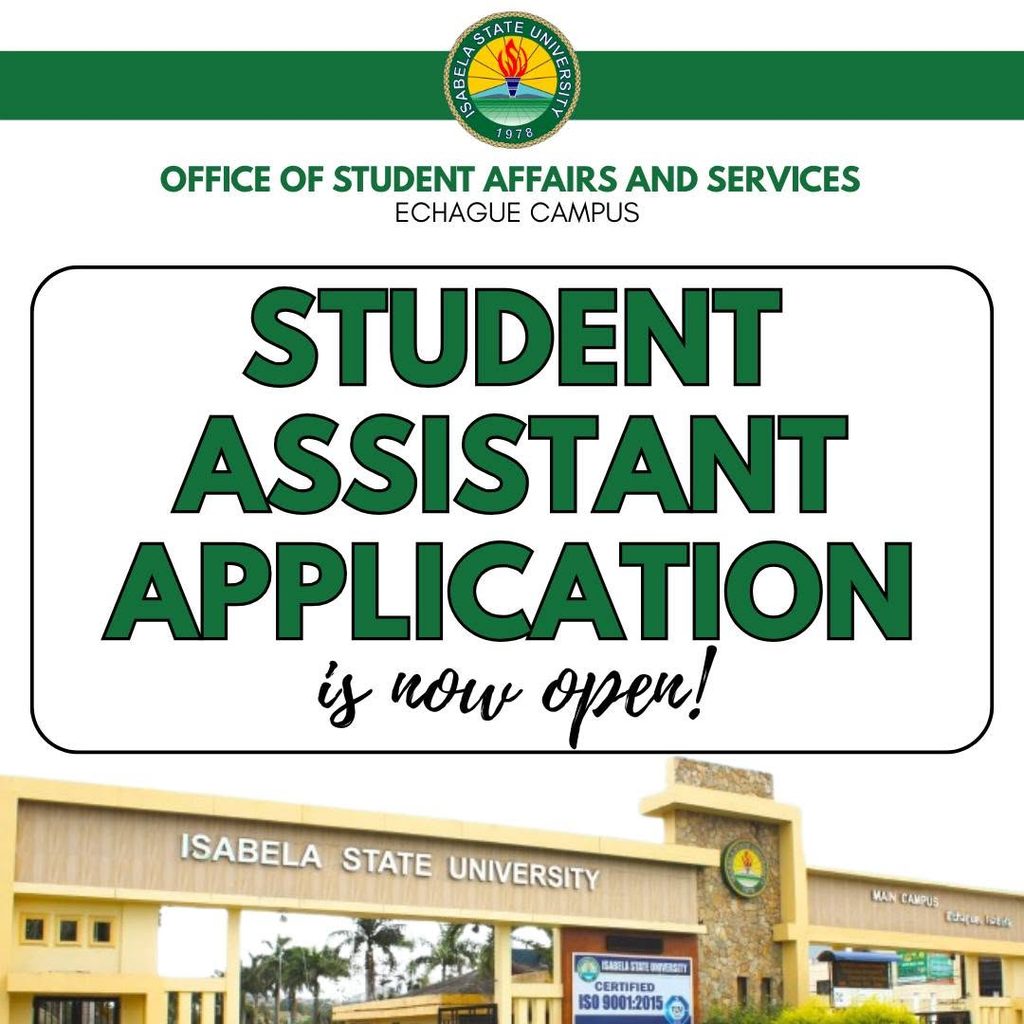
Effective Semester of Academic Year 2021–2022, Isabela State University (ISU) has implemented the Student Assistantship Program (SAP) as part of its institutional commitment to providing financial assistance, practical work experience, and skills development opportunities to students, particularly those from economically disadvantaged households, including students belonging to the bottom 20% income group.
The program provides qualified students with opportunities to render temporary or short-term services in various university offices and units while receiving financial compensation for their work. Through this initiative, student assistants gain valuable workplace experience, develop essential professional competencies, and earn additional income to help cover educational and personal expenses, including transportation, meals, learning materials, and other daily necessities.
Beyond financial assistance, the Student Assistantship Program promotes experiential learning, employability, personal development, and financial independence by enabling students to acquire practical skills while pursuing their academic studies. The program also seeks to alleviate financial pressures that may contribute to academic difficulties or discontinuation of studies, thereby supporting student retention and successful degree completion.
3. Student Loan Program
Based on the Board Resolution No. 91 series of 2003 or the establishment of a Student Loan Program (SLP), all bonafide students can avail this loan to aid them in their school needs such as payment in their school project/s, allowances, payment of boarding house and among others.
4. Free Internet Access for Academic Use
Taking a significant step toward equitable access to online resources, the ISU Echague has implemented free internet access for students, with vouchers dispatched to college secretaries on February 21, following the release of Memorandum No. 049, s. 2024 from the Office of the Executive Officer. These vouchers serve as gateways to the campus internet network, ensuring seamless connectivity for academic purposes. Students may avail themselves of these vouchers from their respective college secretaries whenever they need internet access on campus. This initiative reduced the financial burden of internet expenses on students, especially those from economically disadvantaged families. Free access to digital resources ensures that poverty does not hinder opportunities for academic success, thereby supporting social mobility and inclusive education.
As part of its commitment to promoting digital inclusion and equitable access to quality higher education, Isabela State University Echague (Main) Campus provides free internet connectivity to support students’ academic learning, research, and access to online educational resources. This initiative benefits students, helping alleviate internet-related expenses, particularly among learners from economically disadvantaged households, while ensuring that financial constraints do not limit their participation in digital learning activities. Through this mechanism, students can access the campus internet network free of charge to conduct research, retrieve learning materials, complete academic requirements, communicate with instructors, and utilize online learning platforms.
5. Free Provision of Food and Beverages
5.1 Free Porridge (Lugaw) and Drinking Water
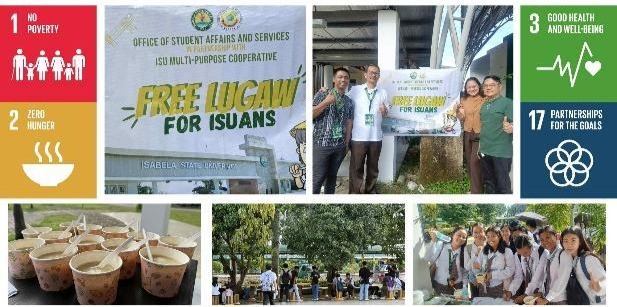
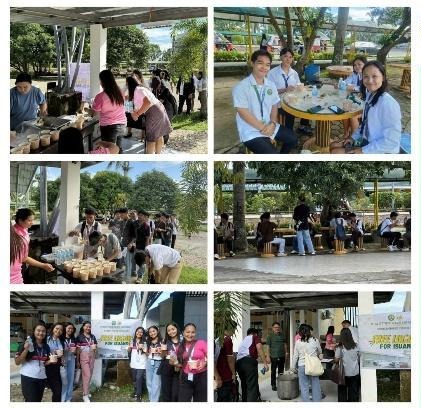
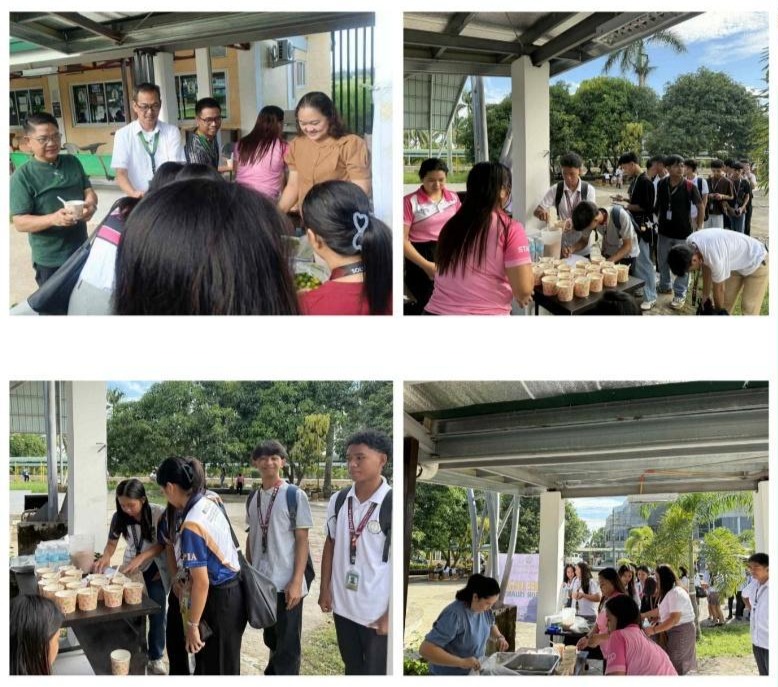
As part of its commitment to promoting student welfare, food security, and inclusive access to higher education, Isabela State University (ISU), through the Office of Student Affairs and Services (OSAS), in partnership with the ISU Multi-Purpose Cooperative, implemented the Free Porridge (Lugaw) and Drinking Water Program on August 18, 2025. Initially conducted at ISU Echague Campus, the initiative was subsequently adopted by other ISU campuses and accredited student organizations, expanding its reach and strengthening institution-wide efforts to address students’ basic needs.
The program provides complimentary meals and drinking water to students, particularly those from economically disadvantaged households, to help alleviate daily food expenses and reduce financial pressures that may affect their academic participation. Through the collective efforts of university offices, institutional partners, and student organizations, the initiative benefited a total of 4,819 students, with an estimated food assistance value of ₱256,000.00.
Beyond providing immediate food assistance, the program promotes student well-being, social inclusion, and a supportive learning environment. By reducing out-of-pocket expenses for meals, the initiative enables financially challenged students to allocate their limited resources to other essential educational needs, including transportation, learning materials, and academic requirements.
Through the expansion of this initiative across its campuses, ISU demonstrates its sustained commitment to addressing the socioeconomic challenges faced by students. By integrating food assistance into its broader student welfare and support programs, the University strengthens educational inclusion and helps create an environment where financial difficulties are less likely to hinder students’ academic participation and educational aspirations.
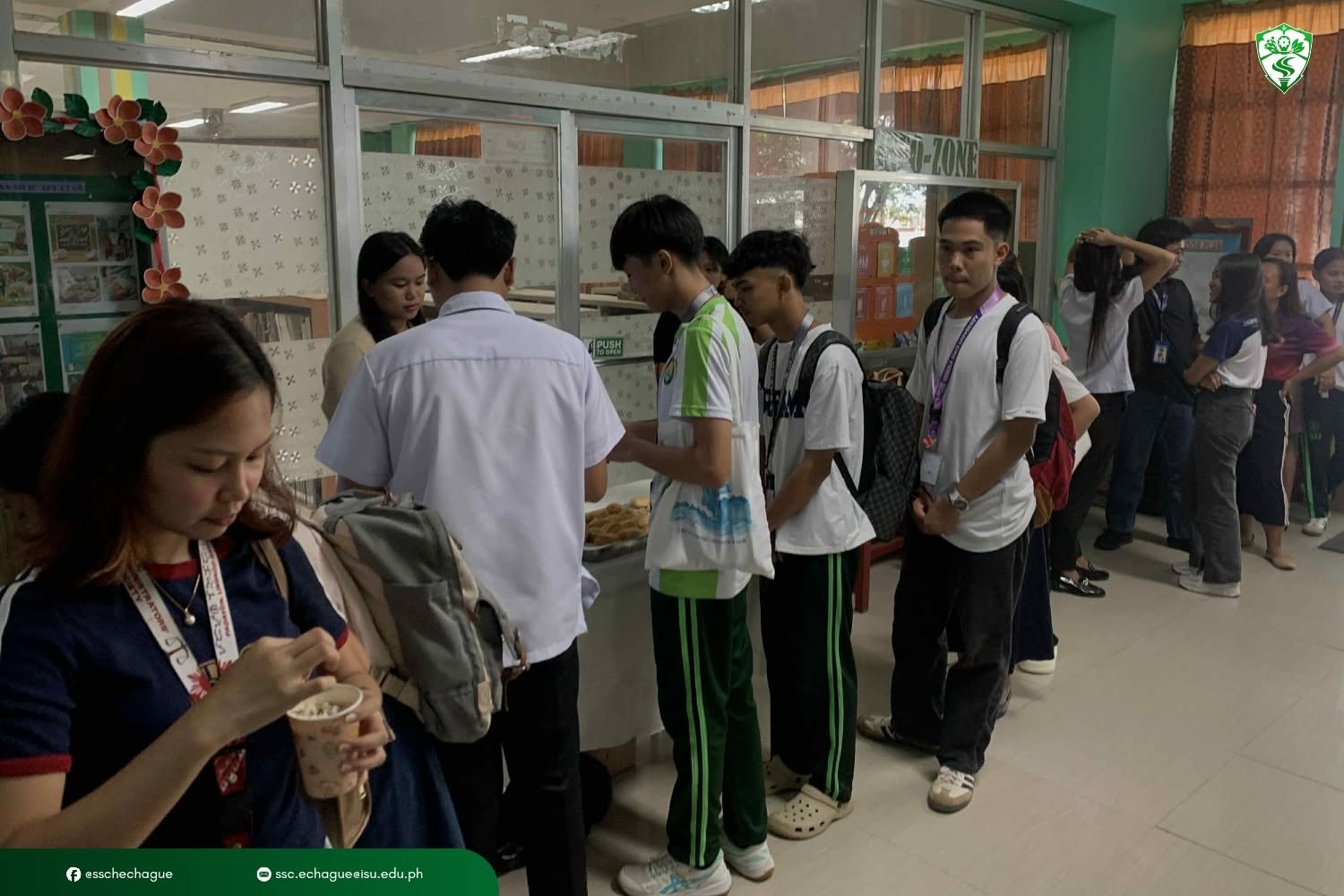
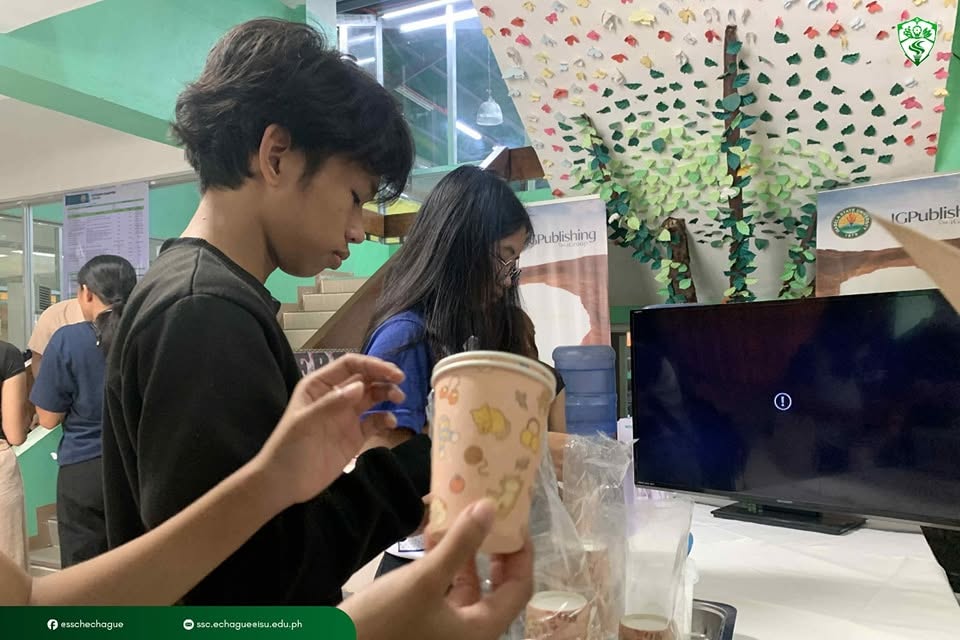
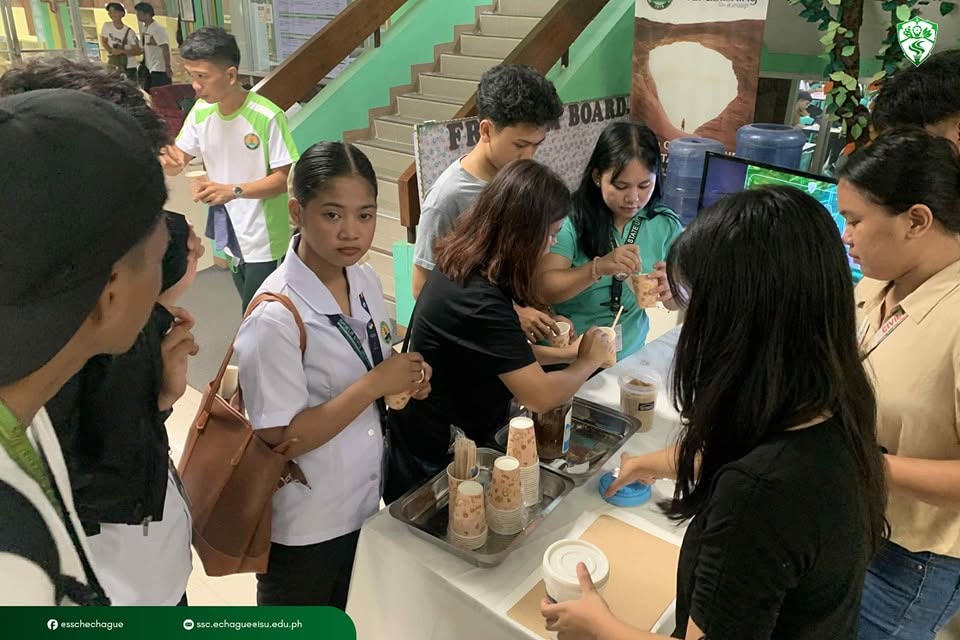
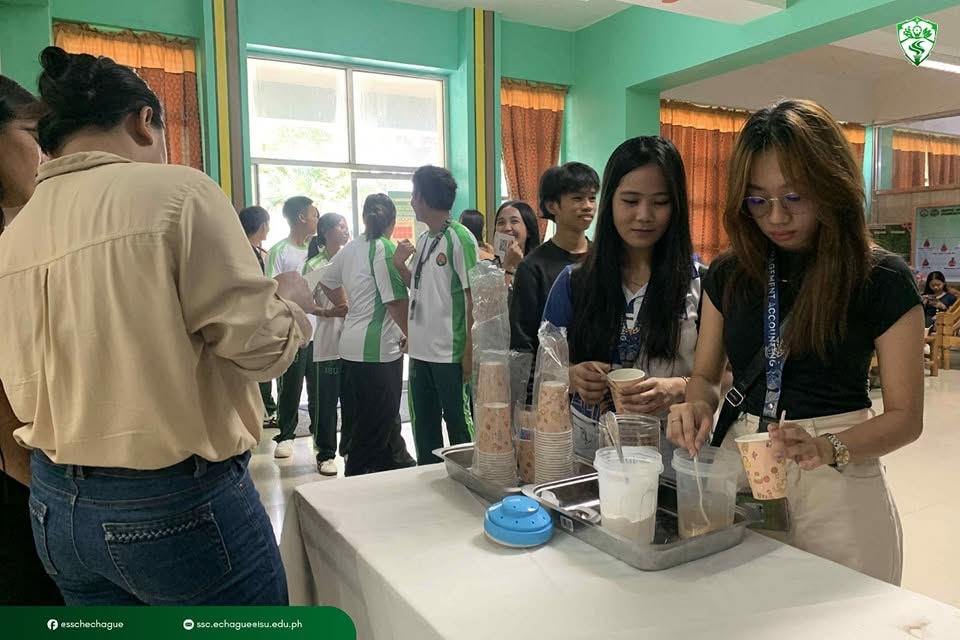
5.2 Free Coffee and Pandesal (Bread)
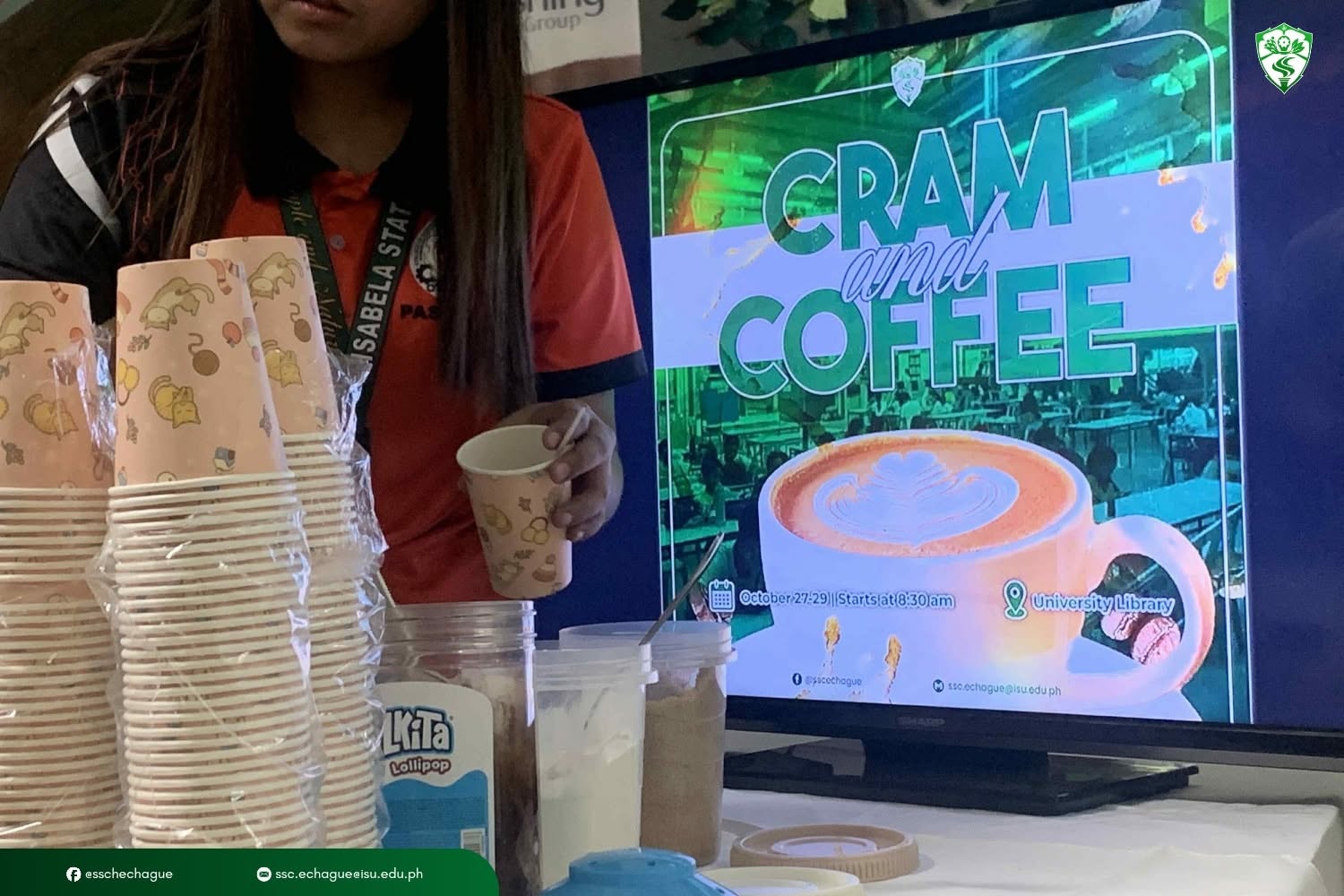
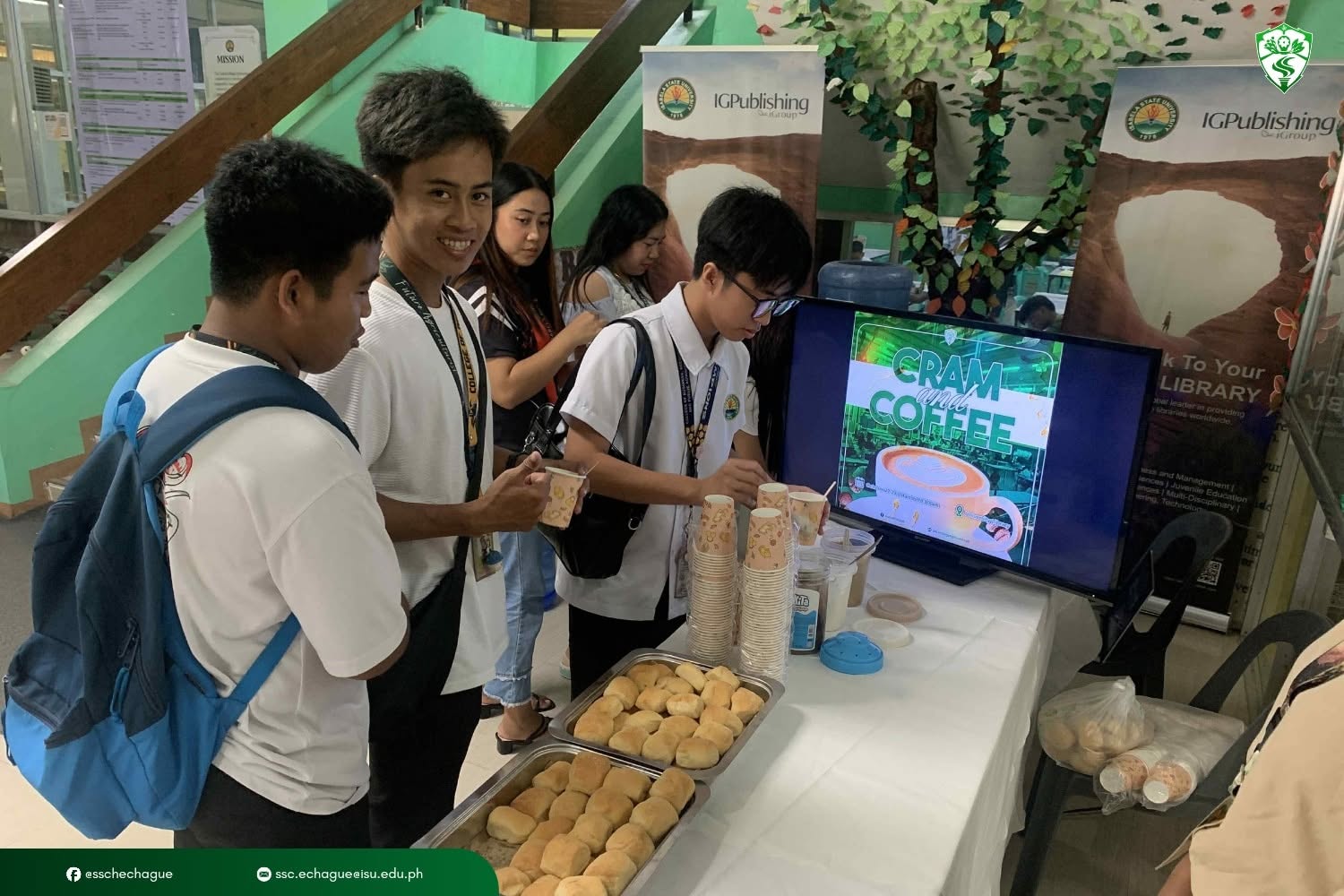
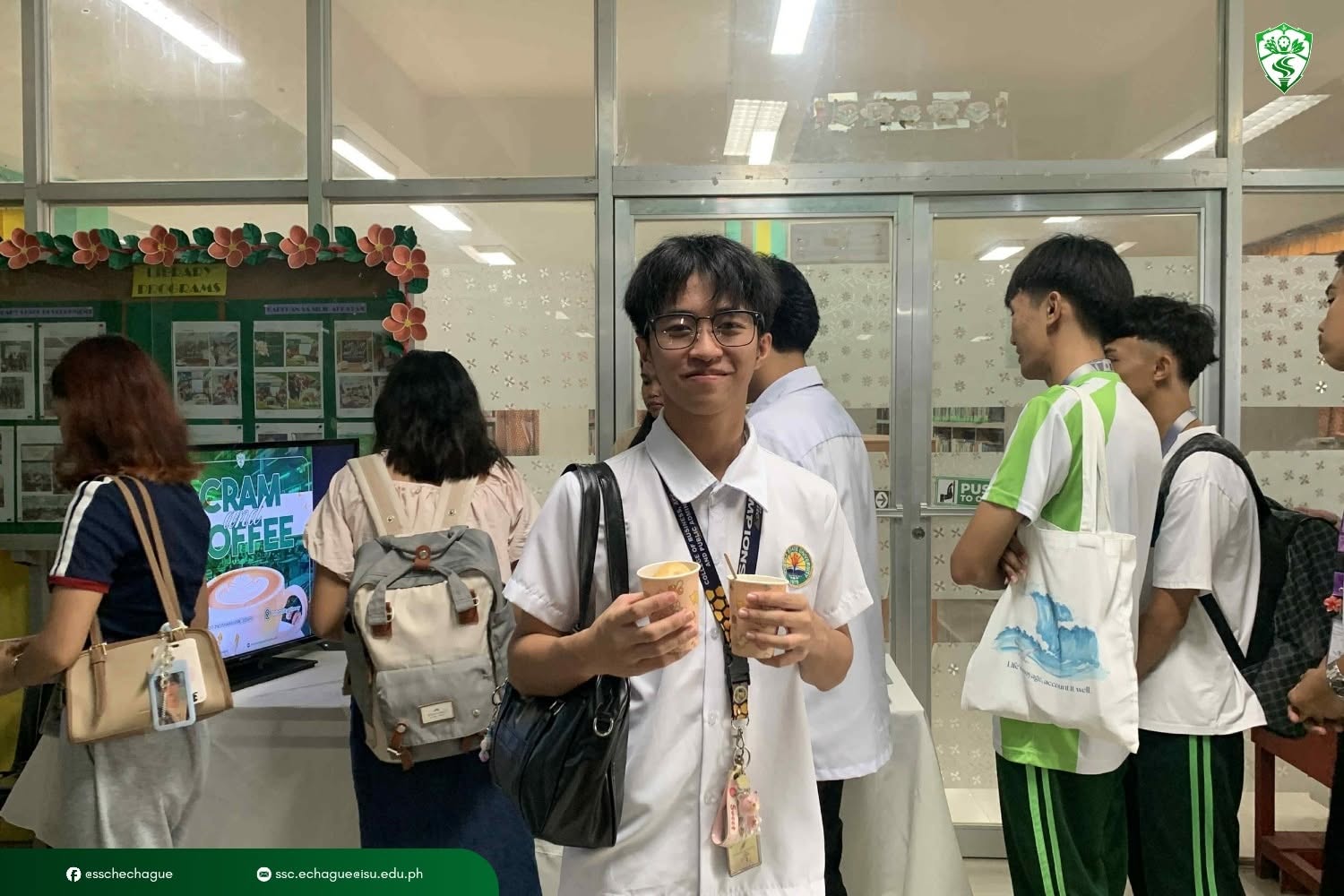
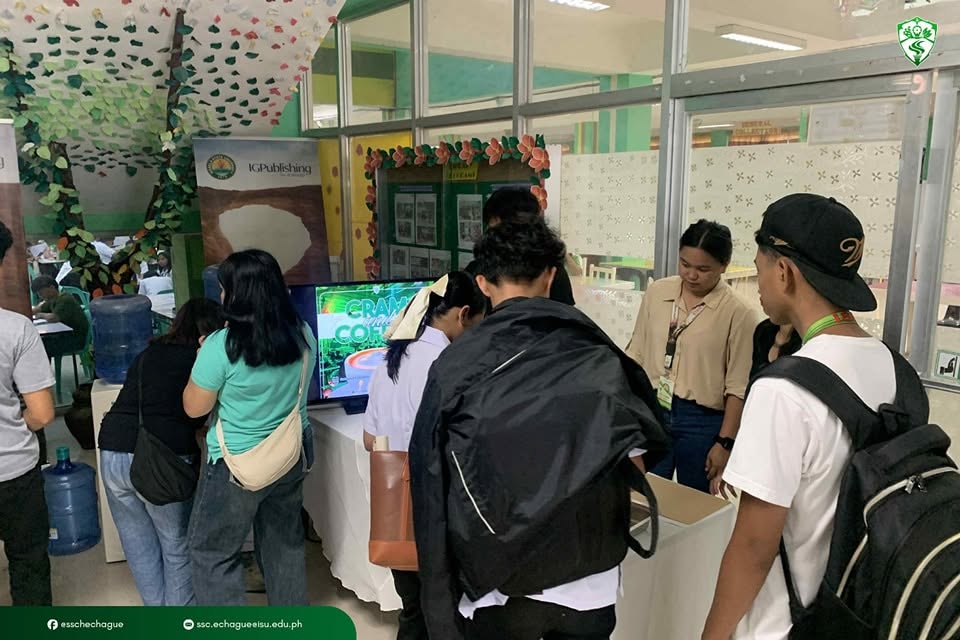
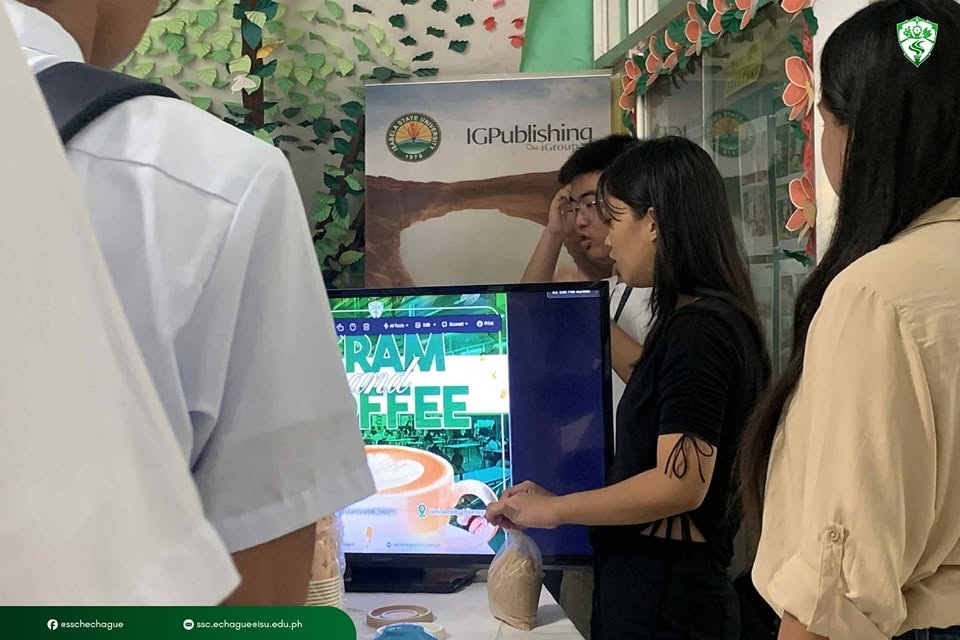
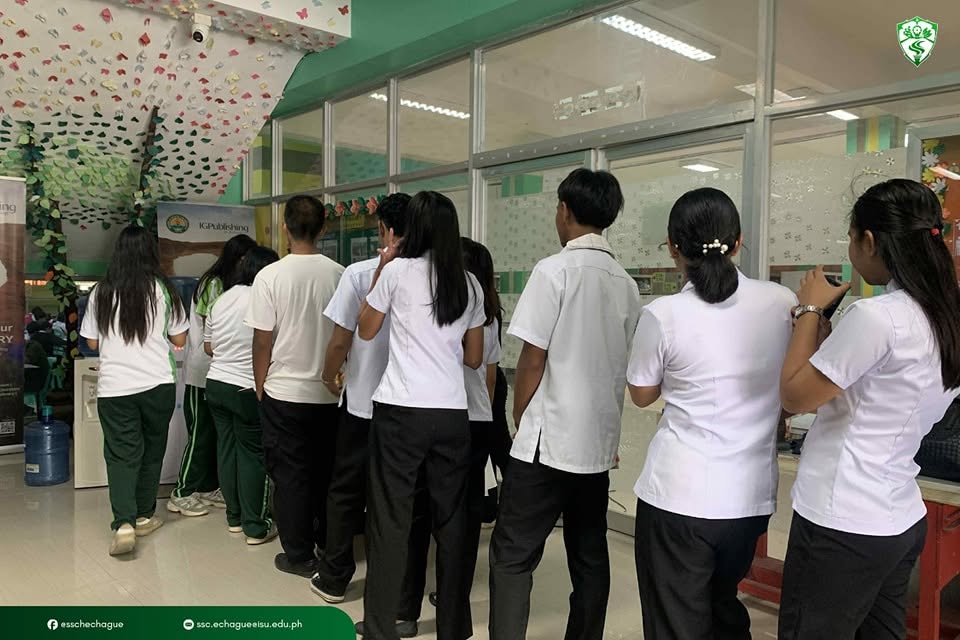
The Kapehan sa Silid-Aklatan: Brew & Review Program is a student-centered initiative spearheaded by the Isabela State University (ISU) Library Office and implemented across the University’s campuses to support students during examination periods. The program provides complimentary coffee and a conducive learning environment, encouraging students to maximize library resources, prepare for examinations, and strengthen their academic performance.
Recognizing the financial and academic challenges students may experience during examination periods, the initiative aims to alleviate minor daily expenses, particularly for students from economically disadvantaged households, while promoting effective study habits and academic preparedness. By offering free coffee alongside access to library facilities, learning materials, and study spaces, the University provides practical support to students preparing for their preliminary, midterm, and final examinations.
Beyond providing refreshments, the program promotes student well-being, academic engagement, and equitable access to learning resources. Its implementation across ISU campuses reflects the University’s commitment to creating an inclusive and supportive academic environment where students can focus on their studies regardless of their socioeconomic circumstances.
6. Free Transportation Programs
6.1 Free Bus Rides “Biyaheng ISUdyante”
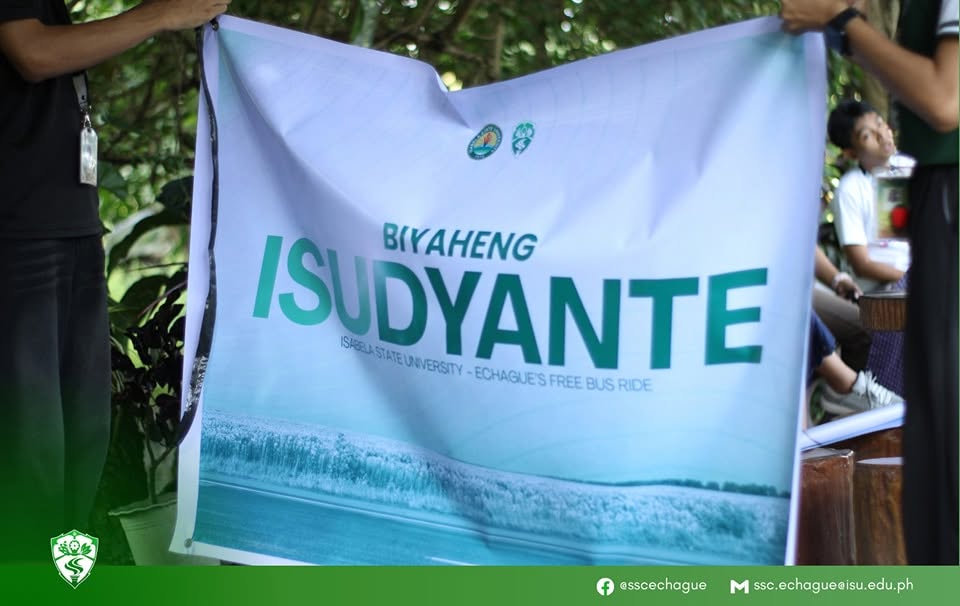
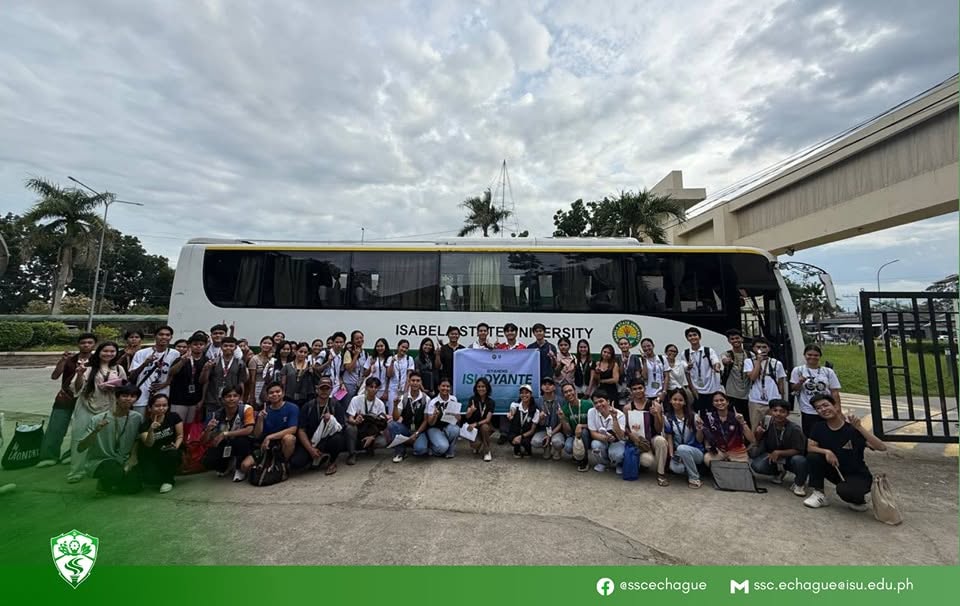
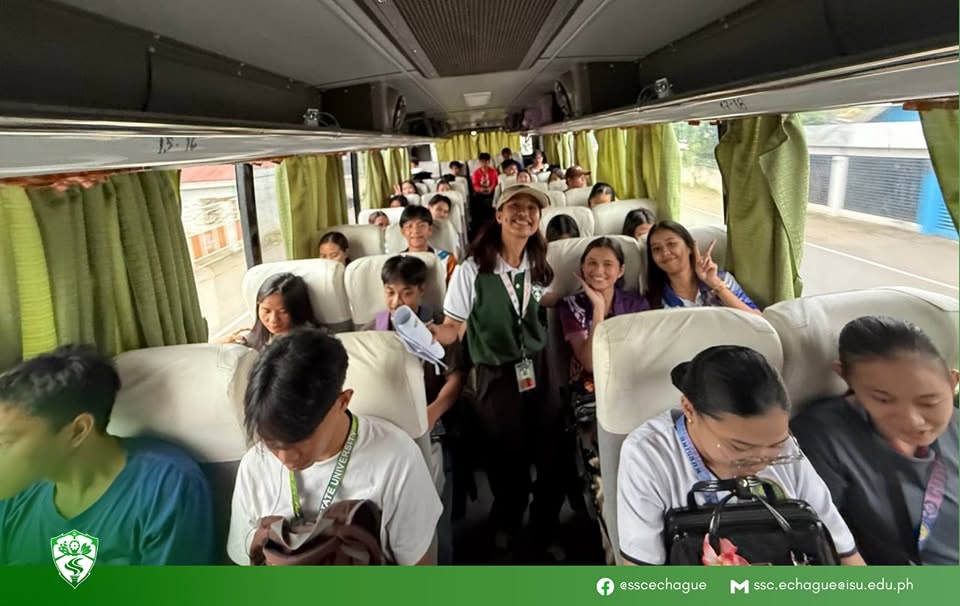
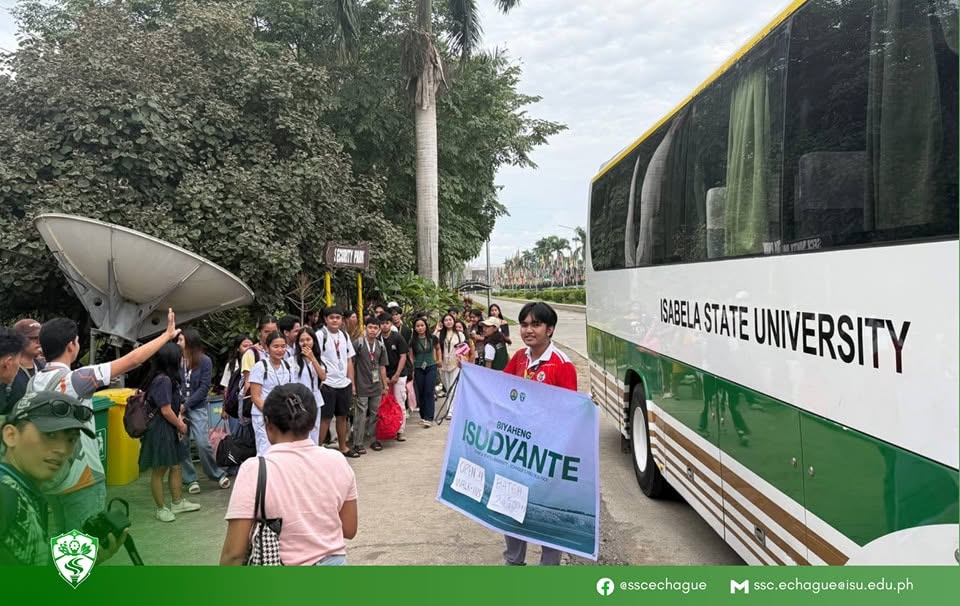
As part of its commitment to promoting inclusive and equitable access to higher education, Isabela State University – Echague Campus, through the Supreme Student Council (SSC), initiated and institutionalized the Biyaheng ISUdyante: Year-Long Free Monthly Student Transportation Program for started on September 20, 2025. This student-led initiative aims to alleviate transportation expenses, particularly among students from economically disadvantaged households, while providing safe, accessible, and reliable transportation services.
Implemented monthly throughout the academic year, the program provides free bus transportation along major travel routes, enabling students to travel more conveniently while reducing their commuting expenses. The initiative is particularly beneficial to students who regularly travel between their homes and the University, as well as those whose families experience financial difficulties in meeting transportation costs. By providing transportation assistance, the program also helps ease the financial burden on parents and guardians who support their children’s educational needs.
The program is estimated to benefit nearly 1,500 students, demonstrating the Supreme Student Council’s commitment to addressing students’ everyday financial challenges through practical and responsive welfare initiatives. Beyond providing free transportation, the program promotes student mobility, accessibility, and equitable opportunities to participate in academic activities.
Through the Biyaheng ISUdyante Program, the Supreme Student Council demonstrates the significant role of student leadership in advancing institutional sustainability initiatives. By integrating transportation assistance into student welfare programs, ISU Echague Campus strengthens its commitment to reducing financial barriers, supporting educational accessibility, and promoting an inclusive learning environment where students can pursue their academic aspirations with reduced transportation-related financial pressures.
6.2 Free on Campus Bicycles
The free transport bicycles for ISU students aim to reduce the impact of poverty by removing transportation expenses as a hindrance to their education. The transport bikes are available for use at designated bike stations near the campus’ main gate, colleges, and student dormitories, providing easily accessible transportation for students. The transportation bikes are expected to enhance the mobility and accessibility of the university community, while simultaneously reducing the carbon footprint associated with conventional modes of transportation.
8. Free Charging Stations
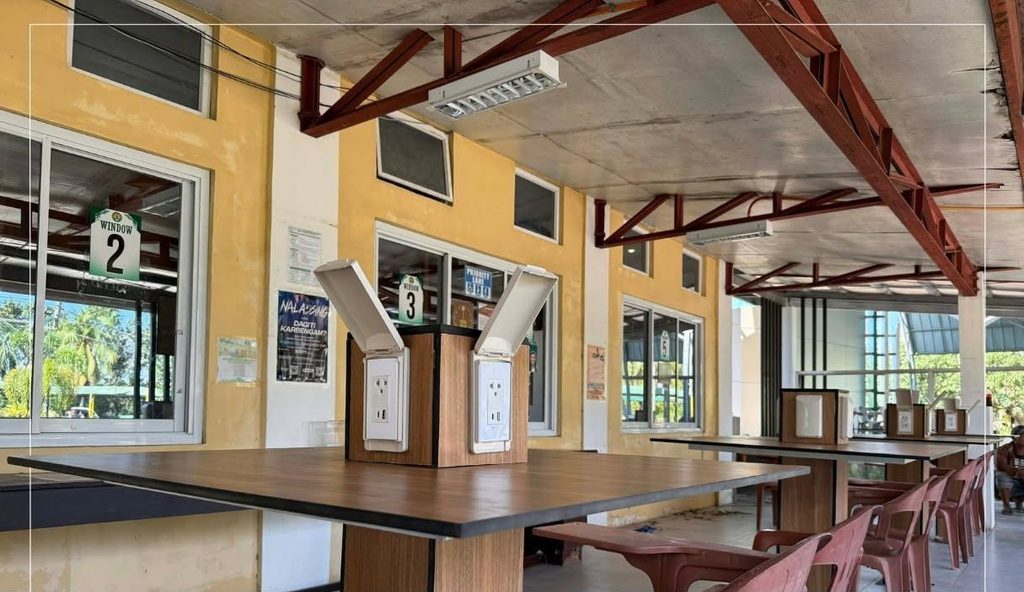
Isabela State University (ISU)–Echague Campus, through its Supreme Student Council (SSC), implemented the Free Charging Station Project to improve access to essential student services and support academic activities. Funded through the Student Development Fund (SDF-70%), the initiative provided eight charging stations at the Student Center under the Office of Student Affairs and Services (OSAS).
Officially launched on December 2, 2025, the project provides students with free access to charging facilities equipped with USB, Type-C, and standard electrical outlets. Each station has four charging ports, offering a total of 32 charging ports for student use during school hours.
The initiative addresses students’ daily needs by providing accessible charging facilities for mobile devices used in learning, research, and communication. By offering these services free of charge, ISU helps reduce minor student expenses, supports digital accessibility, and promotes a more inclusive and student-friendly learning environment, particularly for students from economically disadvantaged households.
9. Affordable Student Housing with Free Wi-fi, Electricity and Water
Isabela State University, through its Office of Student Affairs and Services, offers affordable student housing equipped with free Wi-Fi, electricity, and water, providing learners with a safe, comfortable, and conducive living environment. This is a part of the University’s commitment to student welfare and inclusive education by ensuring that every student has access to essential amenities that support academic success and holistic development.
10. Free Medical Consultations and Check-Ups
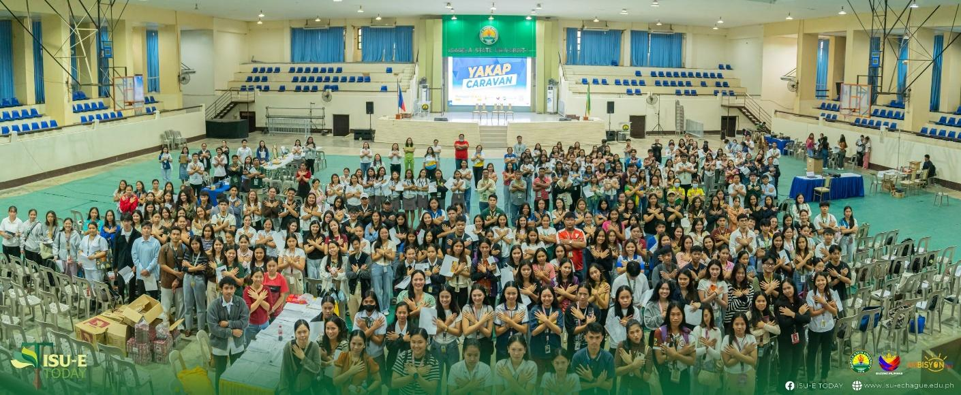
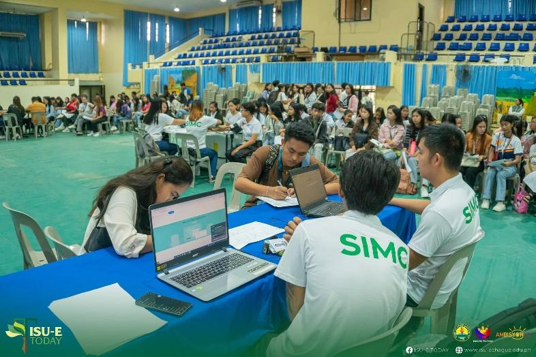
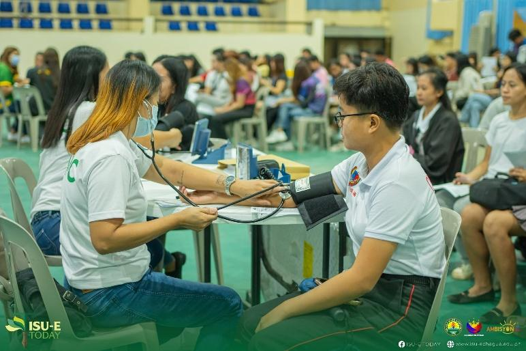
As part of its commitment to promoting inclusive healthcare, student welfare, and equitable access to essential health services, Isabela State University (ISU) – Echague Campus, through the Office of Student Affairs and Services (OSAS) and University Health Services, in partnership with the Philippine Health Insurance Corporation (PhilHealth), successfully conducted the PhilHealth YAKAP Caravan: Yaman ng Kalusugan Program on November 25, 2025. The initiative aimed to strengthen access to affordable healthcare, promote preventive health practices, and reduce health-related financial burdens, particularly among students from economically disadvantaged households.
The caravan facilitated the distribution of PhilHealth Membership Data Records (MDRs) and identification cards to newly registered student-members, providing essential documentation to support their access to eligible healthcare benefits and services. Hundreds of students participated in the activity, reflecting the University’s efforts to improve health insurance awareness and facilitate access to healthcare protection among its student population.
In addition to membership assistance, the caravan provided various medical and preventive healthcare services to students, faculty, and staff. These included basic laboratory examinations, medical check-ups and consultations, dental extractions and basic dental care, obstetrics and gynecology (OB-GYN) consultations, ear, nose, and throat (ENT) examinations, and mental health consultations. Through these services, the University helped reduce potential out-of-pocket healthcare expenses while encouraging early health assessment, preventive care, and timely medical consultation.
11. Free Legal Assistance Program
Pursuant to Board Resolution No. 60, series of 2022, Isabela State University (ISU) established its Legal Aid Clinic as part of its institutional commitment to social justice, poverty reduction, and inclusive community development. The program aims to provide accessible legal assistance to underserved and economically disadvantaged individuals, particularly students from low-income households and vulnerable community members who may face financial barriers to obtaining professional legal services.
Through the Legal Aid Clinic, the University seeks to empower individuals and communities by promoting legal awareness, protecting fundamental rights, and improving access to justice. The initiative provides opportunities for qualified beneficiaries to obtain legal guidance, consultations, and assistance without the financial burden ordinarily associated with professional legal services. By addressing legal concerns that may affect individuals’ financial security, family welfare, and access to essential rights, the program contributes to reducing socioeconomic inequalities and strengthening community protection mechanisms.
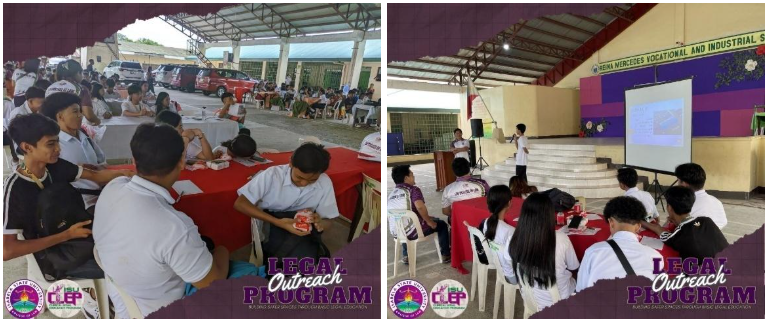
As part of its implementation, ISU-Cauayan Campus integrated free legal assistance into its community extension program, “Acts of Kindness: From Our Campus to Your Homes,” conducted on December 23, 2025 in Barangays Nagcampegan and San Luis, Cauayan City, Isabela. During the outreach activity, legal consultations and assistance were provided by Atty. Genesis D. Nool, Atty. Samuel R. Santos, Atty. Bannilyn Mae S. Gamit, and Atty. Roberto S. Valenzuela. The activity also offered free medical and dental services and distributed 300 gift packs to residents, particularly families affected by storms and flooding.
The integration of legal assistance into community outreach activities demonstrates the University’s efforts to extend essential professional services beyond its campuses and reach individuals who may have limited access to legal support. By providing these services free of charge, ISU helps reduce potential legal expenses, promotes awareness of legal rights, and supports the ability of disadvantaged individuals and families to address legal concerns.
12. Cash-for-Work Program for Graduates
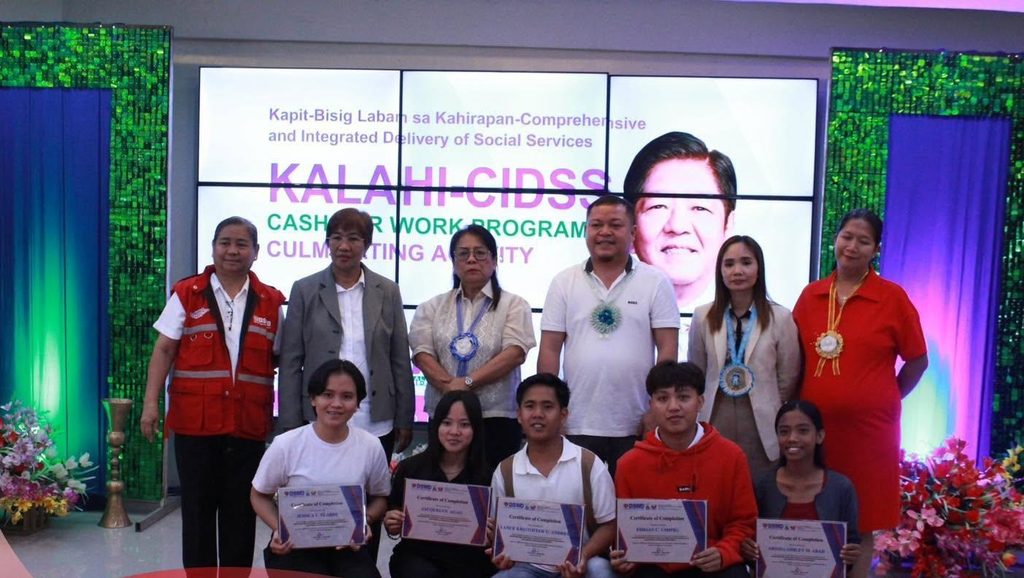
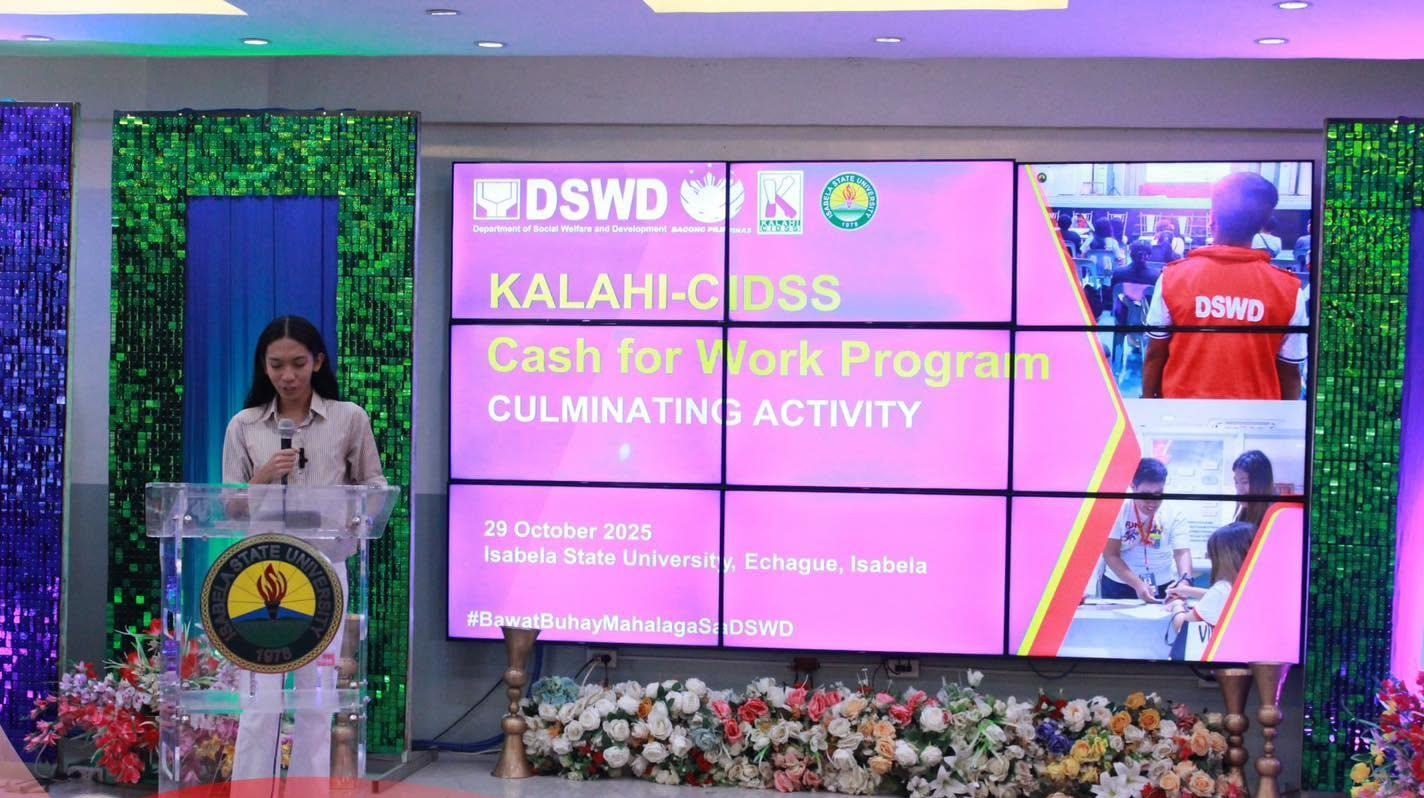
As part of its commitment to poverty reduction, employment generation, and socioeconomic empowerment, Isabela State University (ISU), in partnership with the Department of Social Welfare and Development (DSWD) Region II, implemented the KALAHI-CIDSS Cash-for-Work Program for State Universities and Colleges (SUC) Graduates. The initiative provided temporary employment and income-generating opportunities to college graduates from Academic Year 2022-2023, and 2023-2024 particularly those experiencing financial difficulties and challenges in securing employment after graduation.
The program aimed to provide immediate financial assistance through temporary work opportunities while enabling beneficiaries to gain practical work experience, develop professional competencies, and strengthen their employability. By providing compensation for services rendered, the initiative helped alleviate short-term financial pressures among graduates and their families while supporting their transition from higher education to employment.
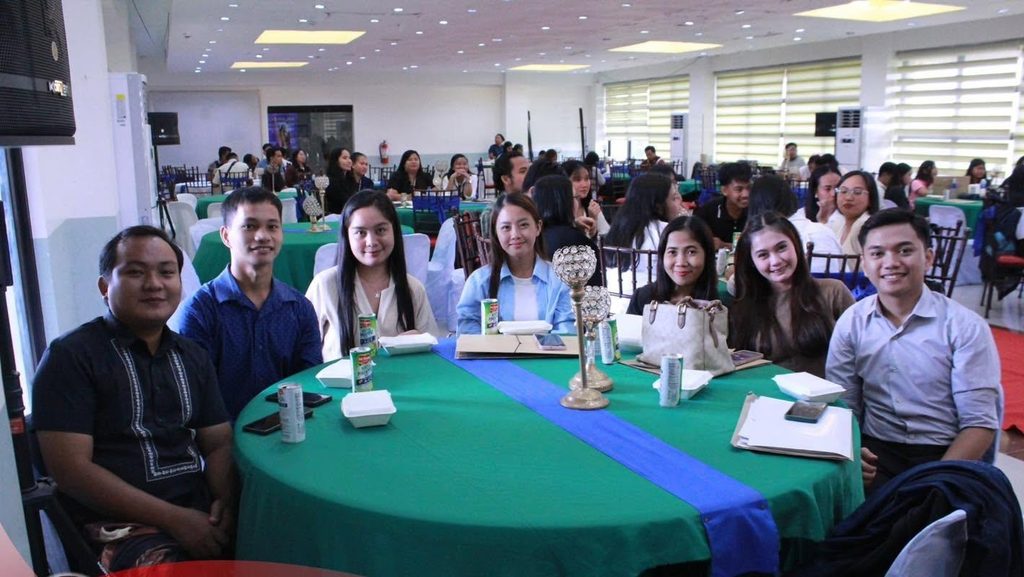
On October 29, 2025, ISU Echague Campus, together with DSWD Region II and partner government agencies, conducted the program’s culminating activity, which included a ceremonial payout, awarding of certificates, and financial literacy training to promote responsible financial management among beneficiaries.
Through this program, ISU strengthens its commitment to poverty reduction by supporting graduates’ financial well-being, employability, and opportunities for socioeconomic advancement.
COMMUNITY ANTI-POVERTY PROGRAMS
1. Partnerships with Government Agencies and NGOs for Community Livelihood and Enterprise Development
Isabela State University (ISU) upholds its commitment to inclusive community development through strategic partnerships with government agencies, nongovernmental organizations (NGOs), and other stakeholders, particularly in serving underserved, economically disadvantaged, and marginalized communities. Guided by CHED Memorandum Order No. 20, s. 2011, the University allocates 10% of its tuition fee collections to extension services, supporting its institutional mandate to promote community empowerment and sustainable development.
Through the General Appropriations Act (GAA) and Special Budget (SB) No. 164, ISU earmarked ₱16,773,833.08 to support community extension initiatives. These resources facilitate livelihood development, entrepreneurial training, mentorship, technical assistance, and access to university expertise and facilities. Such interventions aim to strengthen local capacities, encourage the establishment of financially and socially sustainable enterprises, and create income-generating opportunities for economically disadvantaged communities.
In 2025, ISU successfully completed 151 extension programs, demonstrating its sustained commitment to community engagement and socioeconomic development. Through collaborative and university-supported initiatives, ISU continues to promote entrepreneurship, improve livelihood opportunities, strengthen community resilience, and contribute to poverty reduction and inclusive economic growth.
2. Local Start-Up Assistance
2.1 Bamboo Shoot Noodles Livelihood Training Program for the Indigenous Peoples (IP) Community
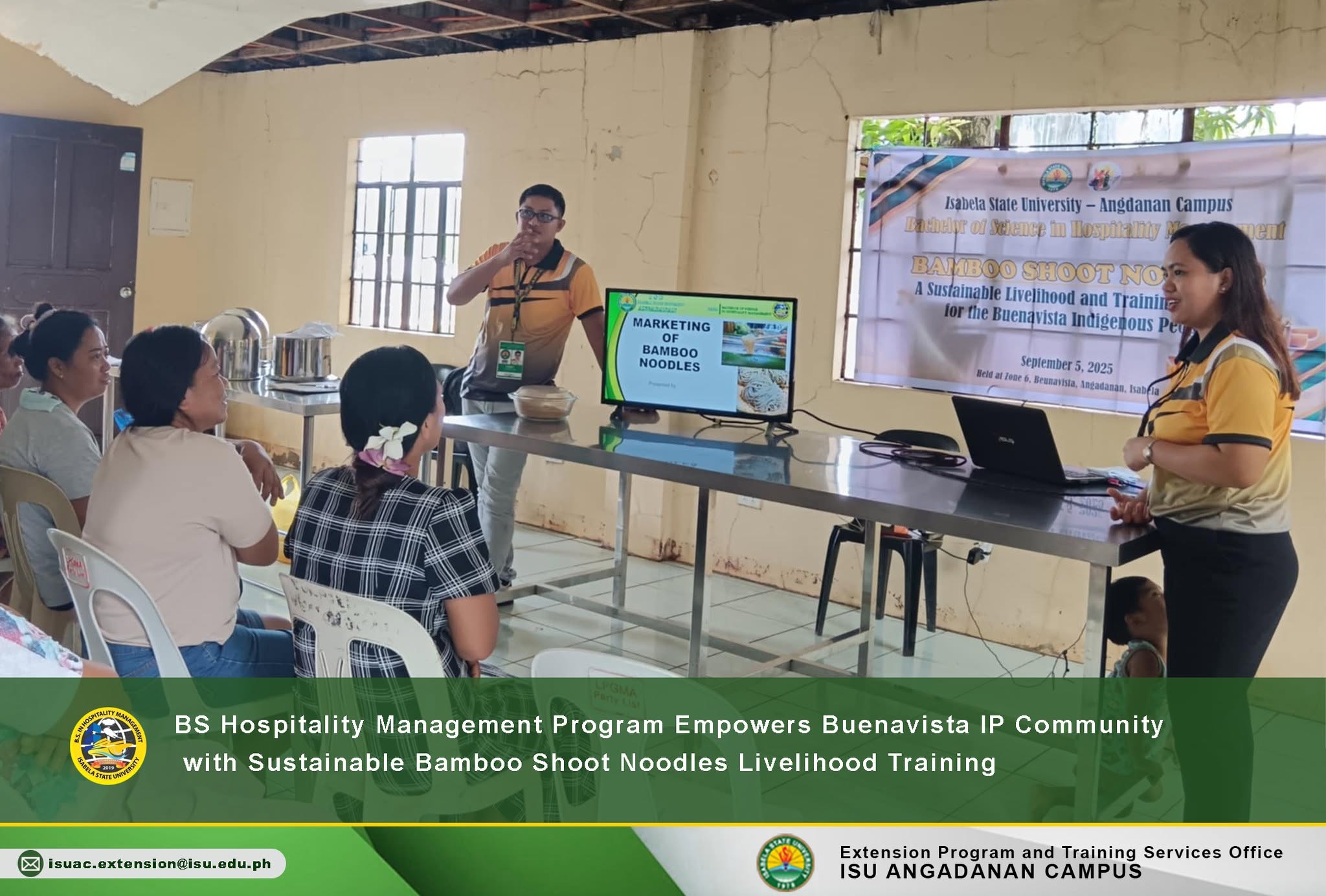
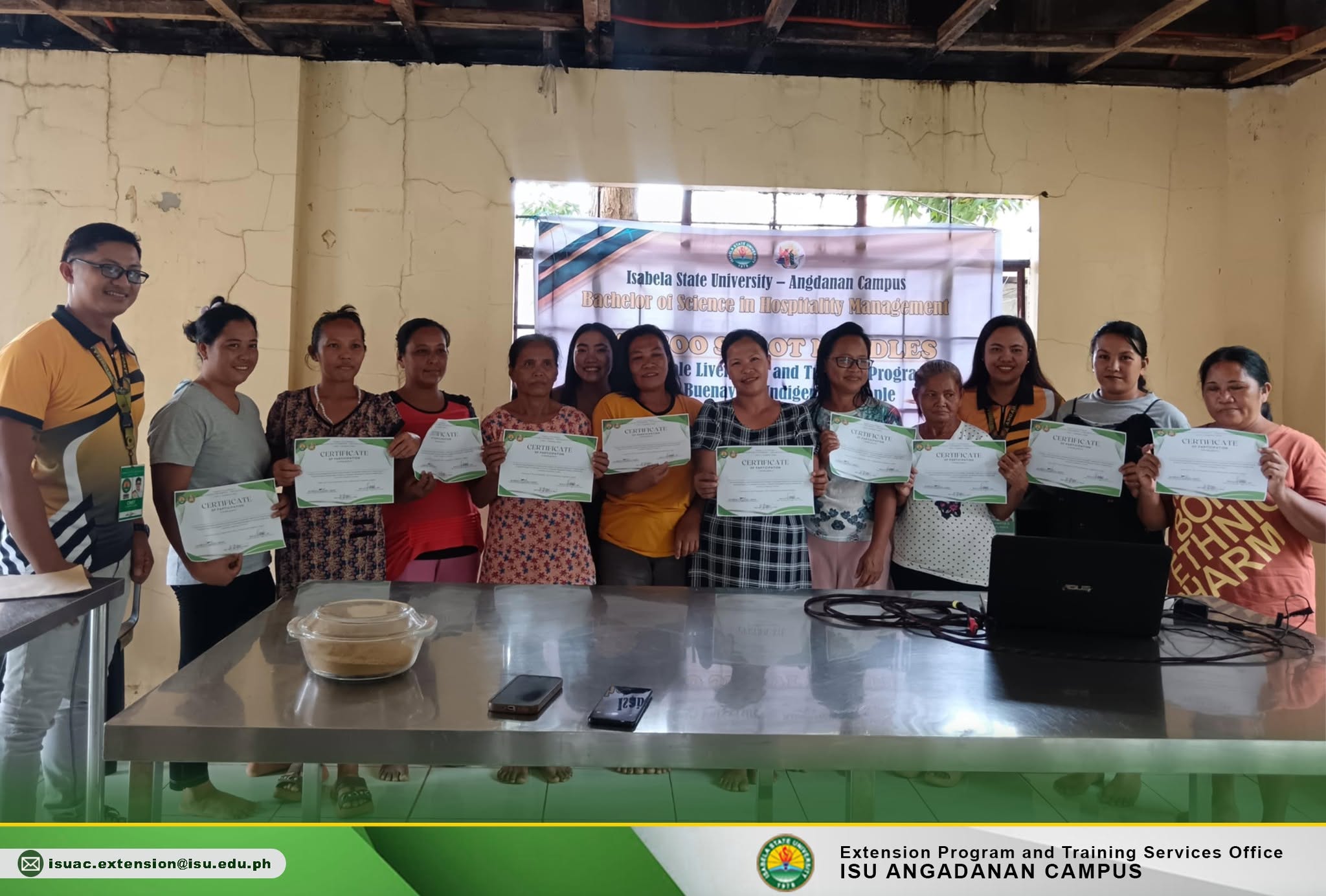
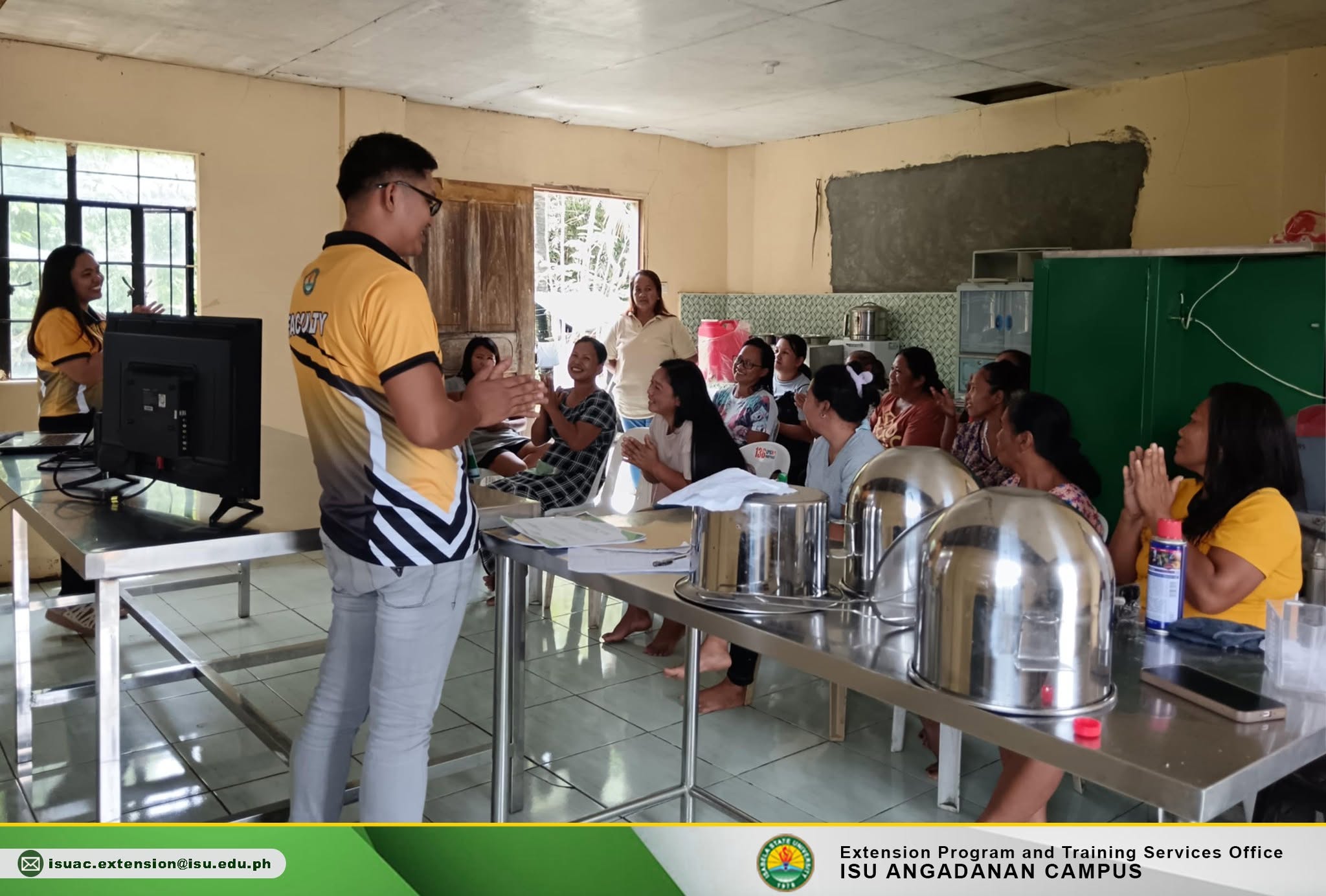
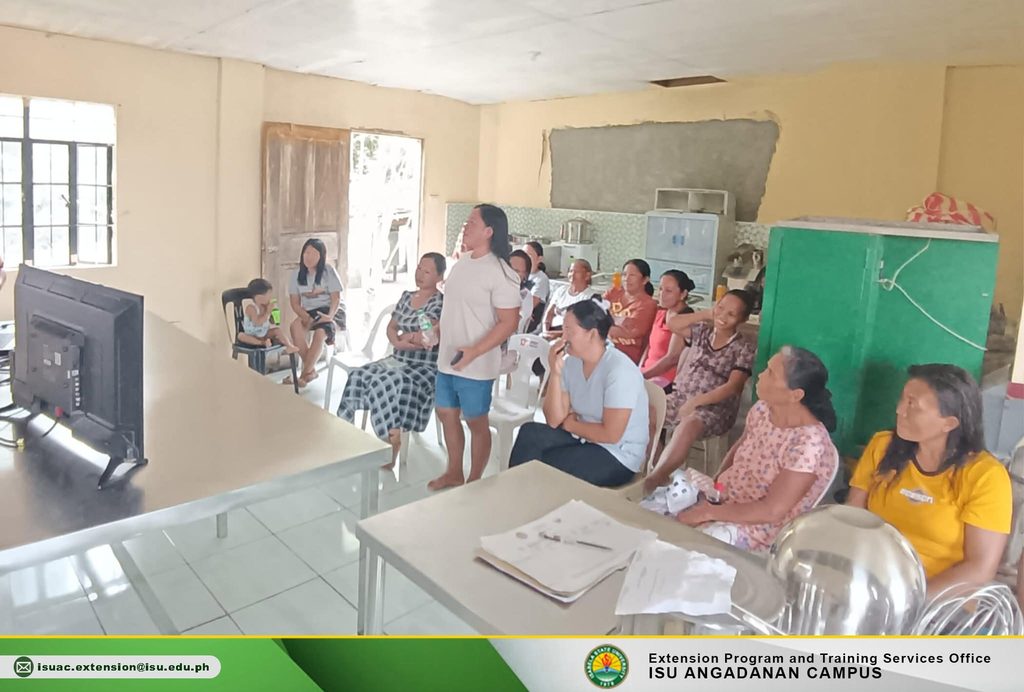
Isabela State University (ISU)–Angadanan Campus, through its Bachelor of Science in Hospitality Management Program, implemented the Bamboo Shoot Noodles Livelihood Training Program for the Buenavista Indigenous Peoples (IP) community, to support livelihood development and community empowerment.
The initiative provided practical training on transforming locally available bamboo shoots into marketable noodle products, creating opportunities for income generation, food security, and small-scale business development. Participants also received training in product branding, pricing, and marketing strategies to strengthen their entrepreneurial capabilities and promote financially sustainable livelihood activities.
The University supported the delivery of technical training, product development activities, and entrepreneurial guidance, helping reduce the financial barriers associated with acquiring livelihood skills and exploring business opportunities. The program also promoted the sustainable utilization of local resources, cultural preservation, and economic inclusion among Indigenous Peoples.
2.2 Rag Weaving Livelihood Training Program for Women and Solo Parents
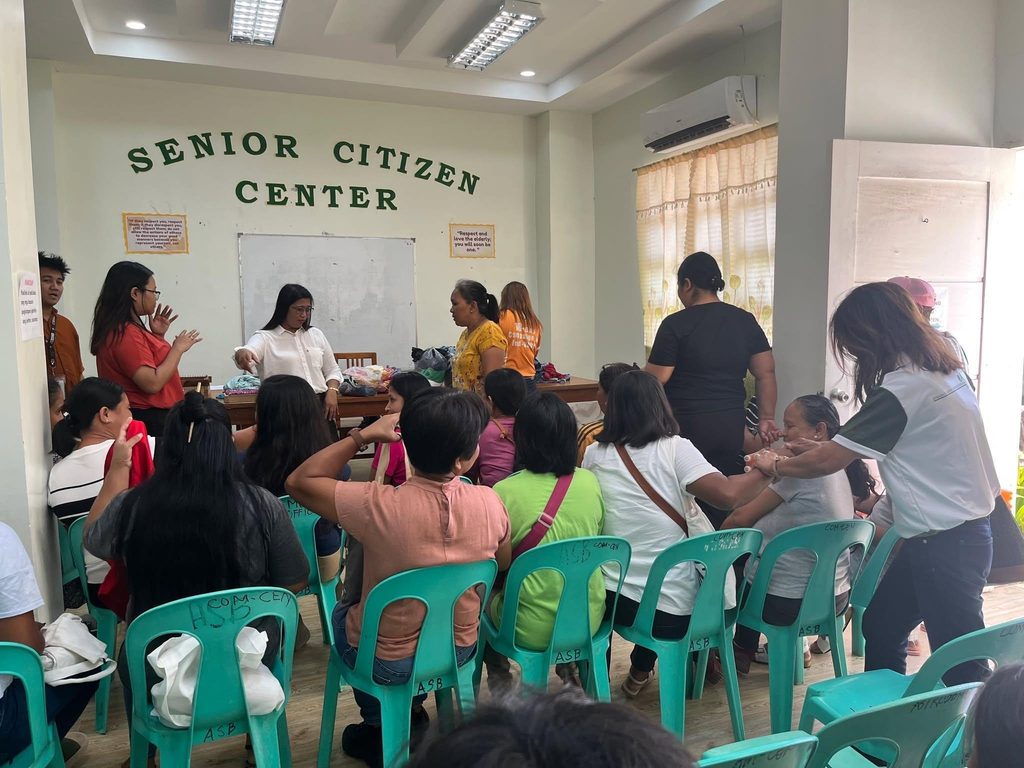
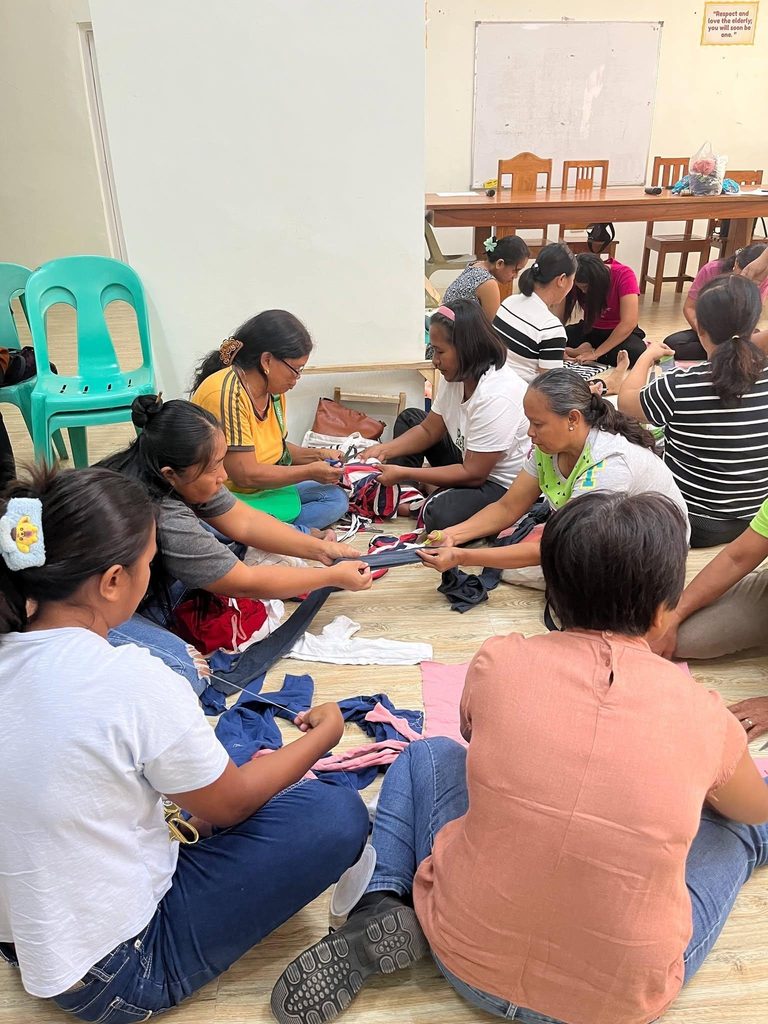
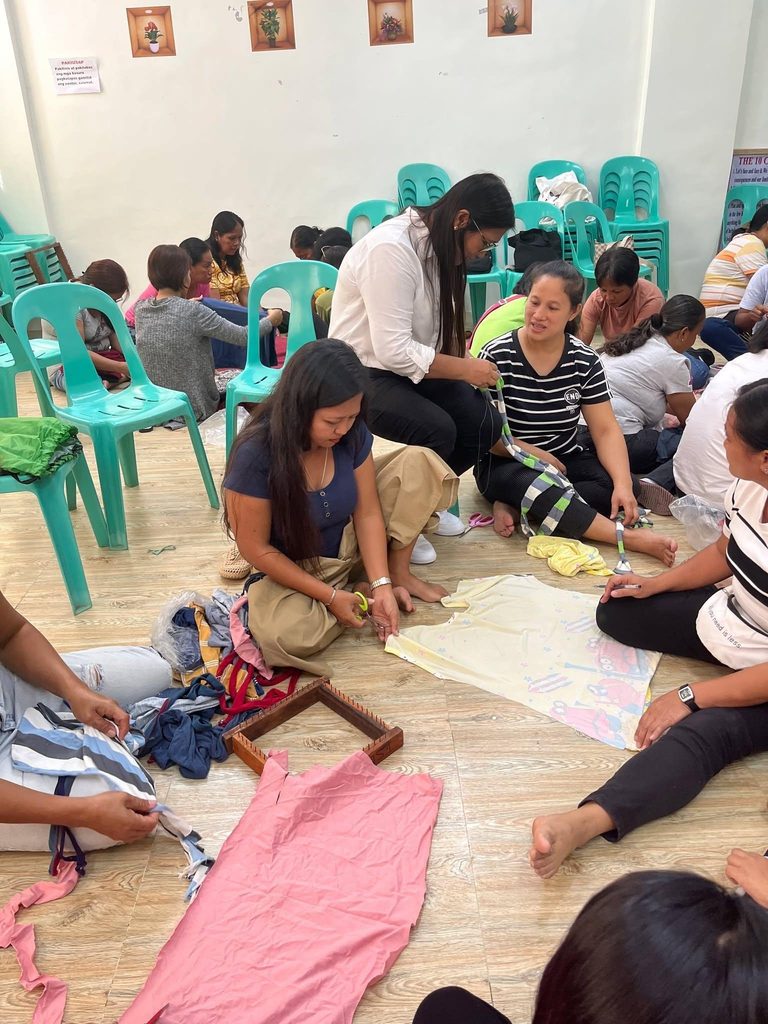
Isabela State University (ISU)–San Mateo Campus promotes sustainable local entrepreneurship through livelihood training and technical assistance. On April 10, 2025, ISU conducted a Rag Weaving Livelihood Training Program at the Santa Catalina Sustainable Livelihood Agriculture Cooperative (SCLAC) in Tumauini, Isabela. The initiative empowered women, solo parents, and 4Ps beneficiaries by providing practical weaving skills to support income generation, small-scale enterprise development, and improved household economic well-being.
Through practical demonstrations, technical guidance, and skills development, participants learned to produce woven products that could support small-scale, home-based enterprises. The program also encouraged creativity, teamwork, and the productive use of available materials.
This initiative demonstrates ISU’s commitment to supporting local business start-ups through livelihood training and technical assistance, particularly among vulnerable sectors. By equipping participants with practical income-generating skills, the University promotes women’s economic empowerment, sustainable livelihoods, and opportunities for poverty reduction.
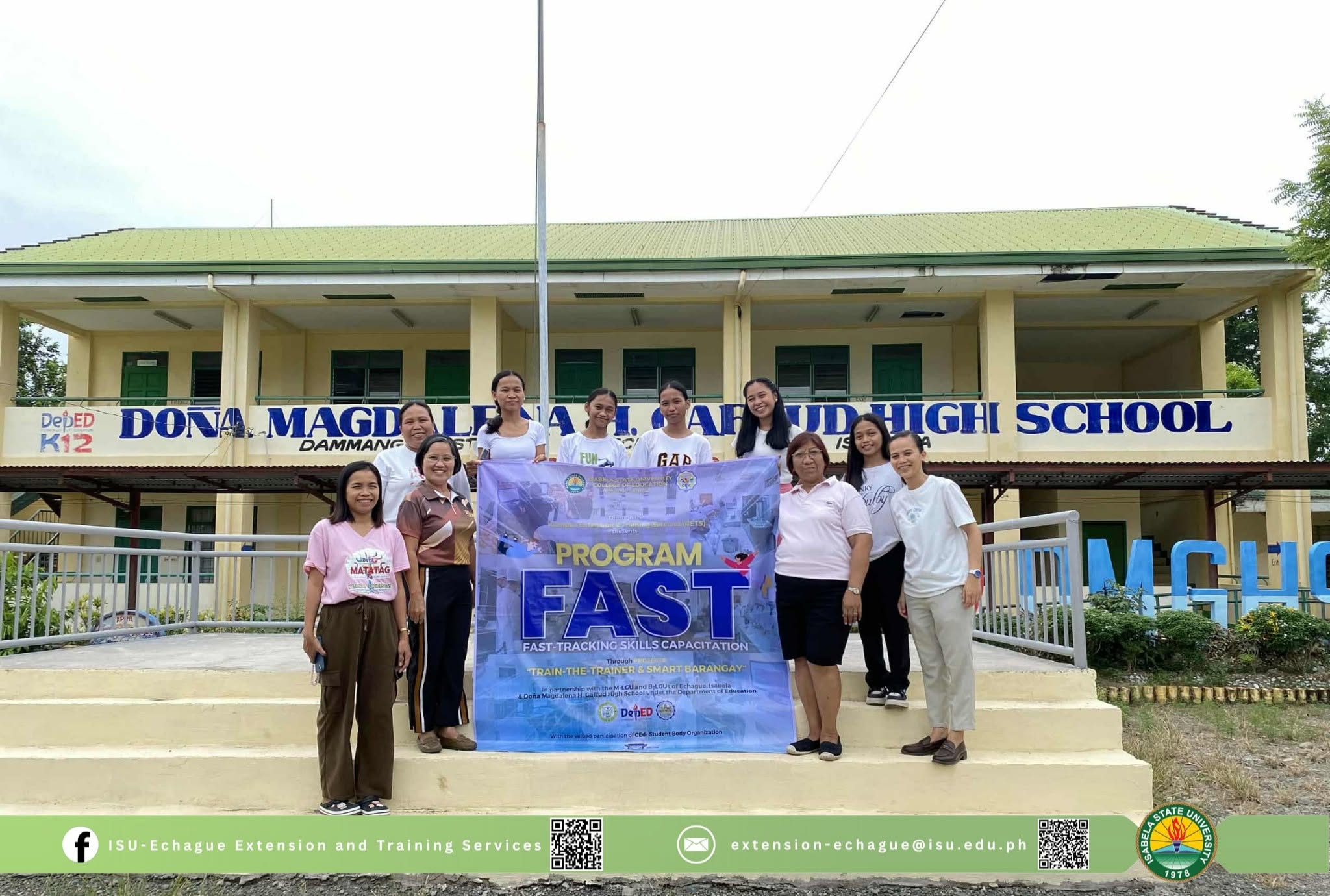
2.3 Project Train-the-Trainer under Program FAST (Future-Ready Advancement for Skills and Technology)
Isabela State University (ISU)–Echague Campus, through its College of Education and Campus Extension and Training Services (CETS), implemented Project Train-the-Trainer under Program FAST (Future-Ready Advancement for Skills and Technology) from April 25 to May 30, 2025, at Doña Magdalena H. Gaffud High School, Echague, Isabela.
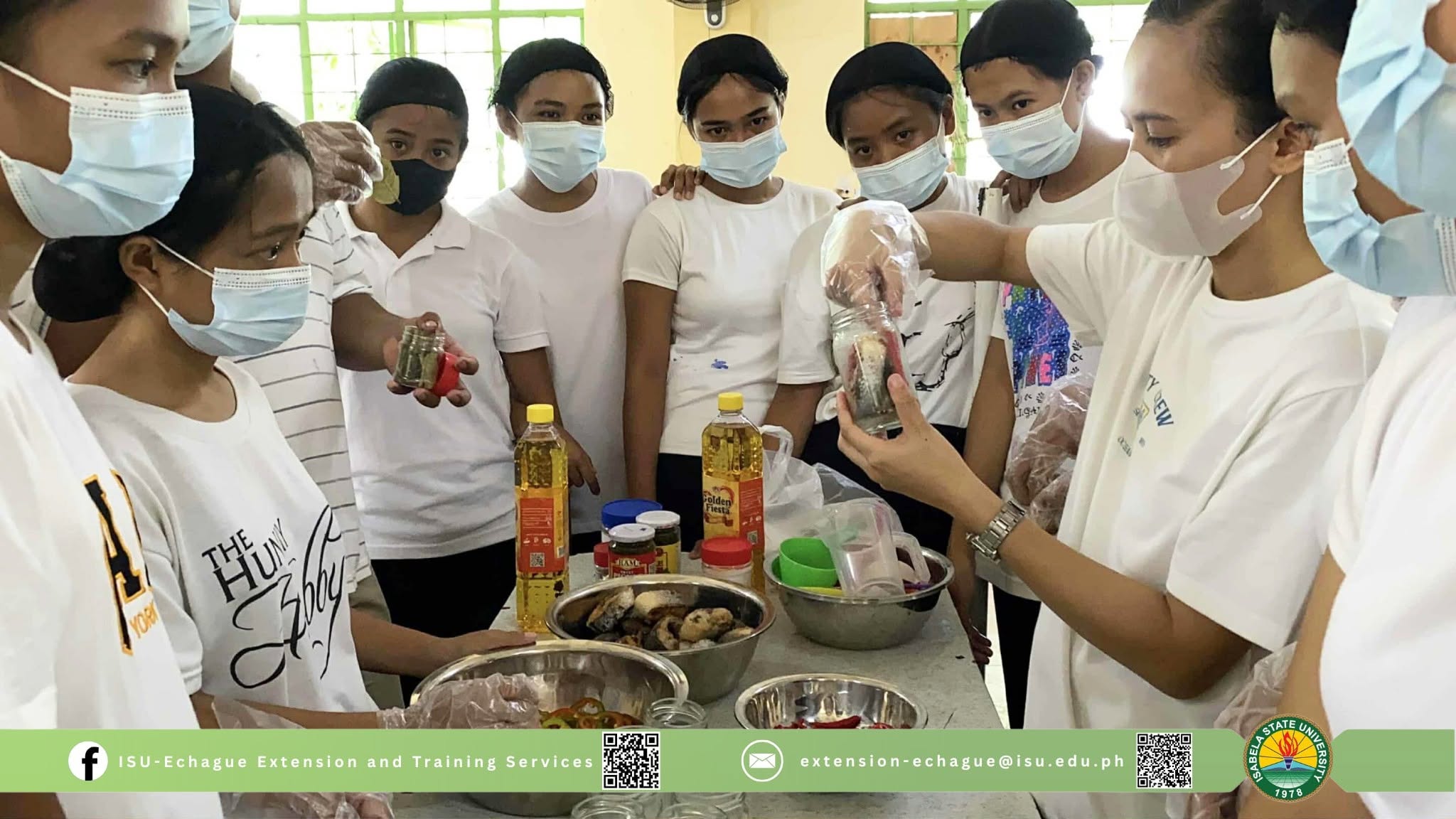
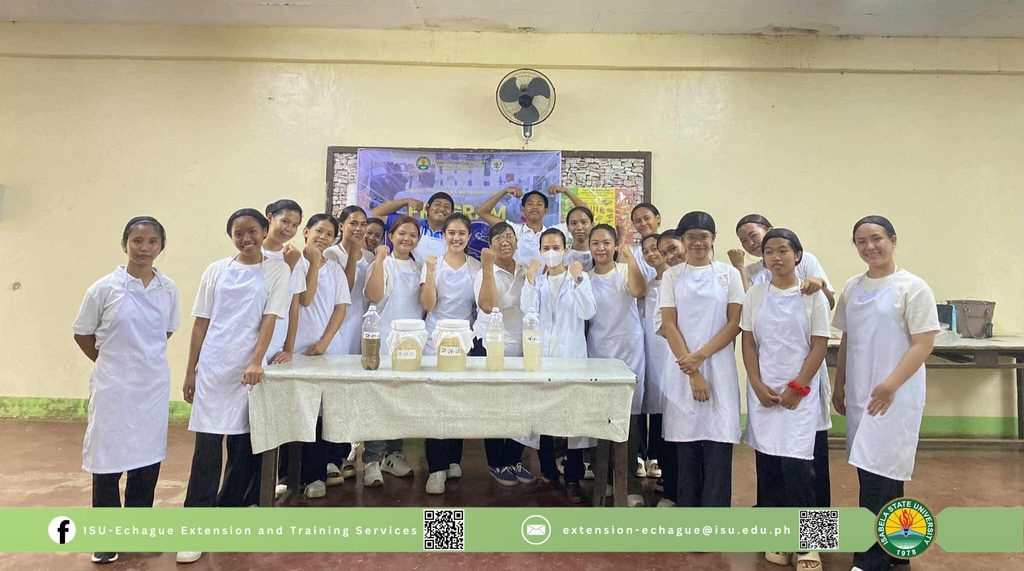
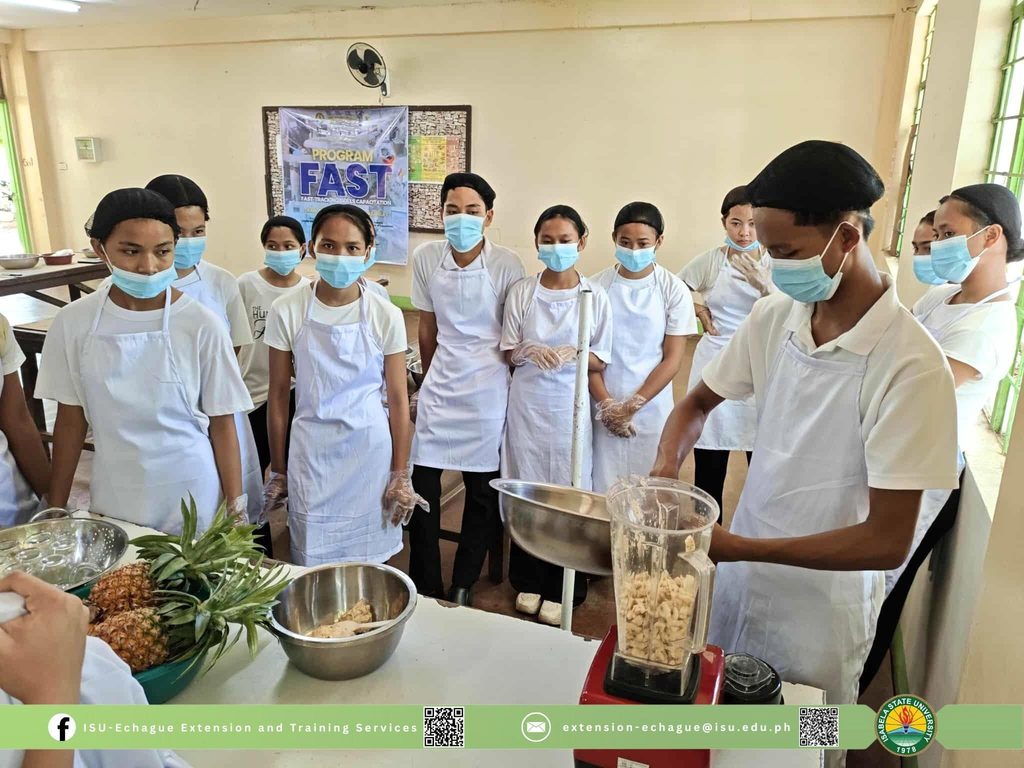
The program provided six training sessions on food processing, including drying, dehydration, fermentation, pickling, and thermal processing. Participants received free hands-on training, faculty mentorship, instructional materials, and technical assistance to develop practical livelihood skills and explore opportunities for small-scale business development.
Through its Train-the-Trainer approach, ISU equipped participants to share their knowledge with other communities, encouraging local entrepreneurship and sustainable income-generating activities. This initiative demonstrates the University’s commitment to supporting local business start-ups through skills development, mentorship, and technical assistance, particularly among underserved communities.
3. Programs for Services Access
Isabela State University (ISU) is committed to improving access to essential healthcare services through community-based outreach programs, particularly for underserved and economically disadvantaged communities.
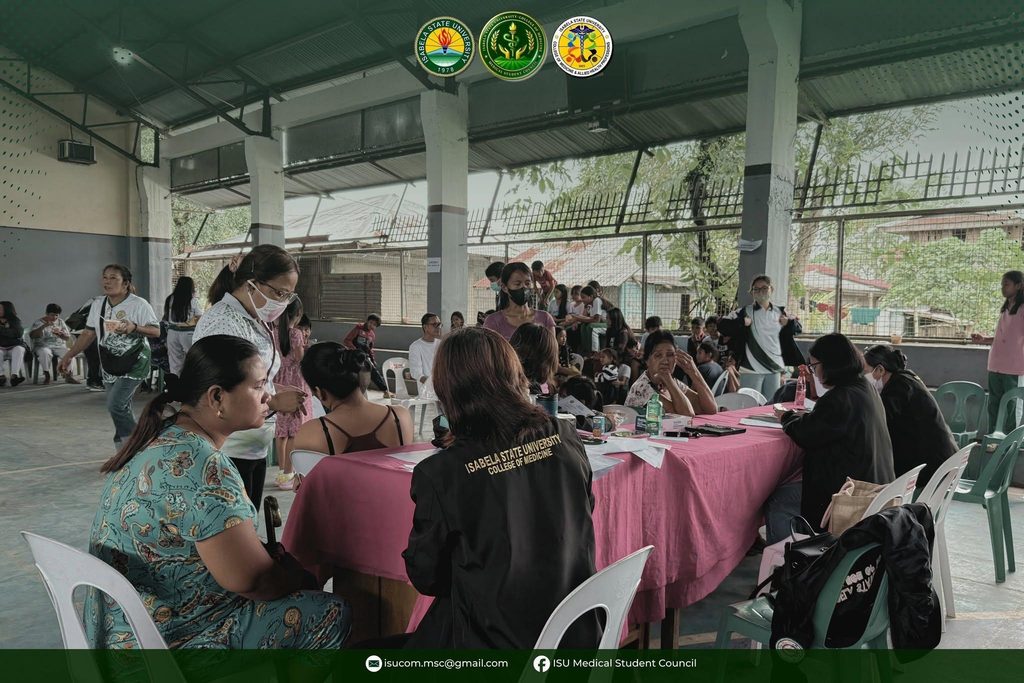
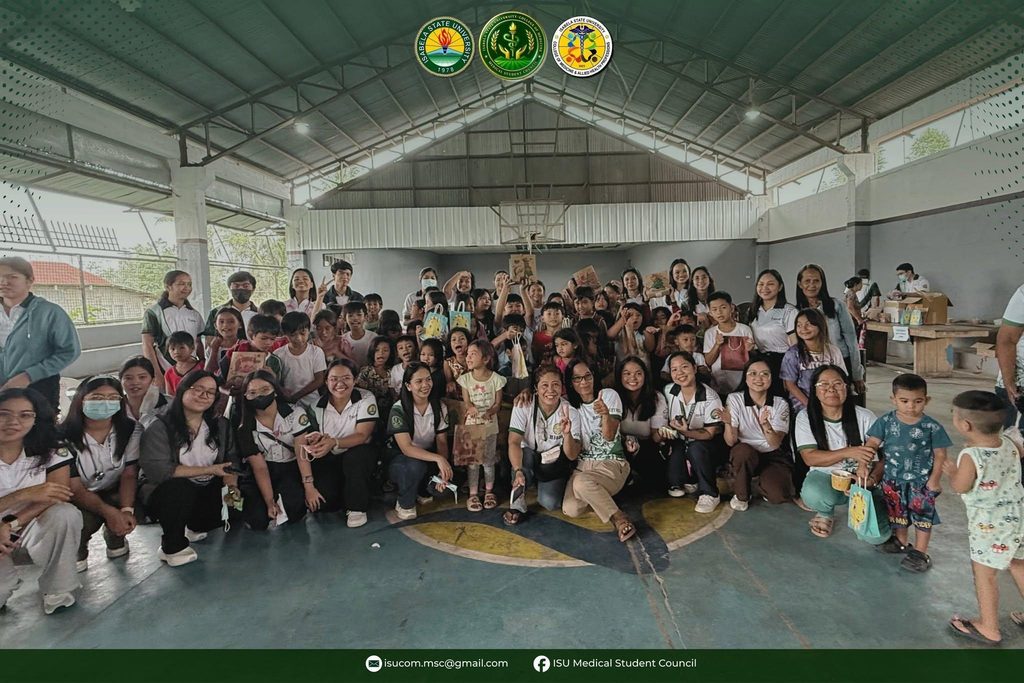
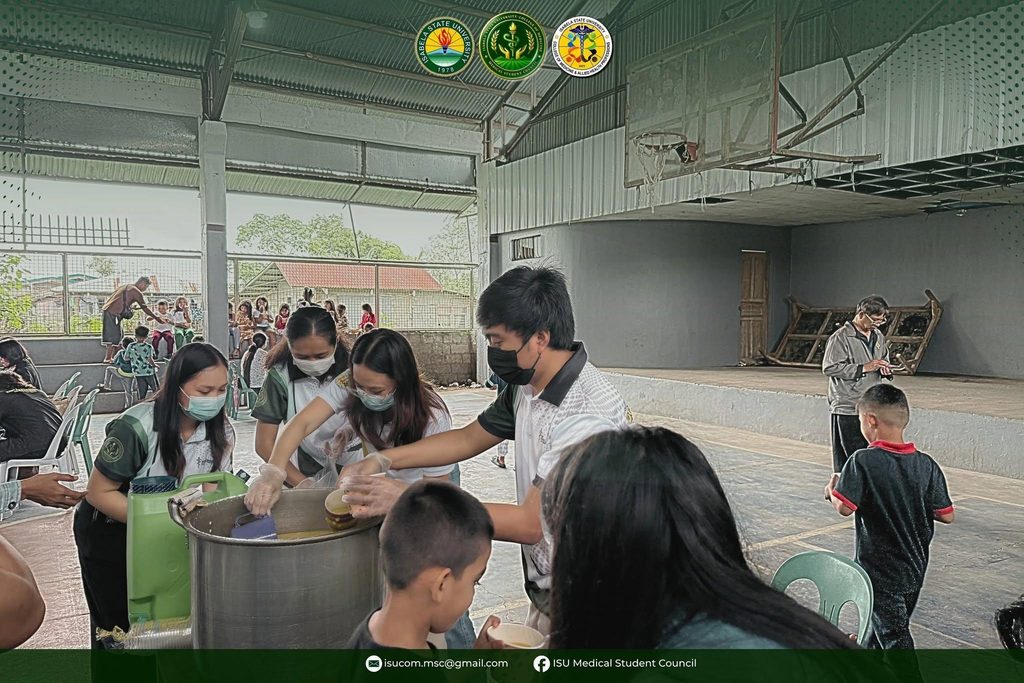
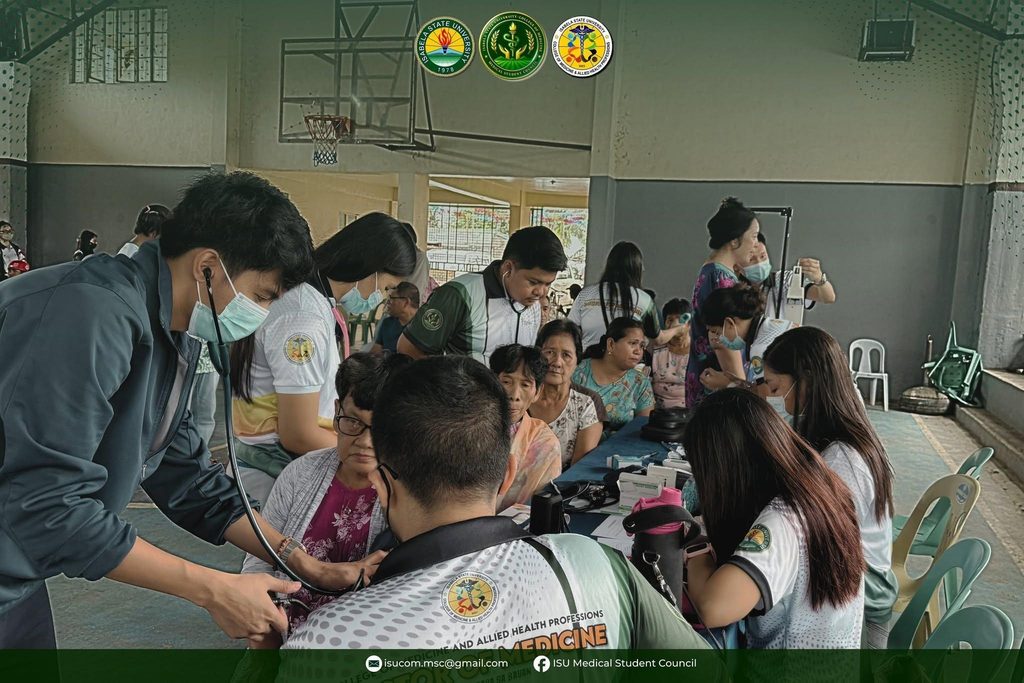
Through its College of Medicine, in collaboration with the Medical Student Council, ISU implemented the “ISU pasCOM Pangkalusugan: Handog-Kalinga sa Barangay Salay” medical mission in Barangay Salay, Echague, Isabela. As part of its Preventive Medicine and Public Health initiatives, the program provided free medical consultations, medicines, feeding activities, and community health assistance to local residents.
The initiative also recognized the contributions of Barangay Health Workers in delivering essential healthcare services. By providing free medical assistance and promoting preventive healthcare, ISU helps reduce healthcare-related expenses, improve access to basic health services, and strengthen the well-being of vulnerable households.
Through this initiative, the University demonstrates its commitment to inclusive healthcare, community welfare, and poverty reduction by making essential medical services more accessible to local communities.