
2025 Reports | SDG 16 – Peace, Justice and Strong Institutions









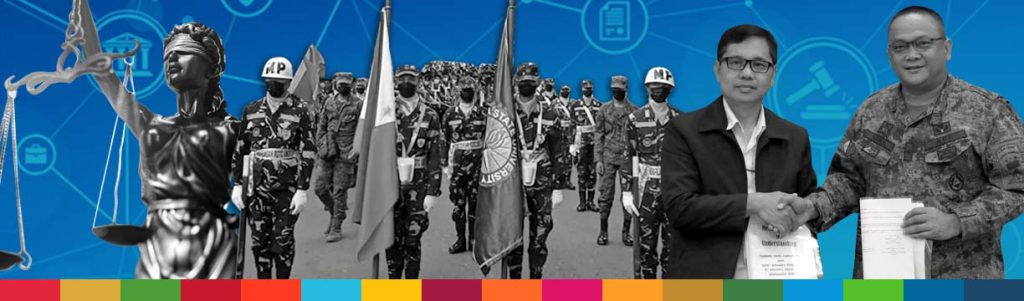
Isabela State University (ISU) upholds its commitment to integrity, transparency, justice, and strong institutional governance as part of its broader mission of advancing inclusive and sustainable development. Guided by its vision of becoming “a model Smart-Green University internationally recognized for positive societal transformation by 2030,” the University integrates good governance, ethical leadership, and social responsibility into its institutional policies, operations, and community engagements. It promotes transparency and accountability through established governance mechanisms, financial reporting and disclosures, and participatory decision-making processes that engage students, employees, and community stakeholders.
Beyond institutional governance, ISU advances social justice and community empowerment through research, extension programs, and partnerships with local and national government agencies. These initiatives support equitable access to education, environmental stewardship, livelihood development, and civic awareness. By extending its expertise and services to communities, the University helps address local development challenges, strengthen community capacities, and promote inclusive and sustainable progress.
These efforts are anchored in ISU’s mission to develop lifelong and future-ready professionals who serve as generators of knowledge and agents of positive change. Through its Smart-Green higher education approach, the University seeks to contribute to the inclusive and sustainable transformation of communities and responsible resource generation and management. By fostering a culture of integrity, accountability, and social responsibility, ISU strengthens its role in advancing peace, justice, and effective institutions in support of Sustainable Development Goal 16 (Peace, Justice, and Strong Institutions).
UNIVERSITY GOVERNANCE MEASURES
Elected Representation
The Board of Regents, the highest governing body of the Isabela State University (ISU) system, serves as the cornerstone of the University’s leadership and governance. Tasked with formulating vital institutional policies, the Board ensures that every decision embodies inclusivity, accountability, and shared governance. Chaired by the Commission on Higher Education (CHED) Commissioner and co-chaired by the University President, the Board is composed of ten (10) distinguished members representing various sectors — including national and regional government agencies, the private sector, and the University’s internal stakeholders. Among them are regional directors, committee chairs, and the presidents of the alumni, faculty, and student federations, each contributing valuable insights to the University’s strategic direction.
This diverse composition allows the Board to integrate multiple perspectives in policy formulation, ensuring that the University’s academic, administrative, and developmental decisions align with public service and educational excellence. Through collaborative deliberations, the Board upholds transparency and responsiveness, fostering a governance culture that values participation and evidence-based decision-making. Ultimately, the Board of Regents’ unified leadership strengthens ISU’s mission to deliver accessible, high-quality education while promoting equity, innovation, and sustainable development across its campuses and communities.
Students’ Union
Isabela State University (ISU) upholds student representation and participatory governance through the Supreme Student Council (SSC) Federation, the highest policy-making and coordinating body for all student councils across the ISU system. Composed of duly elected officers from each campus, the SSC Federation is officially recognized by the University and works closely with the administration to promote student welfare, leadership development, and institutional harmony. It serves as the collective voice of the student body, ensuring that student perspectives are considered in university decision-making processes and policy discussions.
Beyond advocacy, the SSC Federation organizes and implements various programs that advance student interests, such as leadership summits, outreach activities, and campaigns addressing academic, social, and political concerns. It also fosters collaboration among campus student councils, harmonizing initiatives and creating a unified platform for dialogue and action. Through these efforts, the SSC Federation empowers students to take an active role in shaping a responsive and inclusive academic environment, reinforcing ISU’s commitment to democratic participation, transparency, and holistic student development.
Identify and Engage with Local Stakeholders
Isabela State University (ISU) upholds its mission of fostering inclusive growth and social transformation through quality extension services that empower people and strengthen communities. Anchored in its Extension Manual, the University institutionalizes a framework that ensures its programs are participatory, evidence-based, and responsive to real community needs. Guided by the spirit of volunteerism, ISU’s faculty, staff, and students contribute their time, expertise, and resources to uplift underserved sectors—instilling civic consciousness, compassion, and a deep sense of social responsibility within the academic community.
Collaboration lies at the heart of ISU’s extension agenda. The University works closely with local government units (LGUs), non-government organizations (NGOs), private industries, and people’s organizations to co-create solutions that address pressing social, economic, and environmental issues. By adopting a need-based and problem-oriented approach, ISU ensures that every program is grounded on thorough community assessments and scientific research. Its bottom-up, community-based process engages beneficiaries at every stage—from identifying problems to implementing and evaluating projects—fostering local ownership, accountability, and sustainability.
More than providing temporary assistance, ISU’s extension initiatives prioritize capacity-building, empowerment, and long-term resilience. By equipping individuals and communities with knowledge, skills, and appropriate technologies, ISU enables them to become active partners in their own development. This enduring commitment to public service, sustainability, and social equity reflects ISU’s vision of a just, self-reliant, and empowered society built on education, innovation, and collective action.
Read more: ISU Extension Manual (https://isu.edu.ph/isu-extension-manual/)
Participatory Bodies for Stakeholder Engagement
Isabela State University (ISU) promotes participatory governance by establishing institutional mechanisms and platforms that enable local stakeholders to engage with the University and contribute to decisions concerning institutional priorities and community development. Through formal partnerships, stakeholder consultation forums, and collaborative bodies, the University provides opportunities for local government representatives, civil society organizations, partner agencies, students, and local residents to communicate their concerns, share perspectives, and participate in shaping university programs and initiatives. These mechanisms strengthen the link between the University and the communities it serves, ensuring that stakeholder voices are considered in advancing human rights, addressing regional development challenges, and implementing community-oriented programs. The following initiatives demonstrate ISU’s efforts to institutionalize meaningful stakeholder engagement in support of inclusive and participatory governance under SDG 16.
ISU and CHR R02 Establish Human Rights Center as a Participatory Stakeholder Body
On November 5, 2025, Isabela State University (ISU) and the Commission on Human Rights Region II (CHR R02) signed a Memorandum of Agreement (MOA) establishing the Center for Human Rights Education (CHRE) at the ISU Echague Campus. Led by ISU President Dr. Boyet L. Batang and CHR Regional Director Atty. Jimmy P. Baliga, the Center provides an institutional mechanism for engaging government agencies and local communities in advancing human rights education and advocacy. Managed by the University’s Gender and Development (GAD) Office, the CHRE facilitates stakeholder engagement through human rights instruction, research, and Barangay Human Rights Action Centers (BHRACs). Through this structure, ISU provides an avenue for local residents and partner institutions to communicate community concerns, contribute perspectives, and participate in initiatives that inform the University’s human rights programs and community engagement priorities.
ISU Hosts Regional Climate Forum as a Platform for Stakeholder Participation
On September 18, 2025, ISU convened the Climate Change Commission (CCC), local government units (LGUs), water districts, students, and civil society representatives for the Regional Climate Action Forum. Through its Student Forum and Regional Stakeholders Forum, the University established a consultation platform where local and regional stakeholders could raise concerns, exchange perspectives, and contribute to discussions on issues affecting their communities, including drought, watershed degradation, and water security in Cagayan Valley. Discussions covered climate adaptation, sustainable agriculture, and carbon markets. By providing an avenue for stakeholders to communicate their priorities and recommendations, the forum supports participatory decision-making and helps inform the University’s research, extension, and community engagement directions.
ISU and LGU Echague Institutionalize Multi-Sectoral Stakeholder Engagement
On September 12, 2025, ISU and the Local Government Unit (LGU) of Echague signed four Memoranda of Agreement (MOAs) covering sports development, tourism and hospitality, cultural and athletic programs, and event documentation for the Mengal Festival 2025. These agreements establish formal mechanisms for coordination between the University and the municipal government in planning and implementing initiatives that respond to local development priorities. Through this partnership, local government representatives serve as institutional partners in identifying community needs, coordinating activities, and aligning university expertise and resources with municipal priorities. The agreements strengthen channels for local stakeholder engagement in shaping the University’s community-oriented programs and initiatives.
Together, these initiatives demonstrate ISU’s efforts to establish institutional mechanisms for stakeholder engagement. By providing structured avenues for local government units, civil society representatives, partner agencies, students, and local residents to communicate their concerns and contribute to institutional priorities, the University promotes participatory governance and more inclusive decision-making in support of SDG 16.
University principles on corruption and bribery
Isabela State University (ISU) upholds the principle that public office is a public trust, requiring all officials and employees to perform their duties with responsibility, integrity, competence, and accountability, and to prioritize public interest over personal gain. In line with this commitment, the University adheres to national laws and regulations that promote ethical conduct and prevent graft and corruption, including Republic Act (RA) No. 3019 or the Anti-Graft and Corrupt Practices Act, RA No. 11032 or the Ease of Doing Business and Efficient Government Service Delivery Act of 2018, RA No. 6713 or the Code of Conduct and Ethical Standards for Public Officials and Employees, and applicable provisions of government procurement laws and the Revised Penal Code. These legal frameworks guide the University’s efforts to maintain integrity and accountability in public service and institutional operations.
ISU reinforces transparency and public accountability through its compliance with government disclosure and service-delivery requirements, particularly the Transparency Seal and Citizen’s Charter under the General Appropriations Act. These mechanisms provide public access to institutional information, government transactions, and service standards, including prescribed procedures and processing times. The University also makes relevant financial and procurement information available through required reports and disclosures, including quarterly financial reports, Philippine Government Electronic Procurement System (PhilGEPS) postings, Freedom of Information (FOI) compliance, and Statements of Assets, Liabilities, and Net Worth (SALN). Through these measures, ISU strengthens public access to information, promotes ethical conduct, and supports transparent, accountable, and efficient institutional governance.
See more:
- ISU Citizen’s Charter: https://isu.edu.ph/citizens-charter-2/
- ISU Transparency Seal: https://isu.edu.ph/transparency-seal-2022-2026/
University Academic Freedom Policy
Isabela State University (ISU) upholds academic freedom as a fundamental principle guiding its teaching, research, and governance practices. Anchored in the ISU Administrative Manual and Research Manual, this policy guarantees that faculty members have the autonomy to choose their research areas, conduct studies independently, and share their findings through instruction, publication, and public discourse without external interference. This institutional protection nurtures a culture of innovation, intellectual integrity, and critical inquiry, empowering educators and researchers across all disciplines and campuses to engage with local, national, and global issues through evidence-based scholarship.
Beyond supporting research autonomy, ISU’s administrative framework reinforces ethical conduct, inclusivity, and respect in the academic workplace, ensuring that both faculty and staff operate in an environment of fairness and professional freedom. The University’s public commitment—reflected in its official manuals, governance policies, and website—demonstrates transparency and alignment with international higher education standards. Through this steadfast adherence to academic freedom, ISU not only strengthens its research and teaching mission but also contributes to the advancement of knowledge, democratic values, and social progress.
University Publication of Financial Data
In alignment with its commitment to transparency and good governance, Isabela State University (ISU) ensures that its financial data and operational information is readily available to the public through its official Transparency Seal webpage. This initiative serves as a clear demonstration of the university’s accountability and openness in the management of public funds. ISU systematically publishes comprehensive financial documents such as the Statement of Appropriations, Allotments, Obligations, Disbursements and Balances (FAR No. 1), Summary of Disbursements (FAR No. 4), Physical Reports of Operations (BAR No. 1), and Revenue and Receipts (FAR No. 5), covering multiple fiscal. These detailed reports enable stakeholders to track fund utilization and program implementation outcomes with accuracy.
In addition, the university discloses DBM-approved budgets, annual procurement plans, procurement monitoring reports, and ISO 9001:2015 certifications, ensuring that all spending and institutional activities align with government standards and performance targets. ISU also publishes Freedom of Information (FOI) manuals, registries, and reports, as well as policies such as the “No Wrong Door” policy, which guarantee accessible and transparent communication channels for stakeholders.
Through these comprehensive publications, ISU exemplifies a proactive approach to transparency by allowing students, faculty, government agencies, and the general public to review its financial performance and governance practices. This openness reinforces trust in the institution’s operations and underscores its role as a responsible, transparent, and accountable public university that upholds the highest standards of ethical and fiscal management.
See more: ISU Transparency Seal (https://isu.edu.ph/transparency-seal-2022-2026/)
WORKING WITH GOVERNMENT
Provision of Expert Advice and Technical Support to Government
Isabela State University (ISU), through its BIRD-C Research and Development Center, provides specialized technical expertise, research-based evidence, and advisory support to local and provincial government units. Through its research and development initiatives, the University assists government partners in addressing public governance challenges and strengthening evidence-informed planning, policy implementation, and service delivery.
These engagements include the development of HealthGuard to support government efforts in contact tracing and border control; the provision of data management systems and technical expertise to the Provincial Government of Isabela to strengthen data-driven decision-making; the co-development of the iCITY Digital Business Locator with Cauayan City to support local economic planning and MSME development; and the development of the ODeSSEE decision-support platform to assist government efforts in flood preparedness and public health response.
Through these initiatives, ISU serves as a technical and knowledge partner to government institutions, translating academic research and technological expertise into practical tools and evidence that inform government decisions and programs. By working directly with local and provincial governments in developing, implementing, and applying these solutions, the University contributes specialized institutional advice and technical support to public-sector planning, policy execution, and service delivery. These engagements demonstrate ISU’s role in strengthening government capacity and promoting responsive, evidence-based, and effective governance in support of SDG 16.
See more: ISU BIRD-C Webpage (https://isu.edu.ph/business-intelligence-and-research-and-development-center-bird-c/)
Policy- and Lawmakers Outreach and Education
Isabela State University – Cauayan Campus extends its professional expertise and public service to local communities through outreach initiatives that promote access to essential services and legal assistance. On December 23, the University conducted its year-end outreach program, “Acts of Kindness: From Our Campus to Your Homes,” in Barangays Nagcampegan and San Luis, bringing together faculty, staff, students, and volunteer professionals to serve residents affected by storms and flooding. The initiative provided free legal assistance through volunteer lawyers, medical consultations, dental services, and the distribution of 300 gift packs to families in need.
Through the participation of legal professionals and campus personnel, the initiative brought legal knowledge and professional services closer to community members, providing an avenue for residents to seek guidance on legal concerns and access essential support. The involvement of student organizations and campus offices further demonstrated the University’s institutional commitment to community engagement and responsive public service. By extending professional expertise beyond the campus, ISU Cauayan contributes to improving public awareness of legal services, addressing community needs, and promoting access to justice in support of SDG 16.
Participation in Government Research
ISU and Kyoto University Facilitate Stakeholder Consultation on Sustainable Water Management
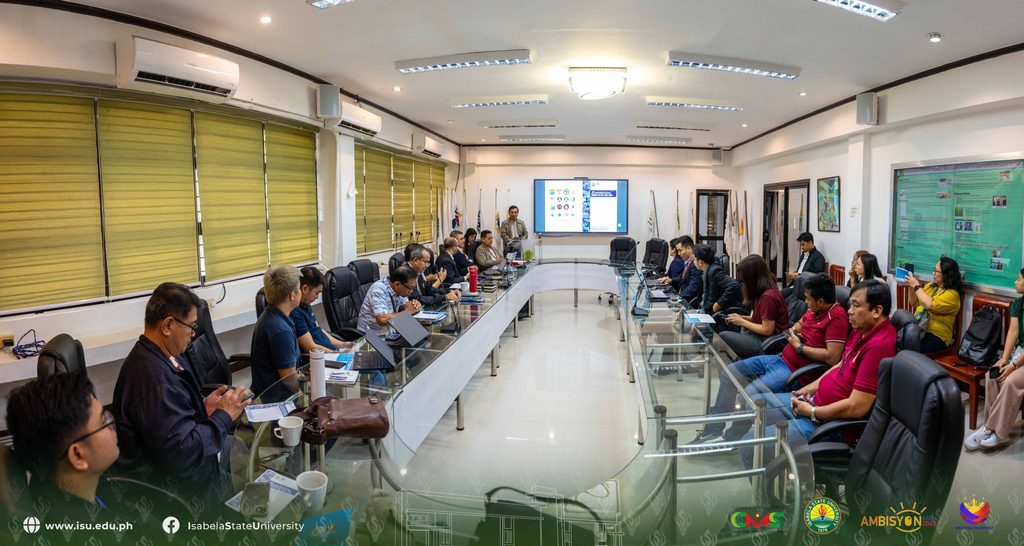
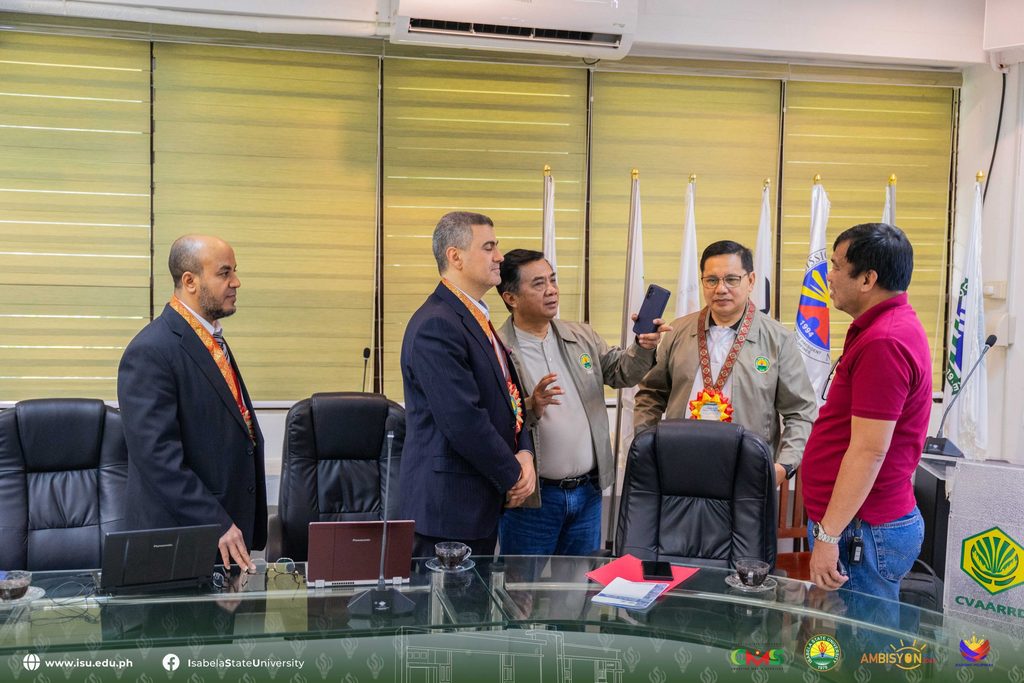
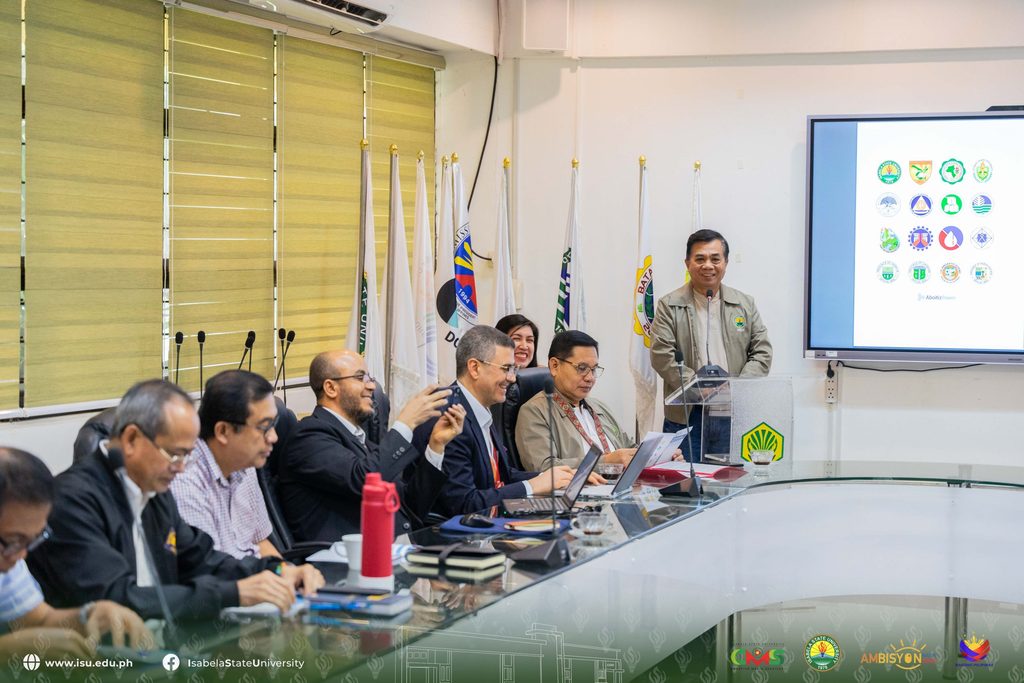
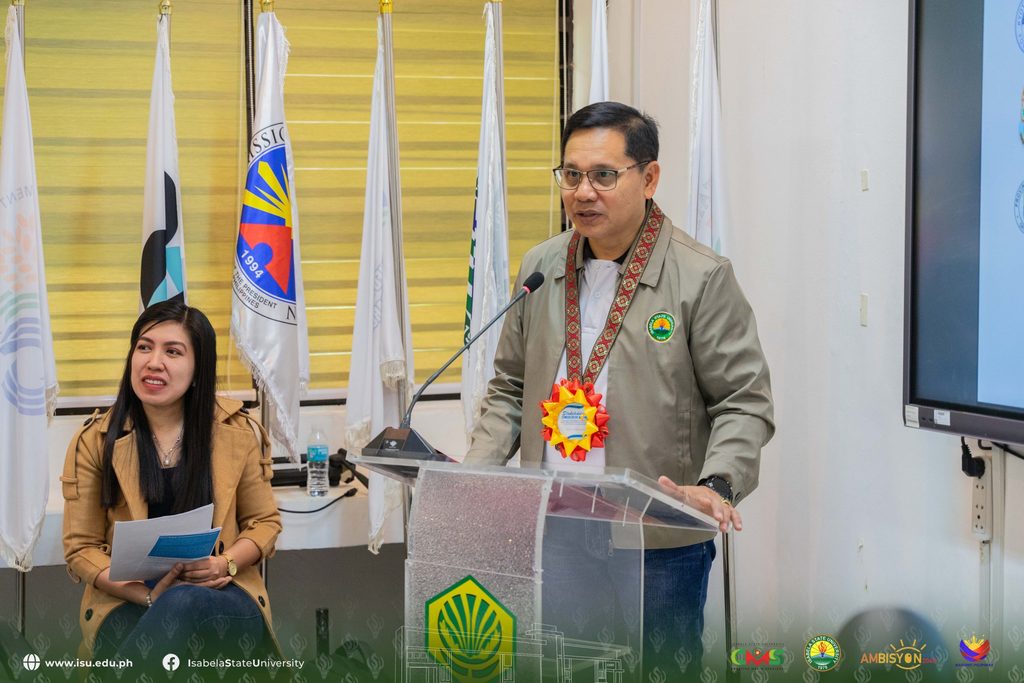
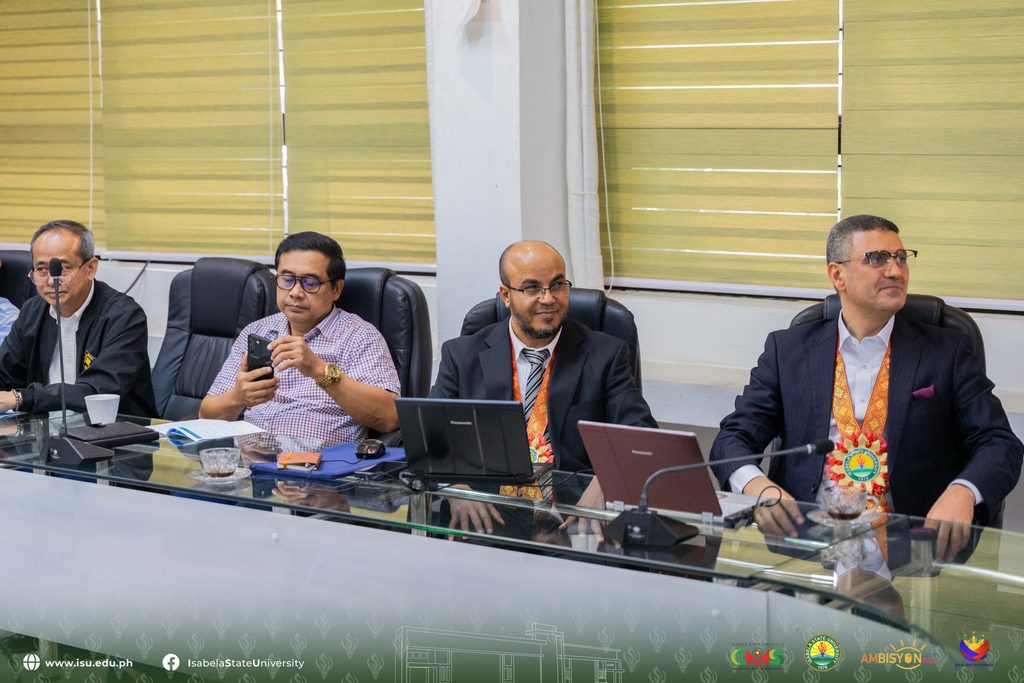
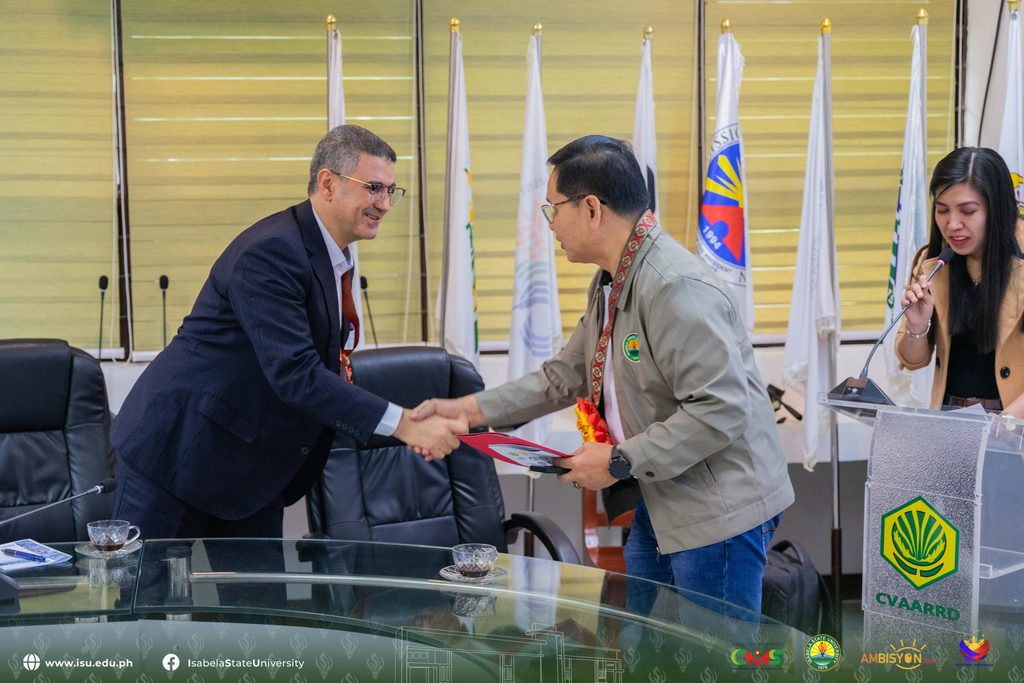
On January 23, 2025, Isabela State University (ISU), in partnership with Kyoto University, convened academic institutions, government agencies, and private sector representatives for a stakeholder consultation on sustainable water management and dam operations. Held at the CVAARRD Building’s Valmayor Hall, the consultation focused on the Magat River Basin and the need to strengthen water security under extreme climatic conditions. Participants included representatives from the National Irrigation Administration, Quirino Provincial Government, SN Aboitiz Power Group, Cagayan State University, and the Department of Public Works and Highways (DPWH).
Through this consultation, ISU provided an institutional platform for exchanging research-based knowledge, technical perspectives, and policy-related insights on water resource management and climate risks. Discussions examined challenges and potential responses, identifying opportunities for integrated water resource management, innovative technologies, and climate-responsive policies. A subsequent NEXUS Project inception meeting further established the project’s objectives, timelines, methodologies, and stakeholder responsibilities, providing direction for collaborative research and implementation.
By bringing together scientific expertise and the practical experience of government and industry stakeholders, ISU helped generate evidence and technical insights relevant to water governance, climate adaptation, and disaster risk reduction. The engagement demonstrates the University’s role in facilitating knowledge exchange and providing research-informed inputs that can support government planning and policy development on regional water security.
Neutral Platform and Safe Space to Discuss Issues and Challenges
ISU Strengthens Human Rights Education and Stakeholder Engagement Through the 18-Day Campaign to End Violence Against Women
On December 1, 2025, Isabela State University (ISU) gathered students, faculty, staff, and partner organizations at the ISU Echague Amphitheater for its observance of the 18-Day Campaign to End Violence Against Women. Led by the Gender and Development (GAD) Office, the initiative promoted awareness of women’s rights, violence prevention, and access to protection and support services. Activities included an Orange Icon Ceremony reaffirming the University’s commitment to women’s safety and dignity, the launch of the GAD Knowledge Management System as a centralized resource for gender-related policies and educational materials, and a partnership with Mengal Women to facilitate collaborative community programs and support services.
A key component of the campaign was a legal education session led by Atty. Marie Grace Marcos of the Commission on Human Rights Region II, who discussed Republic Act No. 9262 or the Anti-Violence Against Women and Their Children Act. The session covered the different forms of abuse, protection orders, available legal remedies, and reporting mechanisms. By facilitating access to legal expertise and authoritative information, ISU provided students, employees, and other participants with practical knowledge of their rights and the legal mechanisms available to address violence.
Through these activities, ISU demonstrates its institutional role in advancing human rights education, promoting awareness of relevant laws, and strengthening collaboration with government agencies and community organizations. The initiative supports a more informed university community and contributes to violence prevention, access to justice, and the promotion of safe and inclusive institutions in line with SDG 5 (Gender Equality) and SDG 16 (Peace, Justice, and Strong Institutions).
PROPORTION OF GRADUATES IN LAW AND CIVIL ENFORCEMENT
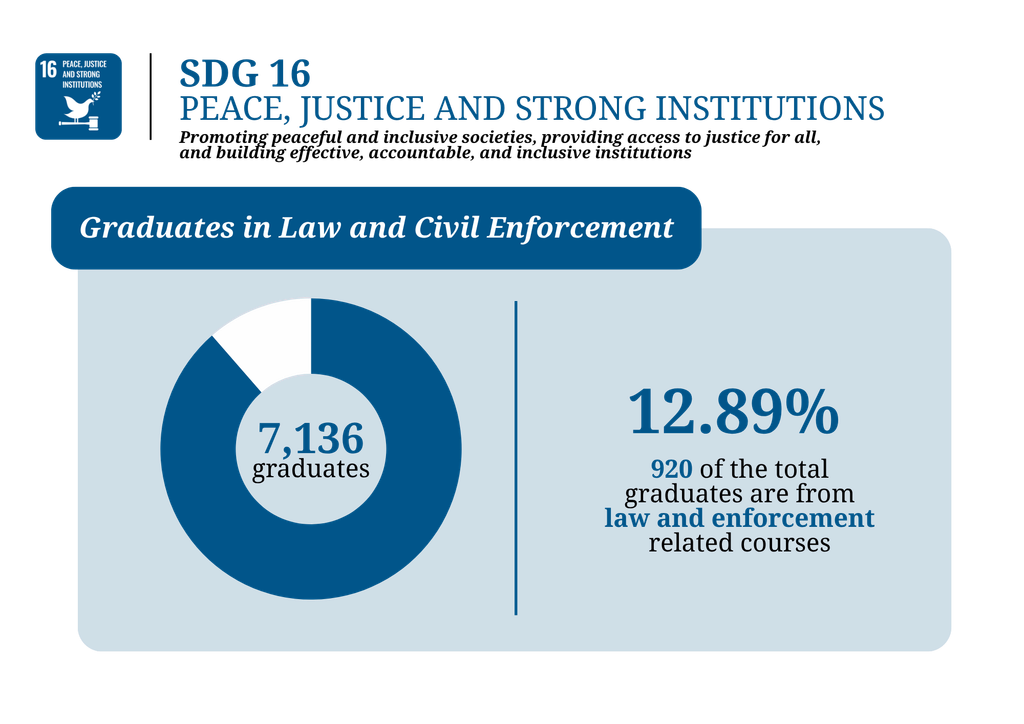
Isabela State University recorded a total of 7,136 graduates, of whom 920 completed law and enforcement-related courses, representing 12.89% of the University’s overall graduate population. ISU offers academic programs in these fields, including the Bachelor of Science in Criminology (BS Criminology), Bachelor of Science in Law Enforcement Administration (BSLEA), and Juris Doctor (JD). These programs provide students with academic and professional preparation relevant to law, public safety, law enforcement, and the administration of justice.
The number of graduates in these disciplines highlights the University’s contribution to developing human resources who can support the rule of law, protect public welfare, promote access to justice, and strengthen public institutions. Through its offerings in criminology, law enforcement, and legal education, ISU helps prepare graduates for roles related to justice administration, public safety, and the enforcement and application of laws. These figures provide a measurable account of the University’s educational contribution to SDG 16 (Peace, Justice, and Strong Institutions).