
2025 Reports | SDG 7 – Affordable and Clean Energy





UNIVERSITY MEASURES TOWARDS AFFORDABLE AND CLEAN ENERGY
Energy-efficient Renovation and Upgrading of Buildings
Isabela State University (ISU) has formally approved its Land Use Development and Infrastructure Plan (LUDIP), through Board Resolution No.68, s.2023, which serves as the guiding policy to ensure that all renovations and new construction projects adhere to energy efficiency and sustainability standards. This plan mandates that every building activity—whether new development or facility improvement—integrates energy-saving measures such as the use of energy-efficient lighting, natural ventilation, and sustainable building materials.
Moreover, the LUDIP outlines ISU’s commitment to upgrading existing buildings to meet higher energy efficiency benchmarks. Renovations must incorporate modern energy management systems and design improvements that reduce overall energy consumption. By institutionalizing LUDIP as a standard requirement, ISU ensures that its infrastructure development aligns with national and international sustainability goals, promoting responsible energy use and long-term environmental stewardship across all campuses.
Upgrade buildings to higher energy efficiency
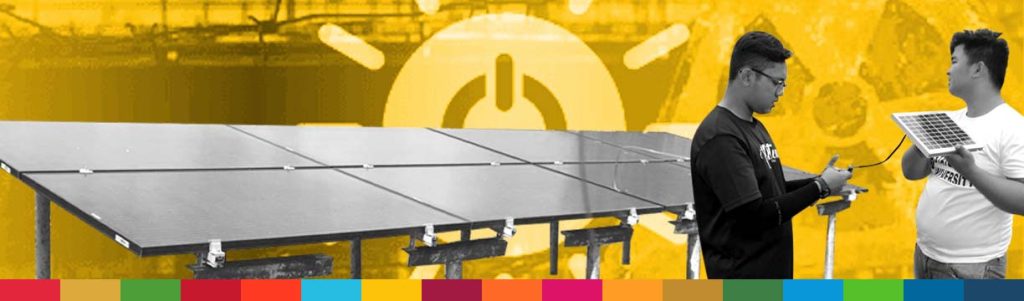
Isabela State University (ISU) advances campus sustainability through the integration of renewable energy technologies and energy-efficient infrastructure across its campuses. At ISU Ilagan, the University installed 30 units of 1,000-watt solar-powered streetlights, while solar photovoltaic (PV) systems provide power for critical internet server infrastructure and the Management Information System (MIS) office.
Similar initiatives have also been implemented at other campuses. These include a 20-kilowatt grid-tied photovoltaic system and a photovoltaic-powered water system at the ISU Echague Climate Change Center, as well as solar-powered streetlights at ISU Santiago Extension. The University has also developed research-based renewable energy innovations, including a Mobile Solar Generator and a 16-kilowatt mobile solar PV system integrated with a biowaste biodigester.
Collectively, these initiatives promote the use of renewable energy, reduce reliance on conventional electricity, improve campus safety, and support the continuity of essential digital services. They also demonstrate ISU’s commitment to responsible resource management, climate resilience, and the development of sustainable and energy-efficient campus environments.
Carbon reduction and emission reduction process
Isabela State University (ISU) has established a process for carbon management and the reduction of carbon dioxide emissions as part of its sustainability initiatives. One of its key actions is conducting research and development projects focused on clean and low-carbon technologies. Notably, the university spearheaded a study titled “Challenges and Opportunities of Electric Vehicle (EV) Development,” which explores strategies to advance the use of electric mobility within and beyond the university.
This initiative demonstrates ISU’s commitment to reducing its carbon footprint by promoting the adoption of zero-emission transportation systems and encouraging the transition from conventional fuel-based vehicles to electric alternatives. In addition to research, the university’s process involves integrating carbon reduction principles into campus operations, energy management, and community extension programs. Through these efforts, ISU actively contributes to mitigating greenhouse gas emissions and supporting national climate action goals.
Plan to reduce energy consumption
Isabela State University (ISU) demonstrates its institutional commitment to SDG 7 (Affordable and Clean Energy) through energy conservation planning, sustainable infrastructure development, and coordinated energy management. Guided by its Land Use Development and Infrastructure Plan (LUDIP) and strategic development priorities, the University promotes energy efficiency across its campuses through the development of energy-efficient facilities, responsible electricity consumption, and the integration of green building practices. These measures form part of the University’s broader institutional approach to managing energy use and reducing its overall electricity consumption.
Further reinforcing this commitment, ISU issued Memorandum No. 183, s. 2023, adopting flexible work arrangements in support of government energy conservation policies. This measure helps optimize the use of campus facilities and office spaces, minimize unnecessary electricity consumption, and encourage more efficient utilization of energy resources. Through institutional planning, operational measures, and sustainable infrastructure development, ISU establishes a coordinated approach to improving energy efficiency and reducing its overall energy demand in support of affordable and clean energy.
Energy wastage identification
Isabela State University (ISU) advances its green building initiatives through sustainable design, building energy assessments, and the promotion of zero-energy building concepts. With the technical expertise of Ar. Wilna Breech Abordo, an Accredited Green Zero Energy Building Consultant and Certified EDGE Expert, the University assesses opportunities to improve building energy performance, identify inefficiencies, and reduce unnecessary electricity consumption.
Initial energy audit findings at ISU Ilagan showed energy efficiency rates of 87.50% for air-conditioning units (ACUs), 95.41% for lighting systems, and 91.25% for other appliances and equipment. The corresponding energy wastage rates were 12.50%, 4.59%, and 8.75%, respectively. These assessment results provide a basis for identifying areas requiring improvement and developing targeted energy conservation measures.
Through these initiatives, ISU promotes the efficient use of energy in its facilities, supports the integration of sustainable building practices, and strengthens its efforts to develop environmentally responsible and energy-efficient campus infrastructure in support of SDG 7 (Affordable and Clean Energy).
Divestment policy
Isabela State University (ISU) promotes sustainability-oriented investment and resource allocation by incorporating environmental, social, and governance (ESG) considerations into its institutional programs, research activities, and infrastructure development. The University supports investments in renewable energy technologies and sustainable infrastructure, particularly solar photovoltaic (PV) systems, to improve energy efficiency and reduce reliance on conventional electricity.
ISU also directs institutional support toward research and innovation in renewable energy, carbon reduction, and climate resilience through research funding, academic conferences, and its annual Research and Extension Caravan. These activities provide opportunities for researchers, faculty members, students, and external stakeholders to exchange knowledge, present innovations, and develop solutions to sustainability challenges.
Furthermore, through international academic collaborations, including ICSS-ESHET and IO-CCADRRM, the University facilitates knowledge exchange, research cooperation, and the development of sustainable approaches to environmental management and disaster risk reduction. Collectively, these initiatives demonstrate ISU’s commitment to responsible resource allocation, clean energy development, and investments that contribute to a low-carbon and climate-resilient future.
ENERGY AND THE COMMUNITY
Local community outreach for energy efficiency
From May to November 2025, Isabela State University (ISU)–Ilagan Campus, through its Community Engagement Office, implemented extension initiatives promoting energy efficiency, electrical safety, technical skills development, and sustainable community development. Anchored on Republic Act No. 11285, or the Energy Efficiency and Conservation Act, these initiatives translate the University’s technical expertise into practical solutions that address community needs.
Among these initiatives is Project EE-BEST in BWI, which strengthens the capabilities of barangay electricians in proper electrical wiring installation, electrical safety, and energy conservation. Project PERA develops community members’ skills in repair and maintenance, promoting resourcefulness, creating livelihood opportunities, and encouraging the responsible use of resources and energy. Meanwhile, Project TECH-EE equips students with practical skills in electrical engineering and rapid prototyping while fostering innovation and energy awareness.
Through these extension initiatives, ISU–Ilagan Campus extends its academic and technical expertise beyond the University and into local communities. By empowering barangay electricians, community members, and students with relevant knowledge and practical skills, the Campus promotes safer electrical systems, more efficient energy use, livelihood development, and sustainable community practices in support of energy conservation and SDG 7.
100% renewable energy pledge
Isabela State University (ISU)–Ilagan Campus, through its Community Engagement Office, conducted a consultative meeting with the Municipality of Burgos, Isabela, to explore the use of plastic waste as an alternative raw material for producing eco-friendly construction tiles.
The initiative promotes research-driven approaches to plastic waste management while supporting the University’s Renewable Energy Pledge through resource efficiency, clean technology, and low-carbon innovation. By exploring ways to transform discarded plastics into useful construction materials, the partnership encourages circular economy practices, reduces waste, and creates potential livelihood opportunities for local communities.
Through this collaboration, ISU–Ilagan Campus and the Municipality of Burgos seek to turn environmental challenges into practical and sustainable innovations. The initiative reflects the University’s commitment to strengthening community partnerships, promoting responsible resource utilization, and advancing environmental protection toward a cleaner, greener, and more climate-resilient future.
Energy efficiency services for industry
Isabela State University (ISU) actively promotes energy efficiency and clean energy education among local communities through the establishment of the Interdisciplinary Center for Renewable Energy Systems and Technologies (iCREaTe), through Board Resolution No. 20, s.2025. This center serves as a platform for research, training, and community engagement focused on renewable energy development and sustainable energy practices.
Through iCREaTe, ISU conducts capacity-building programs, workshops, and outreach activities that help local industries, government units, and communities understand the importance of energy conservation and the benefits of transitioning to clean energy. The center also provides energy efficiency assessments and consultancy services to local enterprises, supporting them in reducing energy consumption and adopting renewable energy technologies.
By integrating research, extension, and direct community services, ISU—through iCREaTe—advances public awareness and practical applications of energy efficiency, reinforcing the university’s commitment to sustainable energy education and technology transfer at the community level.
Isabela State University (ISU) demonstrates its commitment to promoting energy efficiency and clean energy by providing direct services to local industries through the establishment of the Interdisciplinary Center for Renewable Energy Systems and Technologies (iCREaTe). This center serves as a hub for research, innovation, and extension focused on developing and applying renewable energy technologies.
Through iCREaTe, the university offers technical services and capacity-building programs such as energy efficiency assessments, technology demonstrations, and workshops designed to help industries optimize energy use and transition to cleaner energy sources. The center also engages in collaborative research and technology transfer, assisting industries in adopting renewable energy systems like solar, wind, and bioenergy.
By linking academic expertise with real-world industrial needs, ISU—through iCREaTe—plays a vital role in supporting sustainable industrial development, reducing carbon emissions, and advancing energy-efficient practices within the region.
Assistance to low-carbon innovation
Isabela State University (ISU) supports initiatives that foster a low-carbon economy and technology development through research, innovation, and partnership programs. The university has established a process for carbon management and emission reduction, highlighted by its research project titled “Challenges and Opportunities of EV Development.” This study explores strategies for advancing electric vehicle (EV) technologies—an important step toward reducing carbon emissions and promoting sustainable mobility.
Through its innovation and research centers, ISU provides technical assistance, mentorship, and collaboration opportunities for start-ups and innovators developing green and low-carbon solutions. These initiatives encourage the creation and adoption of sustainable technologies such as EVs, renewable energy systems, and energy-efficient tools. By integrating academic research with practical applications, ISU not only contributes to national carbon reduction goals but also helps nurture a local ecosystem of enterprises that support a low-carbon and sustainable economy.
LOW CARBON ENERGY USE
ISU Ilagan Campus monitors its energy consumption from conventional and low-carbon sources as part of its efforts to promote sustainable energy use. Based on the campus-reported data, total energy consumption amounted to 18,985 kWh, of which 553 kWh came from low-carbon sources. This accounts for approximately 2.91% of the campus’s total energy consumption.
The use of low-carbon energy reflects ISU–Ilagan Campus’s efforts to integrate cleaner energy sources into its operations and reduce reliance on conventional energy. Continued monitoring and increased utilization of low-carbon energy can further support the campus’s transition toward a more sustainable energy system and contribute to the achievement of SDG 7.