
2025 Reports | SDG 15 – Life on Land


SUPPORTING LAND ECOSYSTEMS THROUGH EDUCATION
Events about sustainable use of land
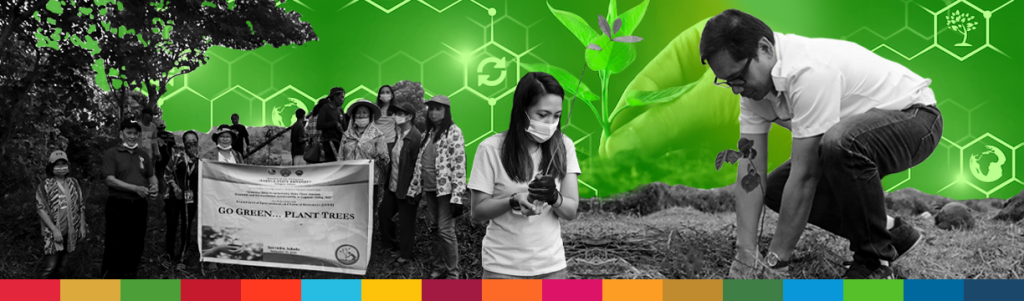
Isabela State University (ISU), through its Cabagan Campus, actively supports forest conservation and sustainable land utilization through its participation in the National Greening Program (NGP) in partnership with the Department of Environment and Natural Resources (DENR), through CENRO Cabagan. The initiative involves the establishment and continuing maintenance of a plantation featuring cacao (Theobroma cacao), contributing to the promotion of sustainable agroforestry and the rehabilitation of land resources.
As part of its continuing commitment, the University conducts monitoring and assessment activities to evaluate tree survival, growth, and overall plantation condition. These activities help identify maintenance requirements, determine necessary interventions, and ensure the proper establishment and long-term sustainability of the planted species. Through this partnership, ISU supports organized conservation efforts, promotes the sustainable utilization of land and forest resources, and strengthens collaboration with government agencies in advancing environmental protection and biodiversity conservation.
Sustainably farmed food on campus
Isabela State University (ISU) promotes sustainable food production and responsible agricultural land management through institutional policies and academic practices that guide the use of campus agricultural areas. Its Income-Generating Enterprise (IGE) Policy on Crop and Animal Production, including land leasing and rental arrangements, provides a framework for managing agricultural production activities and the responsible utilization of university land. These mechanisms support the University’s efforts to encourage sustainable farming practices and ensure that agricultural activities within its campuses are managed in accordance with institutional guidelines.
The University also utilizes its agricultural areas as learning and research spaces for students under the Bachelor of Science in Agriculture and Bachelor of Agricultural Technology programs. In accordance with CHED Memorandum Order No. 23, s. 2021, these areas support field laboratory activities, thesis research, and internship requirements, allowing students to apply sustainable agricultural practices in actual production settings. Through its institutional policies, academic programs, and agricultural operations, ISU promotes responsible food production, sustainable land use, and biodiversity conservation across its campuses.
Maintain and extend current ecosystems’ biodiversity
Isabela State University (ISU) has implemented its Land Use Development and Infrastructure Plan (LUDIP), which also serves as a framework for maintaining and enhancing existing ecosystems and biodiversity across its campuses. The plan ensures that all development and renovation projects are designed with environmental sustainability in mind, integrating measures that protect natural habitats, promote green spaces, and support native plant and animal species. By incorporating eco-friendly design elements such as green landscaping, natural ventilation, and sustainable materials, ISU ensures that infrastructure growth aligns with the preservation of ecosystems and contributes to biodiversity conservation, particularly in areas vulnerable to environmental degradation.
Educational programs on ecosystems
Isabela State University (ISU) integrates ecosystem management, biodiversity conservation, and sustainable natural resource utilization into its academic programs, particularly the Bachelor of Science in Forestry (BSF) and Bachelor of Science in Agribusiness (BSAB). The BS Forestry curriculum emphasizes the scientific study, conservation, and sustainable management of forest ecosystems through four key areas: Forest Biological Sciences, Forest Resources Management, Social Forestry and Forest Governance, and Forest Products Utilization. These fields provide students with a foundation in forest protection, wildlife conservation, and the responsible use of natural resources.
Similarly, the BSF and BSAB curricula incorporate learning competencies on the identification, classification, conservation, and management of wildlife species, including flora and fauna. Through classroom instruction, fieldwork, research, and practical learning activities, students develop an understanding of biodiversity, ecological relationships, and the importance of protecting soil, water, and forest resources. These educational programs equip future professionals with the knowledge and skills to promote sustainable forestry, responsible agribusiness practices, and biodiversity conservation, contributing to the protection of ecosystems and their services at the community and national levels.
Sustainable management of land for agriculture (edu outreach)
Isabela State University (ISU), through its Bachelor of Science in Agriculture and Bachelor of Science in Forestry programs, promotes the protection, restoration, and sustainable use of terrestrial ecosystems. Courses such as Agroforestry and Sustainable Upland Development and Agroforestry Design and Farm Development equip students with practical knowledge and competencies in integrating trees and agricultural crops, rehabilitating degraded lands, preventing soil erosion, conserving biodiversity, and developing sustainable land-use systems.
Beyond classroom instruction, the University extends its expertise to farmers and local communities through educational outreach, training, and technical assistance on agroforestry, soil conservation, sustainable farming, and responsible land management. By integrating academic instruction, field-based learning, and community extension, ISU contributes to ecosystem restoration, the prevention of land degradation, and the conservation of terrestrial biodiversity in support of SDG 15 (Life on Land).
Sustainable management of land for tourism
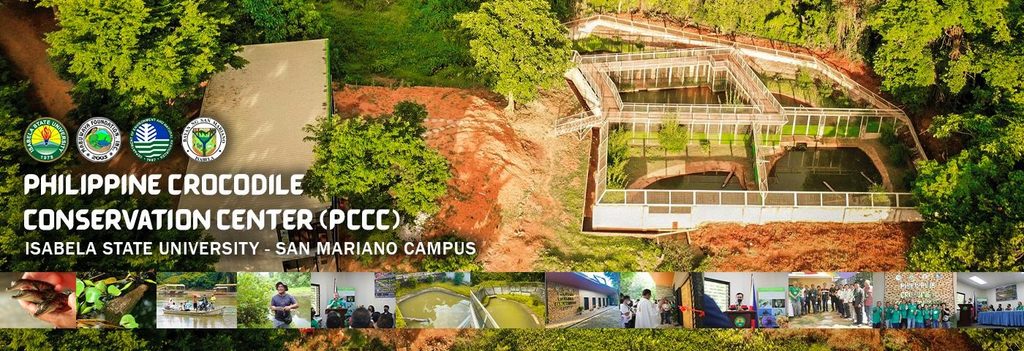
Isabela State University (ISU), through its San Mariano Campus, supports community education and conservation awareness through the Philippine Crocodile Conservation Center (PCCC), established in partnership with the Local Government Unit of San Mariano and Mabuwaya Foundation, Inc., with support from the Department of Environment and Natural Resources (DENR) and the Department of Tourism (DOT). Located within the campus in San Mariano, Isabela, the Center is dedicated to the breeding, head-starting, research, and protection of the critically endangered Philippine crocodile (Crocodylus mindorensis).
Beyond its conservation functions, the Center provides opportunities for educational visits and public awareness activities that introduce local communities and visitors to Philippine crocodile conservation, biodiversity protection, and the importance of maintaining natural habitats. By integrating wildlife conservation, environmental education, and responsible nature-based tourism, ISU helps promote awareness of the value of protecting terrestrial and wetland ecosystems. Through this initiative, the University contributes to community education on sustainable land and natural resource management while supporting conservation-oriented tourism in San Mariano and surrounding areas.
SUPPORTING LAND ECOSYSTEMS THROUGH ACTION
Sustainable use, conservation and restoration of land (policy)
In alignment with its commitment to conserving and sustainably managing terrestrial ecosystems, Isabela State University (ISU) has established policies and programs that ensure the protection, restoration, and responsible use of forests, mountains, and drylands associated with the university. The College of Forestry and Environmental Management (CFEM) at ISU Cabagan Campus, in collaboration with the Cagayan Valley Program on Environment and Development (CVPED), spearheads initiatives focused on reforestation, watershed rehabilitation, and biodiversity conservation.
These efforts are supported by the university’s broader environmental policies, which integrate ecosystem conservation principles into academic, research, and extension activities. Other ISU campuses also implement complementary programs that promote sustainable land use, habitat protection, and ecological restoration. Through these coordinated initiatives, ISU ensures that its land resources are managed in a way that preserves natural ecosystems, supports biodiversity, and contributes to climate resilience and environmental sustainability.
Monitoring IUCN and other conservation species (policies)
Isabela State University (ISU) demonstrates its strong commitment to biodiversity conservation through its Cabagan Campus, which has been officially designated by the ISU Board of Regents as a Wildlife Sanctuary. This designation establishes the campus as a protected area that serves as a natural habitat for various species of flora and fauna, including those that may be listed under the IUCN Red List and national conservation lists.Through this policy, ISU ensures the identification, monitoring, and protection of threatened and vulnerable species within its grounds. The university integrates wildlife conservation into its research and academic programs, particularly through its College of Forestry and Environmental Management (CFEM), which conducts studies on species diversity, habitat assessment, and ecosystem protection. Regular monitoring and habitat preservation activities are undertaken to prevent environmental degradation and promote ecological balance. By institutionalizing this wildlife protection policy, ISU reinforces its role as a steward of biodiversity, ensuring that university operations coexist responsibly with the natural ecosystems they encompass.
Local biodiversity included in planning and development
Isabela State University (ISU) integrates local biodiversity considerations into its planning and development processes through the implementation of its Land Use Development and Infrastructure Plan (LUDIP). This plan serves as a guiding framework to ensure that all construction, renovation, and land development activities are carried out with environmental sustainability at the core. It requires that projects protect and enhance existing ecosystems by preserving natural habitats, maintaining green spaces, and supporting native plant and animal species found within university grounds.
By incorporating eco-friendly design practices—such as green landscaping, the use of sustainable building materials, and natural ventilation systems—ISU ensures that infrastructure expansion does not compromise local biodiversity. Instead, it promotes harmony between development and the environment, safeguarding ecological balance and contributing to the long-term conservation of local species and habitats associated with the university’s campuses.
Alien species impact reduction (policies)
Isabela State University (ISU), through the Northern Luzon Innovation Center for Environment and Biodiversity Information, Research, and Development for Sustainability (NLIC-EBIRDS), actively implements initiatives that align with its policy to minimize the impact of alien or invasive species on campus ecosystems. One key effort is the establishment of a Biodiversity Plot located behind the College of Forestry and Environmental Management (CFEM), which serves as a living laboratory dedicated to the promotion, propagation, and conservation of native tree species.
This initiative supports the university’s broader goal of restoring ecological balance by prioritizing indigenous flora over non-native or invasive species that threaten local biodiversity. Through research, monitoring, and educational activities conducted by NLIC-EBIRDS and CFEM, ISU raises awareness of the ecological risks posed by alien species and encourages the use of native plants in landscaping, reforestation, and habitat restoration. This approach ensures that ISU’s campus development and environmental management practices contribute to the protection of native biodiversity and the reduction of invasive species impacts.
Collaboration for shared land ecosystems
Isabela State University (ISU) Cabagan Campus, in partnership with the Department of Agriculture – Regional Field Office 2 (DA-RFO2), implements a community-based goat dispersal and capacity development project aimed at supporting backyard farmers and promoting sustainable land ecosystem management. This collaborative initiative provides local farmers with quality goat stocks while equipping them with training on goat management, sustainable grazing practices, and animal healthcare to ensure long-term productivity and ecological balance.
Through this partnership, ISU fosters active community engagement in maintaining shared agricultural and land ecosystems by encouraging responsible livestock practices that prevent overgrazing, promote soil health, and optimize the use of natural resources. The project also strengthens local livelihoods while reinforcing ISU’s commitment to sustainable land use and ecosystem stewardship, integrating agricultural development with environmental conservation efforts within the surrounding communities.
LAND SENSITIVE WASTE DISPOSAL
Policy on plastic waste reduction
Isabela State University (ISU), through Memorandum No. 08-076, s. 2025, dated August 27, 2025, issued by Dr. Jane G. Cabauatan, Cluster Executive Officer of ISU Cabagan Campus, implements a No Plastic Policy prohibiting students and employees from using single-use plastics within campus premises. The policy covers plastic bags, straws, cups, spoons, forks, and bottles. During university events, programs, and activities where food and refreshments are served, members of the university community are encouraged to bring reusable utensils and tumblers as alternatives to disposable plastics.
Anchored in Republic Act No. 9003, or the Ecological Solid Waste Management Act of 2000, the policy aims to reduce plastic waste generation and encourage environmentally responsible practices across campus operations. Through institutional directives and the participation of students and employees, ISU promotes waste reduction, reusable alternatives, and a culture of environmental responsibility, contributing to a cleaner and more sustainable campus.
Policy on hazardous waste disposal
The Isabela State University Environmental Management Code (ISU-EMC) of 2018 serves as a comprehensive framework guiding the university’s commitment to environmental protection and sustainable practices. Under Section V, Part C: Environmental Protection (page 10 of 20), the Code mandates the minimization of synthetic pesticides, fertilizers, and commercial feeds, used within the campus to reduce ecological impact and promote safer, greener operations. Furthermore, Section VI: General Guidelines (pages 11–12 of 20) requires all university units to implement solid waste reduction and segregation at the source. This includes facilities such as offices, conference rooms, canteens, dormitories, guesthouses, and student parks. Waste materials are categorized into compostable or biodegradable waste, paper waste, recyclable and reusable materials, and special waste. Each waste receptacle must be properly labeled, color-coded, covered, and secured to ensure effective waste management. The Code also emphasizes minimizing the use of hazardous chemicals in experimental and production areas to uphold safety standards and strengthen environmental stewardship within the university community.
Isabela State University (ISU) Echague promotes organic agriculture practices to minimize the use of hazardous chemicals and materials. Its College of Agriculture faculty and students actively conduct research on organic farming techniques, exploring sustainable methods that ensure safe, nutritious, and environmentally friendly food production. Through these initiatives, ISU Echague not only enhances agricultural knowledge and skills but also fosters a culture of responsible farming, benefiting both the community and the environment.