
2025 Reports | SDG 5 – Gender Equality











Isabela State University (ISU) recognizes its important role in advancing Sustainable Development Goal 5 (Gender Equality) and promoting inclusive, equitable, and transformative development. In line with its vision of becoming “a model Smart-Green University internationally recognized for positive societal transformation by 2030,” the University considers gender equality both a fundamental human right and an essential foundation for sustainable development. This commitment is integrated into its educational, research, extension, and community engagement initiatives. Consistent with its mission to develop lifelong and future-ready professionals who serve as generators of knowledge and agents of positive change, ISU promotes gender-responsive services, programs, resources, and innovations that advance social justice and provide equal opportunities for women and men to participate, contribute, and achieve their full potential.
The University’s commitment to SDG 5 is advanced through the initiatives of its Gender and Development (GAD) Office and Gender Resources Research and Development Center (GRRDC). These units work toward strengthening gender mainstreaming across the ISU System by developing personnel equipped with gender-responsive perspectives; expanding gender-responsive research and extension initiatives that promote women’s empowerment and recognize the contributions of marginalized sectors; integrating gender equality into academic programs through gender-fair language and non-sexist representations; building partnerships with institutions and agencies advocating gender equality at local and international levels; and strengthening knowledge management systems that support gender equity.
ISU further demonstrates its commitment through institutional programs and mechanisms that promote women’s access, participation, and advancement in education and the workplace. These include monitoring female student enrollment, application, admission, and completion rates; providing access initiatives such as scholarships and mentoring opportunities; encouraging women’s participation in academic disciplines where they are underrepresented; and tracking the representation of women in senior academic positions and across degree programs, including traditionally male-dominated fields.
The University also implements policies and support mechanisms that protect the rights and welfare of women and transgender individuals. These include non-discrimination measures, maternity and paternity policies, accessible childcare facilities for students and employees, mentoring initiatives for women, and mechanisms for protecting individuals who report discrimination. Through these policies, programs, research initiatives, and strategic partnerships, ISU continues to address institutional and structural barriers to gender equality. These efforts reflect the University’s commitment to developing future-ready professionals and empowering them as agents of positive change, while contributing to the inclusive and sustainable transformation of communities. In doing so, ISU advances its vision of becoming a Smart-Green University recognized for its positive societal impact.
PROPORTION OF FIRST-GENERATION FEMALE STUDENTS
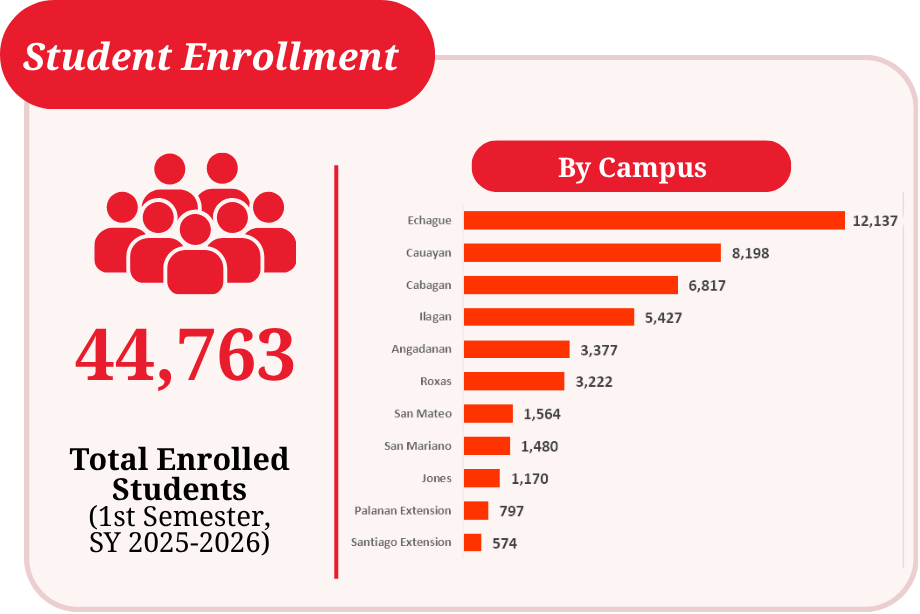
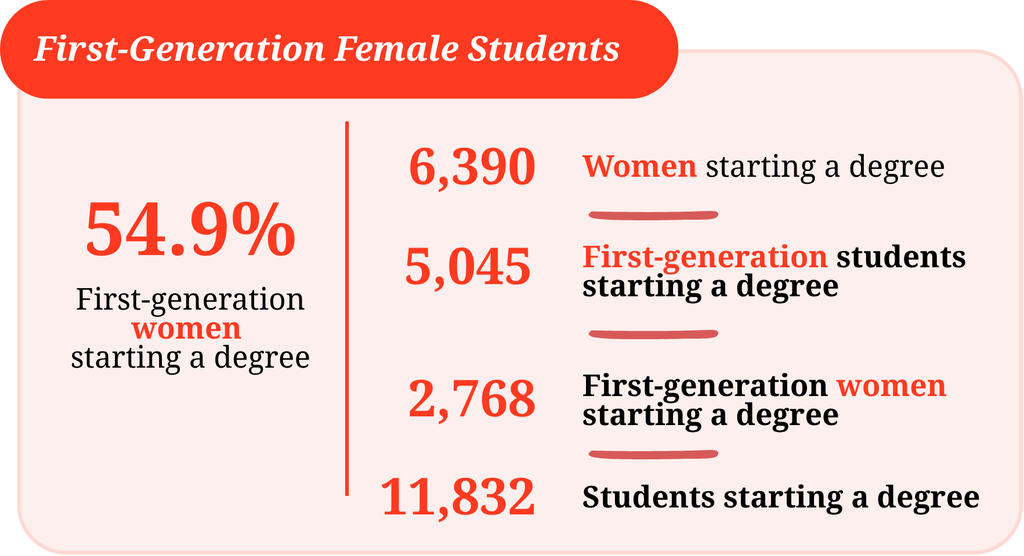
Isabela State University (ISU) has a total enrollment of 44,736 students, including 11,832 new degree-seeking students for the reporting year. Of these new entrants, 6,390 (54.0%) are women, demonstrating women’s strong representation among incoming students. Among these female entrants, 2,768 (43.3%) are first-generation students, meaning they are the first in their families to pursue higher education. Furthermore, women account for 54.9% of the 5,045 first-generation students entering the University.
These figures highlight ISU’s contribution to expanding access to higher education, particularly for women from families without prior university experience. By providing educational opportunities to these students, the University helps address barriers to participation, promote gender equality, and support social mobility and the inclusive development of communities.
Student Enrollment
First-Generation Students Starting a degree
STUDENT ACCESS MEASURES
Tracking access measures
Isabela State University (ISU) strengthens its commitment to gender equality and inclusive access to higher education by systematically collecting, monitoring, and analyzing sex-disaggregated data throughout its annual admission cycles. Through this practice, the University tracks the participation and representation of male and female applicants across its campuses and extension units, providing an evidence-based foundation for assessing equitable access to educational opportunities.
For the reported admission cycle, the University recorded a total of 44,763 applicants/admission records, comprising 24,521 females (54.78%) and 20,242 males (45.22%). The data cover nine (9) campuses and two (2) extension units, demonstrating the University’s institution-wide approach to monitoring gender representation in its admission processes.
Female representation accounts for approximately 54.78% of the University’s reported admission records, indicating substantial participation of women in pursuing higher education across the institution. By maintaining gender-disaggregated admission data, ISU can identify patterns in student participation, assess gender representation across its academic units, and monitor potential disparities in access to educational opportunities.
This systematic monitoring supports the University’s efforts to promote gender-responsive policies, strengthen inclusive admission practices, and ensure that educational opportunities remain accessible regardless of sex. Through evidence-based monitoring and institutional planning, Isabela State University reinforces its commitment to advancing gender equality and providing equitable opportunities for all learners.
Policy for Women’s Applications and Entry
Isabela State University (ISU) upholds a non-discriminatory and gender-responsive framework that ensures equal access to education and employment, regardless of gender identity, gender expression, disability, ethnicity, culture, or religion. This commitment is anchored in national laws, including Republic Act No. 10931, Republic Act No. 9710, and Republic Act No. 7277, and reinforced by CHED Memorandum Order No. 01, s. 2015, which promotes the integration of Gender and Development (GAD) principles in higher education.
In this regard, the University’s admission and hiring personnel are required to observe the following guidelines:
- Student Admission: All students must be admitted regardless of gender identity and expression.
- Employee Recruitment: Hiring must be open to all, regardless of gender identity, gender expression, culture, ethnicity, and religion.
- Gender-Fair Announcements: All job vacancies and admission opportunities must be published on the official ISU website using non-discriminatory and gender-fair language.
- Inclusion of Marginalized Sectors: The University promotes employment opportunities for marginalized groups, particularly persons with disabilities (PWDs) and Indigenous Peoples (IPs).
Through these guidelines, ISU reinforces its commitment to gender equality, non-discrimination, and inclusive access to educational and employment opportunities.
Women’s Access Schemes through Mentoring
Isabela State University (ISU), through its Technical Vocational Education and Training–Competency Assessment Center (TVET-CAC), provides women with access to specialized vocational training, mentoring, and nationally recognized competency certifications, particularly in traditionally male-dominated technical and agricultural fields.
Through the Special Training for Employment Program (STEP), the University implements the Prepare Land Leading to Agricultural Crops Production NC III training at the Echague Campus. The program provides women with opportunities to acquire practical agricultural competencies, including land preparation, farm machinery operation, planting techniques, fertilizer application, and equipment maintenance.
Participants receive technical guidance and hands-on training through a structured learning process that includes a Training Induction Program (TIP), which introduces them to the course curriculum, institutional policies, and TESDA guidelines.
Beyond technical skills development, ISU promotes women’s participation in non-traditional occupations such as Agricultural Crops Production, Horticulture, Rice Farm Machinery, Organic Agriculture Production, and Agro-entrepreneurship. Through these training and mentoring opportunities, the University helps women overcome barriers to entering traditionally male-dominated industries and improves their access to employment, professional development, and sustainable livelihood opportunities.
PROPORTION OF SENIOR FEMALE ACADEMICS
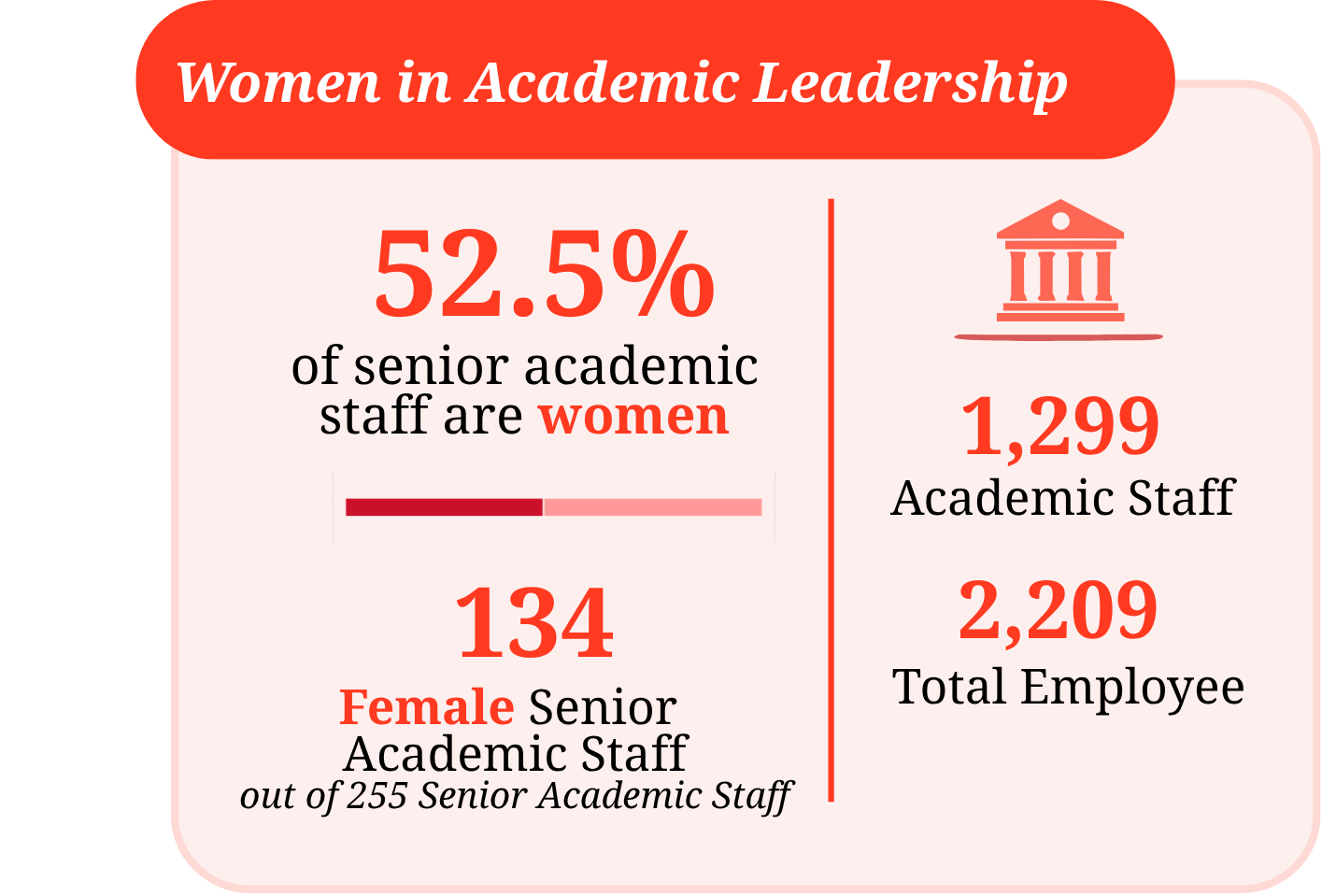
Isabela State University (ISU) employs 2,424 personnel, including 1,261 academic staff. Of the 261 senior academic staff, 138 are women, accounting for 52.9% of senior academic positions. This representation indicates that women hold a slight majority of senior academic roles within the University, reflecting their significant participation in academic leadership and senior-level positions.
The presence of women in more than half of these positions highlights their contribution to the University’s academic workforce and leadership. It also demonstrates progress toward promoting gender equality and inclusive representation in higher education, while supporting opportunities for women’s professional growth and career advancement.
PROPORTION OF WOMEN RECEIVING DEGREES
Total Number of Graduates
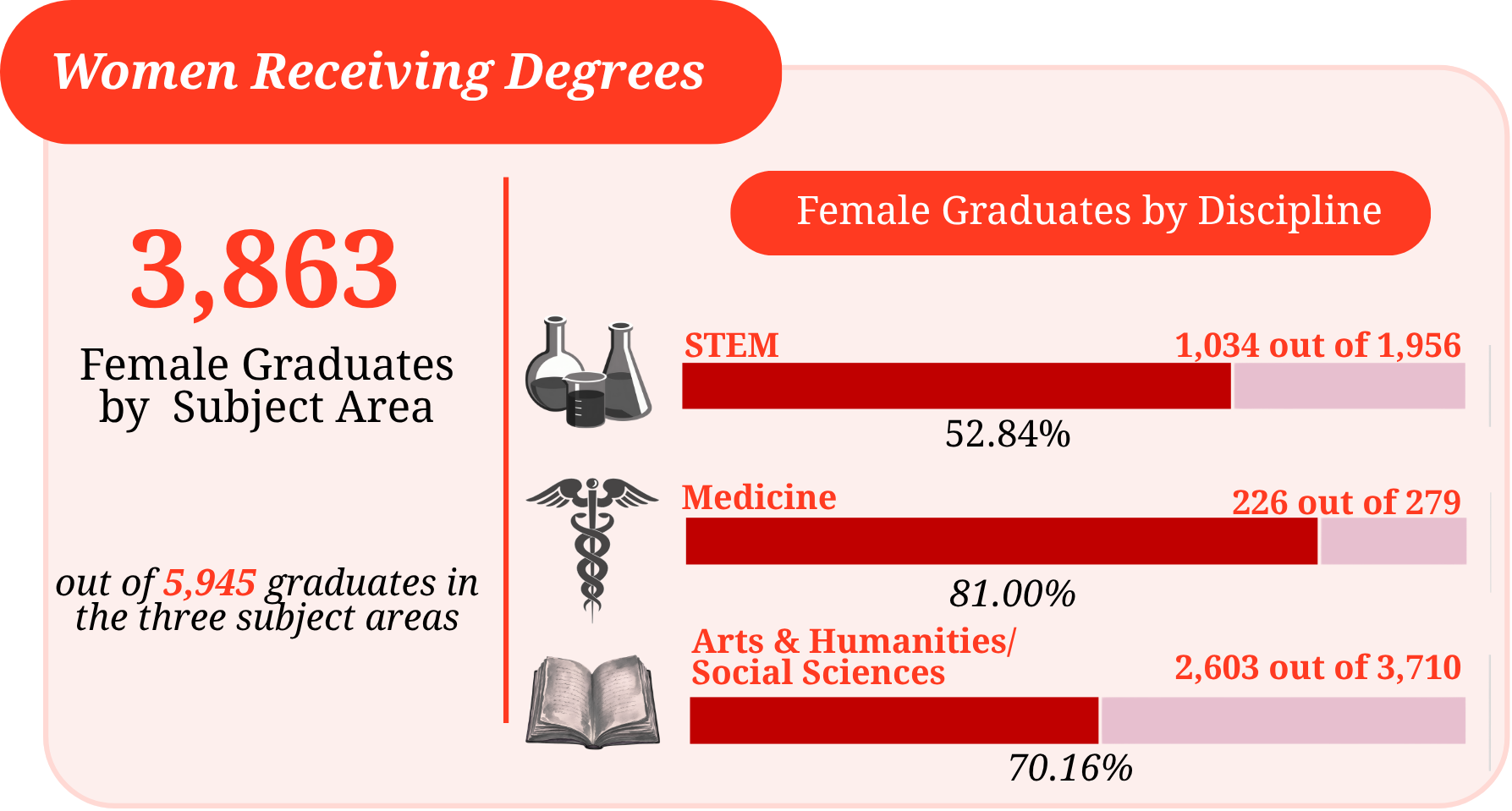
Isabela State University (ISU) recorded a total of 7,136 graduates this year, of whom 5,945 earned degrees across the three reported subject areas: Science, Technology, Engineering, and Mathematics (STEM) with 1,956 graduates; Medicine with 279; and Arts and Humanities / Social Sciences with 3,710.
Of these graduates, 3,863 (65.0%) were women, who accounted for the majority of graduates in all three subject areas: 1,034 (52.9%) in STEM, 226 (81.0%) in Medicine, and 2,603 (70.2%) in Arts and Humanities / Social Sciences.
The strong representation of women among STEM graduates reflects the University’s efforts to encourage and support women’s participation and degree completion in science- and technology-related fields. Meanwhile, the substantial proportion of female graduates in Medicine and Arts and Humanities / Social Sciences further demonstrates women’s academic participation and achievement across diverse disciplines. These figures highlight ISU’s commitment to promoting gender equality and providing equitable opportunities for women to pursue and complete higher education across various fields of study.
Total Number of Graduates by Subject Area
Number of Graduates: STEM
Among ISU’s 1,956 STEM graduates, women accounted for 52.9% (1,034 female versus 922 male graduates), demonstrating that women comprise the majority of graduates in science, technology, engineering, and mathematics. This representation highlights women’s participation and academic achievement in fields traditionally associated with male-dominated professions. The figures reflect the University’s efforts to promote gender equality and provide women with opportunities to pursue and complete degrees in science- and technology-related disciplines. Through inclusive educational opportunities, ISU supports women’s participation in technical fields and prepares them to contribute to scientific advancement, innovation, and economic development.
Number of Graduates: Medicine
ISU recorded 279 graduates in Medicine and related health disciplines, of whom 81.0% (226) were women, compared with 53 male graduates. This substantial female representation reflects women’s strong participation and academic achievement in health-related fields. The University’s established programs in Bachelor of Science in Nursing, Bachelor of Science in Midwifery, and Bachelor of Science in Psychology contribute to developing a competent workforce in healthcare and community health services. While ISU also offers the Doctor of Medicine program, its first batch of graduates is expected in 2027. Through these academic programs, the University continues to promote women’s access to health-related education and support their preparation for professional careers that contribute to improving healthcare delivery and community well-being.
Number of Graduates: Arts and Humanities / Social Sciences
ISU recorded 3,710 graduates in Arts and Humanities / Social Sciences, with women comprising 70.2% (2,603 female versus 1,107 male graduates). This demonstrates the strong participation and academic achievement of women across disciplines related to education, the humanities, and social sciences. Their substantial representation highlights women’s access to diverse academic and professional pathways. Through its inclusive educational environment, ISU continues to support women’s pursuit and completion of higher education across disciplines, contributing to human development, social progress, and community advancement.
WOMEN’S PROGRESS MEASURES
Policy of Non-Discrimination Against Women
Isabela State University (ISU) upholds a strong institutional commitment to equality, inclusivity, and the protection of women’s rights across all academic and administrative spheres. Through its Enhanced Policy on Non-Discrimination and Inclusivity in Workplaces, ISU ensures that no individual experiences bias or unequal treatment based on sex, gender identity or expression, sexual orientation, religion, ethnicity, disability, age, political belief, or socioeconomic background. Anchored in national mandates such as the Magna Carta of Women (RA 9710) and CHED Memorandum Orders on Gender Sensitivity (Series of 2015), this policy reinforces ISU’s proactive stance against workplace discrimination. To operationalize these principles, the University implements mandatory gender sensitivity seminars, anti-discrimination orientations, and inclusivity training for all employees and students. Through these sustained efforts, ISU cultivates a safe, equitable, and empowering environment that upholds human dignity and women’s advancement in education and employment.
Moreover, the University has also enforced a comprehensive Policy on Non-Discrimination to Women and the LGBTQ+ Community, which further strengthens the University’s commitment to upholding gender equality, human dignity, and inclusivity in all aspects of academic and administrative life. It ensures that no student, faculty member, or staff is subjected to unequal treatment, exclusion, or bias based on their sex, sexual orientation, gender identity, or gender expression.
Policy on Non-Discrimination Against Transgender People
Isabela State University (ISU) enforces a comprehensive Policy on Non-Discrimination to Women and the LGBTQ+ Community, which explicitly includes protections for transgender individuals. This policy affirms the University’s commitment to upholding gender equality, human dignity, and inclusivity in all aspects of academic and administrative life. It ensures that no student, faculty member, or staff is subjected to unequal treatment, exclusion, or bias based on their sexual orientation, gender identity, or gender expression.
The policy mandates that all university personnel and offices respect and recognize diverse gender identities—including transgender, cisgender, and non-binary individuals—in both written and verbal communication, institutional records, and daily interactions. It also promotes the consistent use of gender-fair and inclusive language across all university operations, communications, and publications.
Moreover, ISU’s non-discrimination framework is reinforced through the initiatives of its Gender and Development (GAD) Office, which provides awareness training, advocacy programs, and support mechanisms to address gender-based discrimination and ensure a safe, respectful environment for all members of the academic community. Through this policy, ISU not only complies with national gender-equality laws but also actively champions the rights, safety, and visibility of transgender people, promoting a truly inclusive and equitable campus culture.
Maternity Policy
Isabela State University (ISU) upholds its commitment to gender equity and family welfare by ensuring that both women and men are supported in balancing their professional and family responsibilities. In compliance with Republic Act No. 11210, the Expanded Maternity Leave Law, female employees have an option to receive one hundred five (105) days of paid maternity leave—providing financial security and adequate recovery time without penalty to their careers or employment status—or extend for an additional thirty (30) days without pay, and granting an additional fifteen (15) days for solo mothers and for other purposes. This protection allows women faculty and staff to embrace motherhood while maintaining their professional roles within the university.
Paternity Policy
Isabela State University (ISU) upholds its commitment to gender equity and family welfare by ensuring that both men and women are supported in balancing their professional and family responsibilities. In compliance with Republic Act No 8187, the Paternity Leave Act, all married male employees are entitled to seven (7) days of paternity leave with full pay for the first four (4) deliveries of their legitimate spouse with whom they are cohabiting. This progressive policy recognizes that childcare is a shared responsibility and actively supports women’s workforce participation by enabling fathers to be present during the crucial early days of their child’s life. This paternity leave provision reflects the university’s evolving understanding of workplace equity. By allowing non-gestational parents to take time off during the critical postpartum period, the university enables fathers to actively participate in childcare duties, share the domestic workload, and provide essential support to their partners.
Policies Protecting those Reporting Discrimination
Isabela State University (ISU) established a mechanism for reporting discrimination through its Enhanced Policy on Non-Discrimination and Inclusivity in Workplaces, formalized in Office Order No. 19 of 2022. This comprehensive policy, aligned with Republic Act No. 9710 and CHED guidelines, creates confidential pathways for reporting educational or employment disadvantages through the Human Resource Management Office or the Office of Students Affairs and Services. Trained personnel serve as accessible contact points, guiding reporters through the process with sensitivity and expertise.
When reports are filed, the University responds through fair and impartial investigations conducted by the Committee on Decorum and Investigation (CODI), ensuring that complaints receive serious attention and thorough review. Based on investigation findings, ISU implements appropriate responses ranging from support services and reasonable accommodations to corrective measures addressing the discrimination. This structured approach demonstrates the University’s commitment to addressing disadvantages systematically, ensuring that those who experience discrimination have clear mechanisms to seek resolution and support within the institution.
Women’s Mentoring Schemes
Isabela State University has developed women’s empowerment programs that extend beyond traditional academic mentoring to address real-world career barriers. The ISU Women Mentoring Scheme operates through the Technical Vocational Education and Training – Competency Assessment Center (TVET-CAC), which provides specialized vocational education and pathways to National Competency Certifications. These programs strategically target male-dominated agricultural and technical fields where women have historically faced entry barriers, including Agricultural Crops Production, Horticulture, Rice Farm Machinery, Organic Agriculture Production, and Agro-entrepreneurship and Marketing. By combining mentorship with formal certification, ISU does not simply encourage women to consider these fields—it equips them with nationally recognized credentials that validate their expertise and enhance their employability. This approach recognizes that empowering women in non-traditional sectors requires both the confidence-building support of mentorship and the tangible qualifications that enable them to compete effectively in the workforce, transforming aspiration into genuine professional opportunity.
Tracking Women’s Graduation Rate
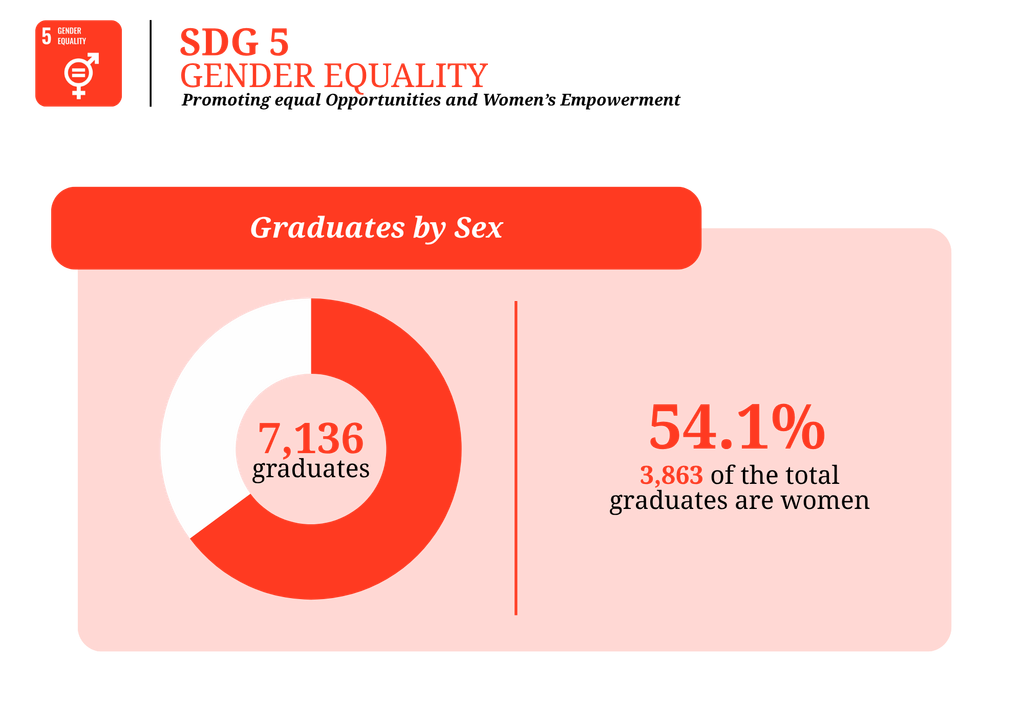
Isabela State University (ISU) recorded a total of 7,136 graduates this year, of whom 3,863 (54.1%) were women. Among the 5,945 graduates across the three reported subject areas—STEM (1,956), Medicine (279), and Arts and Humanities / Social Sciences (3,710)—women accounted for 65.0% (3,863), demonstrating their strong representation and academic achievement across these disciplines. This substantial female representation highlights ISU’s commitment to promoting women’s access to and completion of higher education. Through its inclusive academic environment and gender-responsive initiatives, the University continues to provide opportunities for women to pursue diverse academic fields, earn higher education qualifications, and contribute to professional sectors, local governance, and community development in Isabela and beyond.
Childcare Facilities for Students, Staff and Faculty
Isabela State University demonstrates an inclusive approach to childcare support by operating a Child-Minding Facility that serves the entire university community. The facility welcomes children of both student mothers and university personnel—staff and faculty alike—providing the same comprehensive childcare services to all users. Whether a woman is pursuing her degree or building her career at the university, she has access to quality childcare that enables her to focus on her responsibilities. The facility also provides lactation support, recognizing that nursing mothers need private, comfortable spaces to maintain breastfeeding while fulfilling their academic or professional commitments. By serving students and employees, ISU removes childcare as a barrier to participation for all women in the university community, demonstrating that work-life balance support should not depend on one’s role but should be a universal resource enabling mothers to thrive in their educational and professional pursuits.